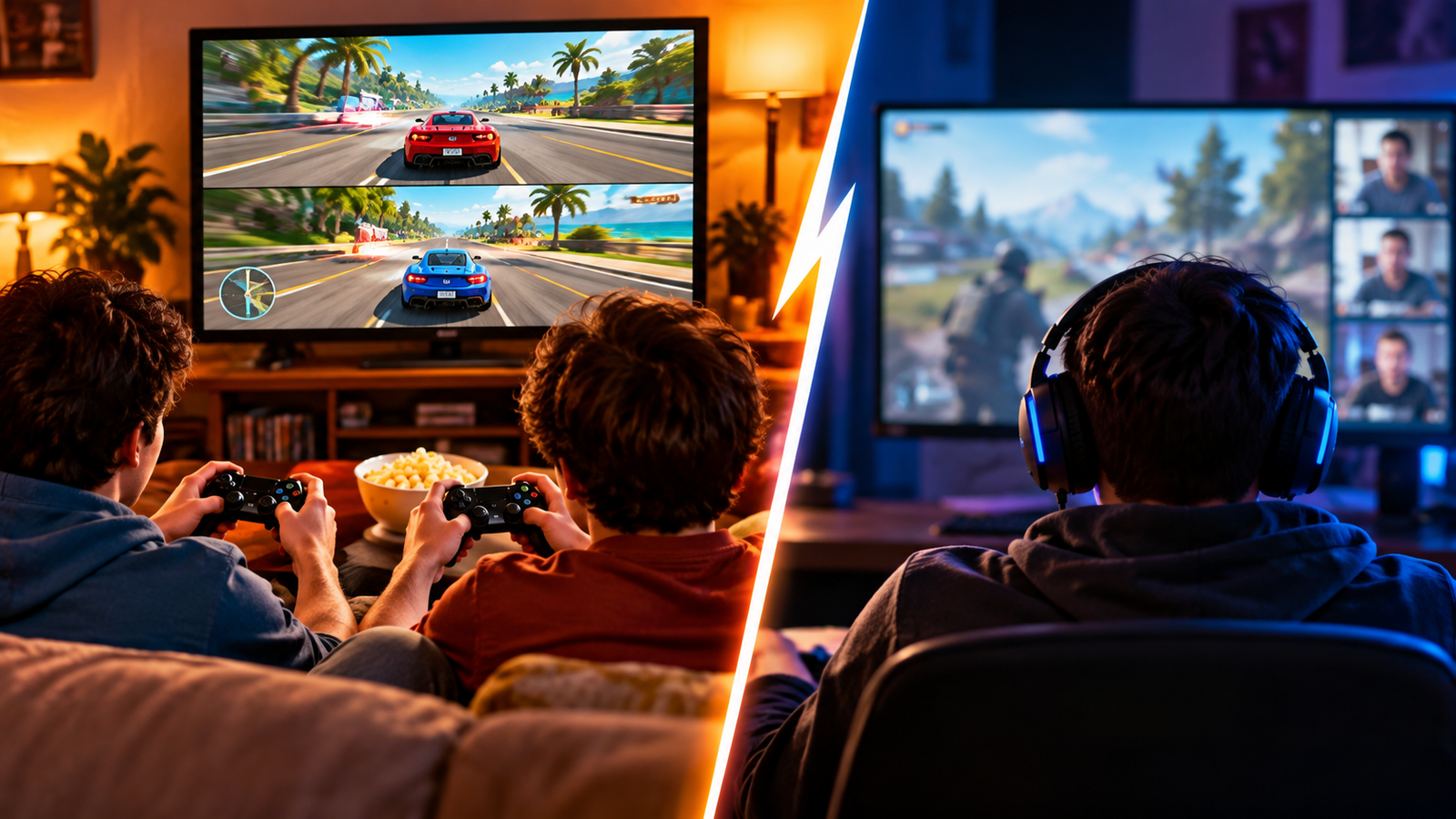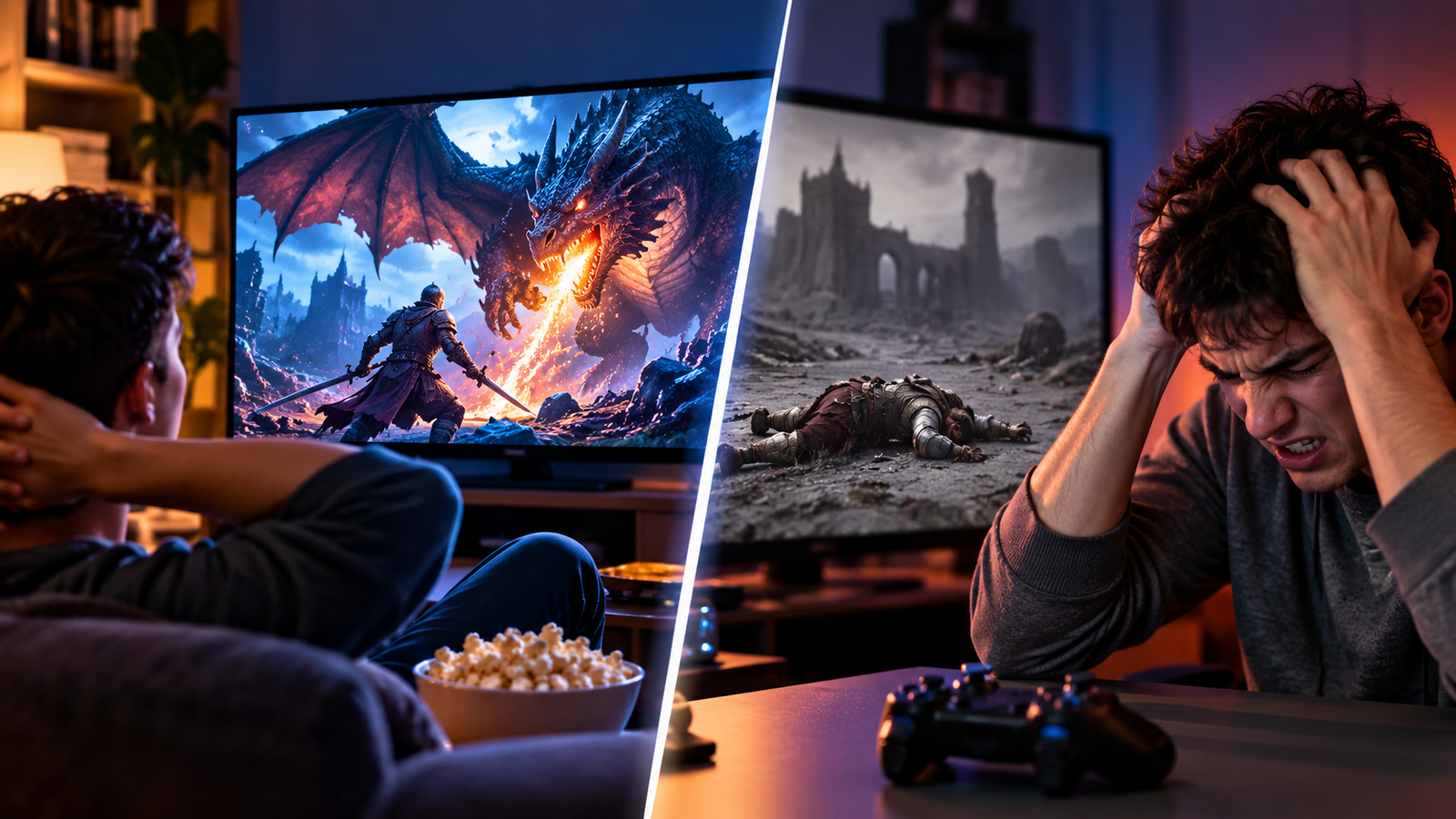










Think about a game you have played for many hours. At first, you had to remember every button. You had to check which key made your character jump, which button let you attack, and which stick moved the camera.
After some time, something strange happened. You stopped thinking about the controls.
You simply played.
You saw an enemy and pressed the right button without much thought. You saw a gap and jumped at the right moment. You moved the camera, aimed, blocked an attack, or changed direction almost as if your hands already knew what to do.
This is one of the clearest signs of great game design. A good game does not force players to think about its controls all the time. It teaches them so well that the controls become a quiet part of the experience.
The player stops thinking about the buttons and starts thinking about the game.
The First Few Minutes Feel Different
Almost every game feels strange at first. Even a simple control system needs time to learn.
Your brain must connect a button with an action. Press one button and the character jumps. Press another and the character attacks. Move a stick and the character walks or turns.
At this stage, your mind has to work on two things at once. You must understand the controls while also trying to survive inside the game world.
This can make the first few minutes feel slow or awkward.
Great games understand this problem. They do not throw every control at the player at once. They give the player time to learn the basic actions. A simple jump may come before a hard combat move. A basic attack may come before a complex combo.
The player gets a chance to build confidence.
Your Brain Builds a Control Map
Every time you use a control, your brain learns a little more about it.
If the same button always makes your character jump, your brain creates a strong link between that button and the action. After enough use, you no longer need to stop and recall the button.
The process becomes automatic.
This is often called muscle memory, although the muscles themselves do not store the memory. Your brain learns the pattern and sends the correct signals with much less conscious effort.
That is why a player who has spent hours with a game can perform actions that seem hard to a new player.
A new player may think, “Which button should I press?”
An experienced player may not think about the button at all.
They simply react.
Consistency Makes Controls Easy
One of the most important parts of good control design is consistency.
If a button has one clear purpose, players can learn it faster. If the same action works in a similar way across different parts of the game, the brain can trust that pattern.
Imagine a game where the jump button changes every few minutes. Even a skilled player would struggle. The problem would not be the player’s ability. The problem would be the design.
Good games avoid this kind of confusion.
They create a control language that makes sense. Once players learn that language, they can use it without much thought.
This also explains why players can move from one part of a game to another without feeling lost. The world may change. The enemies may change. The challenges may become harder. But the basic control system stays familiar.
That sense of trust matters a lot.
Fast Feedback Builds Confidence
Controls also feel better when the game gives a clear response.
Press a button and the character should react in a way that feels correct. If you press the attack button, the attack should feel clear. If you move the camera, the camera should respond in a way that matches your expectation.
The player needs to feel a direct connection between action and result.
This does not always mean the game must react instantly. Some actions need weight and delay. A large character may feel slower than a small one. A heavy weapon may take more time to swing.
What matters is that the response feels clear and predictable.
When players understand why something happened, they can adjust their actions. When the game feels random or unclear, the controls remain in the player’s mind because they never become fully trusted.
Difficulty Helps the Learning Process
Great games also use difficulty as part of control design.
A game that starts too hard can make players think about controls for the wrong reason. They are not learning naturally. They are simply trying to survive.
A well-made game often gives players small challenges first. These challenges help them understand how the controls work.
Once the basic actions become familiar, the game can ask for more.
A jump may become part of a larger movement challenge. A simple attack may become part of a fight that needs timing. A dodge may become important when an enemy has a powerful attack.
The controls stay the same, but the player becomes more skilled.
This is a powerful idea because the game does not always need to teach new buttons. It can create new challenges with actions the player already knows.
When Controls Become Part of the Character
At their best, controls do more than help you operate a character. They help you understand that character.
A fast character may turn quickly and respond at once. A heavy character may feel slower but more powerful. A skilled fighter may have precise attacks and quick defensive moves.
These details can make the character feel real.
You do not just watch the character move on the screen. You begin to feel how that character moves.
This is where controls become part of the game’s identity.
Two games may have the same basic buttons, but they can feel completely different because of their response, speed, weight, timing, and movement.
The buttons are only the starting point. The real experience comes from what the game does with them.
The Controls Leave Your Conscious Mind
Eventually, a great control system reaches a point where the player barely notices it.
You no longer think, “Press this button to dodge.”
You see an attack and your hand reacts.
You no longer think, “Move the stick in this direction.”
You simply move.
This is important because human attention has limits. If you must think about every small action, you have less attention for the world around you.
A game with excellent controls removes that extra mental work.
The player can focus on strategy, story, exploration, sound, visuals, enemies, puzzles, or emotions.
The controls become a bridge between the player’s intention and the game world.
This Is Where Flow Appears
This connection can lead to what people often call flow.
Flow is a state where a person becomes deeply focused on an activity. Time may feel different. Outside distractions can fade away. The task feels difficult enough to stay interesting but clear enough to remain enjoyable.
Games can create this feeling when their controls become natural.
The player is no longer stuck between thought and action. There is a smooth connection between the two.
The player sees a problem, makes a decision, and acts.
That process can feel almost effortless.
This does not mean the game itself is easy. In fact, some of the hardest games can create this feeling. The challenge may be very high, but the player understands the controls so well that failure feels like a result of their decision rather than a failure to understand the interface.
Great Design Becomes Invisible
There is a strange truth about good game design: players may notice it less when it works better.
A complicated control system can make players talk about the controls. A poor system can make them complain about buttons, camera movement, timing, or response.
But when everything works well, players often talk about something else.
They talk about the boss fight.
They talk about the story.
They talk about a difficult level or an amazing moment.
They may never mention the control system at all.
That silence is not a failure. It can be a sign of success.
The Real Goal Is Not to Remember
The goal of great controls is not to make players remember more buttons.
It is to help them remember the system until they no longer need to think about it.
At first, the player learns the controls. Then the player practices them. After enough time, the controls become automatic.
That is when the game starts to feel natural.
The best games create a quiet relationship between the player and the game world. The buttons remain there, but they fade into the background.
You do not feel like you are controlling a character with a device.
You feel like you are acting inside the game.
That is why great games make you forget the controls. They do not hide the controls. They teach them so well that your brain turns them into instinct.
And when that happens, the game stops feeling like a set of buttons.
It starts to feel like an experience.
ALSO READ: The One-Week Fantasy Flier Worth a Calculated Gamble