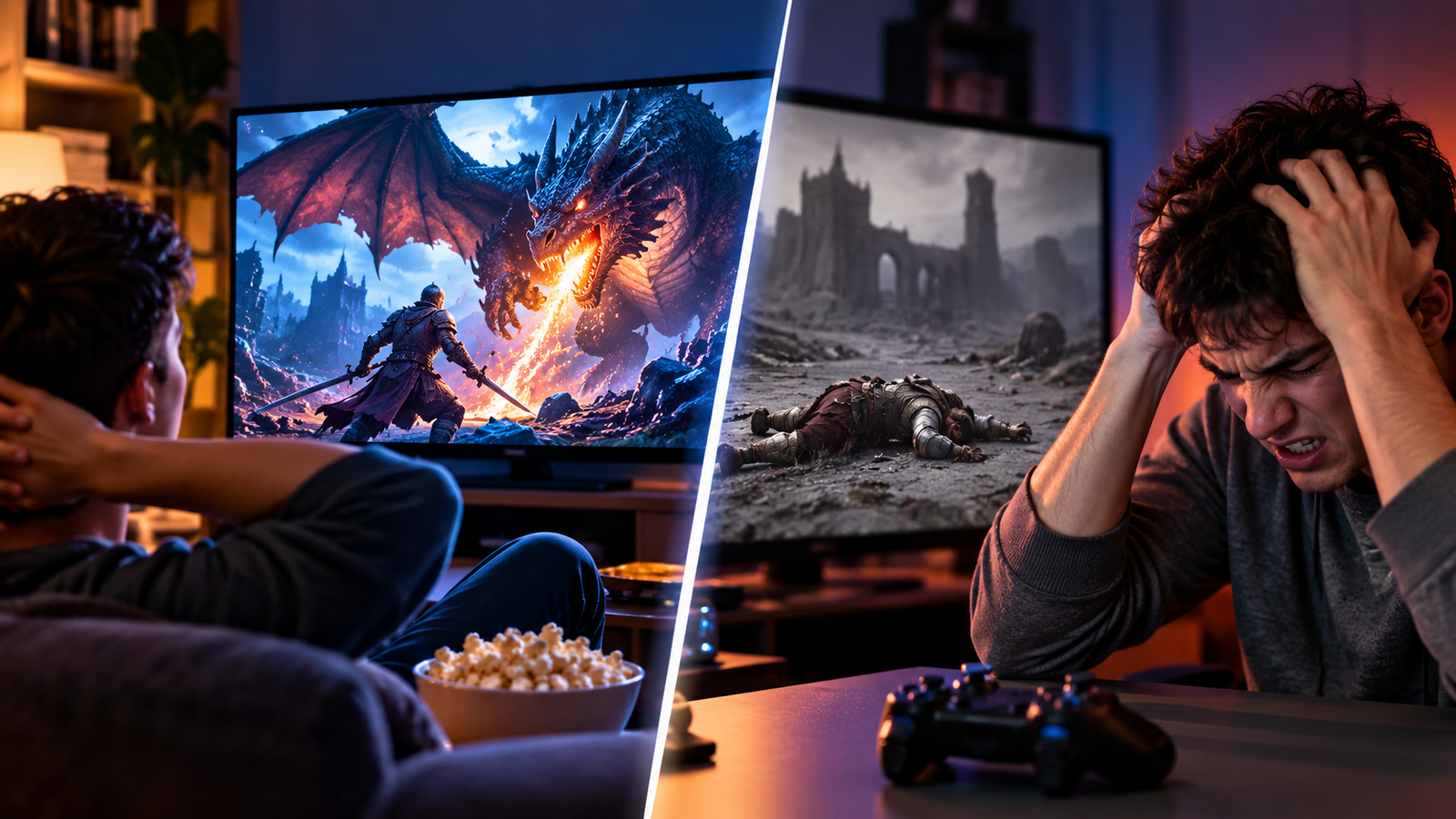









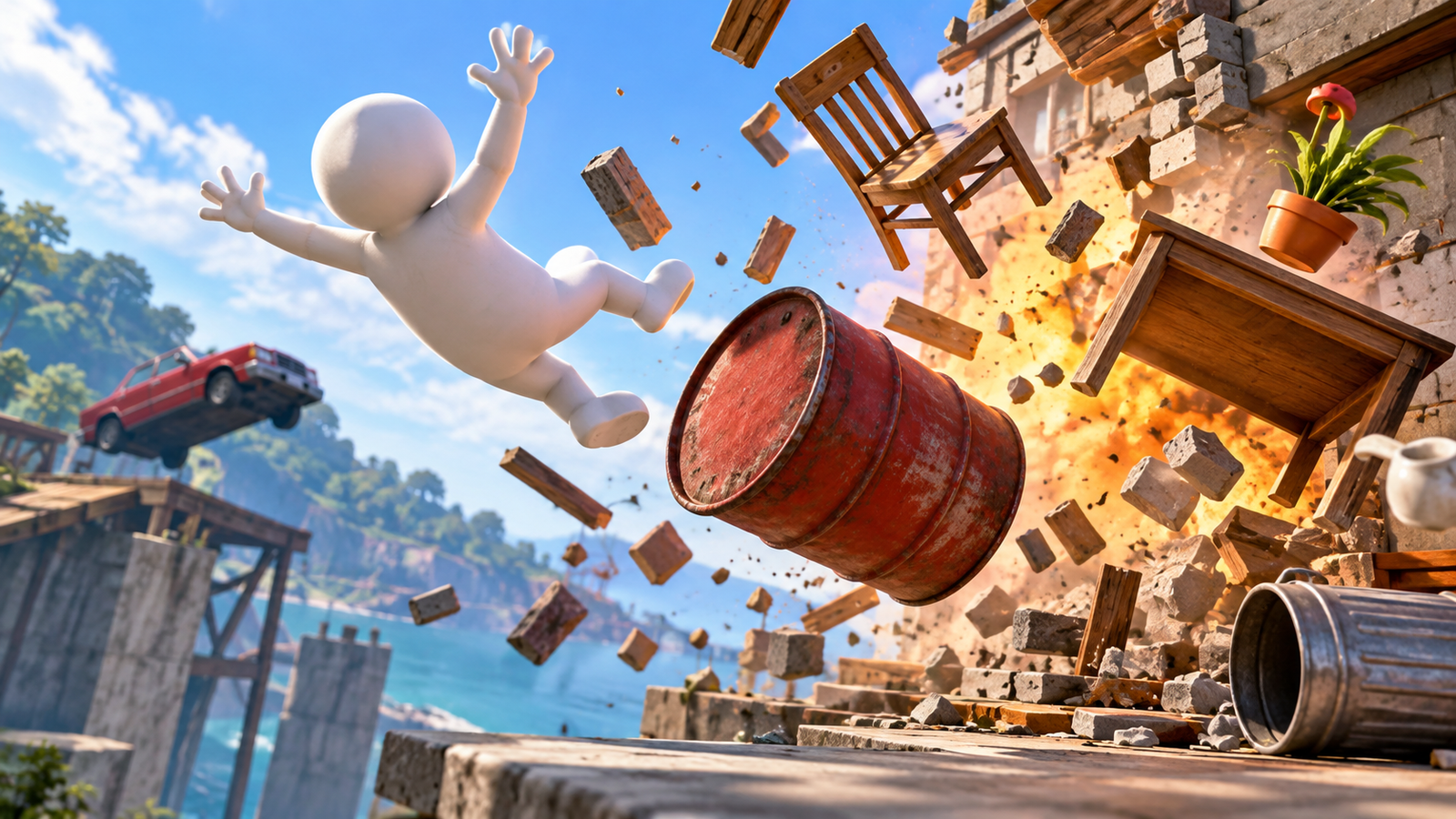
Some of the best moments in games are not planned by the developers. They happen when the game world reacts in a strange way to what the player does. A box falls at the right time, a car flips over, an enemy flies across a room, or a simple push starts a chain of events.
These moments can feel funny, surprising, and even magical. They are common in physics-based games because these games do not control every small action. Instead, they create a set of rules and let objects, characters, and players interact with those rules.
The result is a game world where something new can happen at any moment.
What Is a Physics-Based Game?
A physics-based game uses digital rules that try to copy parts of real-world physics. These rules can control gravity, weight, speed, friction, force, and collisions.
For example, a heavy box may fall faster than expected when it loses support. A small object may move when a larger object hits it. A character may fall after losing balance. A car may roll after a hard crash.
The game does not always need a special command for each event. The physics system can work out what should happen based on the rules.
This is what makes physics-based games different from games that rely mostly on fixed actions and set scenes.
Rules Create Unexpected Events
Imagine a game with a barrel, a table, a chair, and an enemy. A developer could create a fixed scene where a player shoots the barrel and an explosion sends the enemy backward.
That is a clear and controlled event.
A physics system can create something far less predictable. The player may push the barrel instead. The barrel may roll into the table. The table may hit the chair. The chair may fall against the enemy. The enemy may lose balance and fall down a set of stairs.
None of that needs a special script.
The game only needs rules for force, movement, weight, and collision. The final result comes from the way those rules meet.
Small Actions Can Become Big Events
One of the most fun parts of physics is the way a small action can lead to a much bigger result.
A player may move one object by a few inches. That object may hit another object. The second object may fall and hit a third one. The third object may block a door or push a character.
This creates a chain reaction.
The first action may look very simple, but the final result can be huge. Since every object changes the state of the world, the next event depends on what happened before it.
This means two players can perform almost the same action and still get different results.
The Player Adds Another Layer
The physics system alone does not create all the surprises. The player also plays a major role.
Players do not always act as developers expect. Give someone a physics gun, a few objects, some explosives, ropes, vehicles, or a large empty room, and they will often try something unusual.
Games such as Garry’s Mod, Teardown, and Human: Fall Flat make strong use of this idea.
A developer may create a simple tool and expect players to use it in one way. Players may find ten other uses for it.
That freedom can create moments that no designer could fully predict.
Why Strange Physics Can Be Fun
Not every physics result is realistic. Games often use simplified physics to make the experience easier, faster, or more fun.
A character may fly farther than a real person would. A car may flip in a strange way. A box may bounce much more than it should. A character may get stuck between two objects.
Sometimes these results come from limits in the physics system itself.
Yet these strange moments can become part of the game’s charm.
A serious scene can suddenly turn into a comedy scene because an object moves in an unexpected way. A difficult task can become easy because a barrel falls in the perfect place.
The player remembers these moments because they feel different from normal game events.
Bugs Can Become Special Moments
Physics systems can also create bugs.
An object may pass through another object. A character may get stuck. A vehicle may spin in a strange way. A body may react in a way that looks completely impossible.
These problems can hurt a game when they happen too often. But rare physics errors can also become funny and memorable.
Players often share such moments online because they look almost impossible.
A normal scripted event may be seen by thousands of players in the same form. A strange physics event may happen only once. That makes it feel personal.
The player can say, “I cannot believe that just happened.”
The Brain Loves Cause and Effect
There is another reason these moments feel special.
People enjoy events that have a clear cause.
If a player pushes a table, the table moves. If the table hits a barrel, the barrel rolls. If the barrel hits an enemy, the enemy falls.
The player can understand the whole chain.
Even when the final result is strange, the player can see how it happened. This gives the event a sense of truth.
The game did not simply show a random animation. The player caused a real change in the game world.
That feeling can make a small event much more memorable.
Physics Gives Players More Freedom
Traditional game design often depends on careful control. A developer can decide where an enemy stands, when a door opens, and what happens after the player presses a button.
Physics-based design gives up some of that control.
Instead, the developer creates a system with rules and limits. Within those limits, the player has more freedom.
This approach can make a game feel alive.
The player may solve a problem in a way the developer never expected. One person may use a box. Another may use a vehicle. Someone else may destroy part of the room and create a new path.
The game does not need a special script for every solution.
Why These Moments Feel Like Stories
A great physics event can become a story.
A player may tell a friend about the time a tiny object caused a huge crash. Someone may post a video of an enemy who flew across a room after a strange collision.
The value of the moment does not come only from what happened. It comes from the fact that the player was there when it happened.
The event feels like a personal story rather than a piece of content that every player must see.
That is a powerful part of interactive games.
The Balance Between Control and Freedom
Physics-based games work best when they find a balance between control and freedom.
Too much control can make the world feel fixed. Every event feels like a prepared scene.
Too little control can make the game feel broken. Objects may behave in ways that make tasks frustrating.
The best physics systems create rules that are simple enough to understand but rich enough to produce many results.
The developer creates the world. The physics system creates possibilities. The player creates the action.
The final result can be something that none of them could fully predict alone.
Conclusion
Physics-based games create unplanned magic because they allow simple rules to create complex results.
Gravity, force, weight, friction, collisions, and movement may seem like basic systems. Yet when they interact with each other, they can create endless possibilities.
A barrel can start a chain reaction. A car can solve a puzzle by accident. A character can fall in a hilarious way. A small mistake can create a perfect moment.
The most important part is that the player often causes these events.
That is why physics-based games can feel so alive. They do not simply tell players what happens next. They give players a world, a set of rules, and the freedom to see what happens.
Sometimes the result is expected.
Sometimes it is a complete disaster.
And sometimes, for a few seconds, the game creates something that feels like pure magic.
ALSO READ: The WWE Match Type That Could Work Better in 2026