









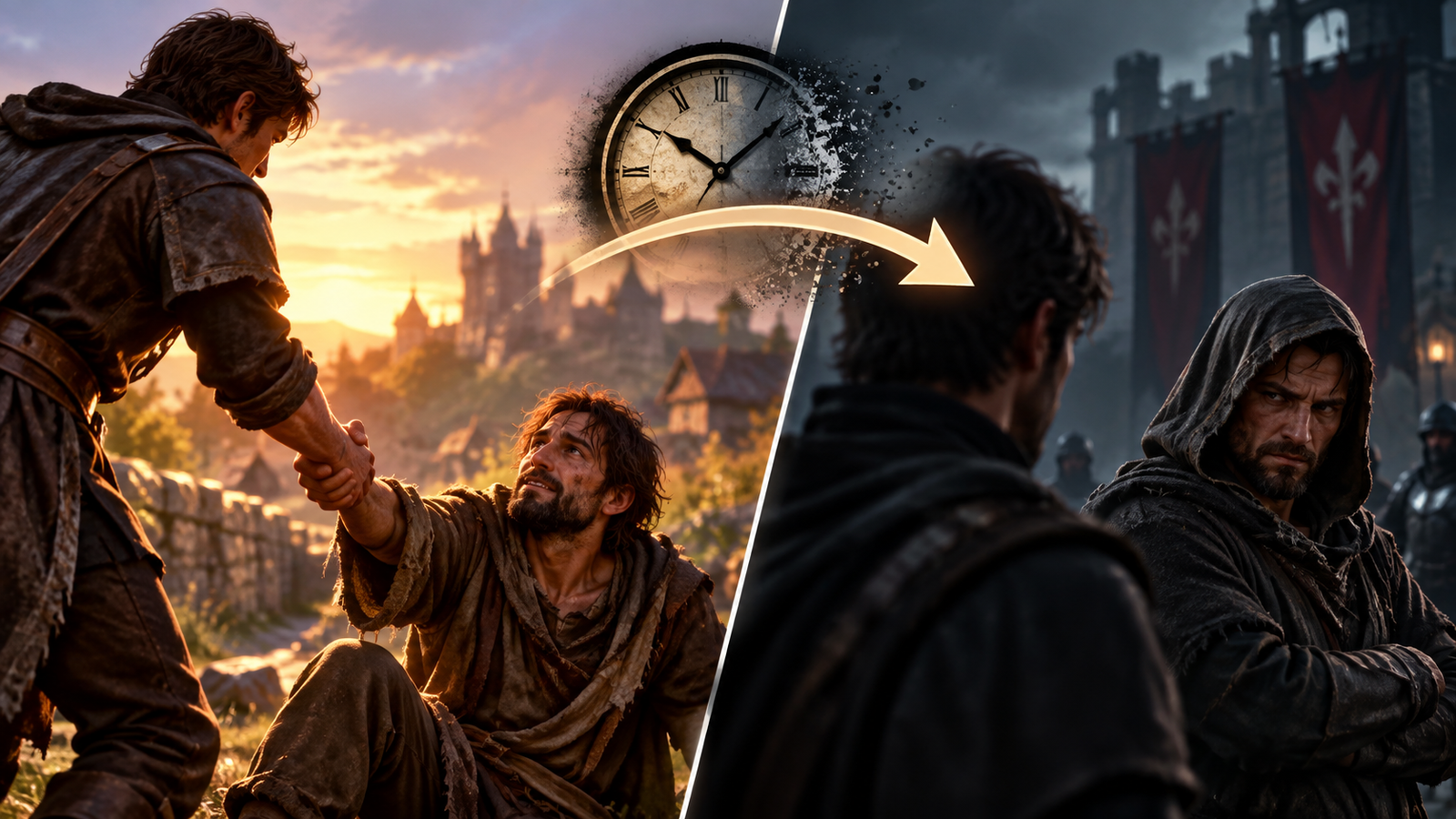
Player choice is one of the strongest tools in modern games. It gives people a sense that their actions matter. Instead of only follow a fixed story, players can make choices that shape people, places, events, and even the final result.
But the timing of a consequence can change how a choice feels.
When a game shows the result at once, the player can easily understand what happened. That can be useful, but it can also make the choice feel simple. A player may see a clear reward or loss and quickly learn which option the game wants them to take.
Delayed consequences work in a different way. The game lets time pass before it shows the full result of a choice. This can make the player think about what they did, remember an old decision, and connect that decision to a later event.
That small gap can add much more weight to player choice.
Choices Feel More Real
In real life, choices rarely have instant results. A small action today can affect a person weeks, months, or even years later. Games can use the same idea to make their worlds feel more natural.
Suppose a player helps a stranger early in a game. Nothing special happens after the scene. There is no reward, no large message, and no clear sign that the choice matters.
Hours later, that same person appears again and offers help during a difficult part of the story.
The player may then remember the earlier event and understand the link.
The result feels more personal because the game did not explain it at once. The player made the connection alone.
The Player Does Not Get the “Right” Answer
Instant results can make some choices feel like a test.
A player picks one option and gets a large reward. Another choice gives a clear loss. After a few such moments, the player may start to look for clues about which option is “correct.”
This can weaken the sense of freedom.
A delayed result removes some of that pressure. The player may not know if a choice was good or bad. They have to move forward without a clear answer.
This is close to how real decisions work. We often make choices with limited facts. We only learn the full result later.
A game can use this idea to make player choice feel less like a puzzle and more like a personal decision.
Delayed Results Create Tension
A good delay can also create tension.
Imagine a player betrays a trusted character. The character leaves, but the story does not explain what this will cause. The player continues through several missions with no clear result.
That old choice may stay in the back of the player’s mind.
The player may ask, “Will that person return?” or “Did I just create a problem for myself?”
This creates a quiet form of tension. The player knows that the world has a memory, but they do not know how far that memory will reach.
When the result finally appears, the moment can have far more force than an instant response.
The World Feels Like It Has Memory
Delayed consequences can also make a game world feel alive.
People can remember past events. Groups can react to old actions. Towns can change after major events. A character who once trusted the player can later refuse to help them.
These details give the world a sense of memory.
The key is that the game does not need to announce every result.
A shopkeeper may simply treat the player with less trust. A friend may speak in a colder tone. A group may close its doors to the player.
These small changes can tell the player that the world remembers what they did.
That can feel far more natural than a message that says, “Your choice has affected this character.”
The Best Moments Come From Realization
One of the most powerful effects of a delayed consequence is the moment of realization.
The player may see an event and slowly understand why it happened.
They may think, “Wait, this is because of what I did earlier.”
That thought creates a strong connection between the player and the story.
The game does not need to explain the whole cause. The player has already lived through the earlier choice. They can recall the scene and understand the link.
This can make the consequence feel like something the player caused rather than something the writer simply placed in the story.
That difference matters.
Delay Can Make Choices More Emotional
A quick result can give a player information. A delayed result can give them emotion.
Consider a player who chooses to leave a companion behind. If the game shows the result at once, the player may feel sad for a short time and then move on.
But if the companion returns much later, changed by that event, the player has had time to forget some of the details. The return can bring those old feelings back.
The player may also regret the choice more because they had many hours to build a new relationship with the world.
Time can give a choice more emotional weight.
Delayed Consequences Stop Easy Choice Control
Players often learn how a game works.
If every choice has an immediate reward, players can study the system and choose the option with the best result. This can turn a story choice into a simple calculation.
Delayed consequences make that harder.
The player cannot always know what they will gain or lose. A choice that seems useful at first may create a problem much later. Another choice that seems risky may help the player in an unexpected way.
This keeps choices less predictable.
It also gives players a reason to make decisions based on their own values instead of only based on the rewards shown on screen.
Delay Still Needs Clear Connections
A consequence should not come so late that the player has no idea where it came from.
If a game waits too long, the player may forget the original choice. The result can then feel random or unfair.
The best delayed consequences leave small clues.
A character may mention an old event. A place may contain a detail from the past. A short line of dialogue may remind the player of something they did many hours before.
These details help the player form the connection without giving away the answer.
The goal is not confusion. The goal is discovery.
Silence Can Be More Powerful Than Explanation
Games often try to explain every result. A character may tell the player exactly what their choice caused. A large message may appear on screen. A new quest may even state the reason.
Sometimes that is useful, but too much explanation can reduce the effect.
Silence can give the player space to think.
If the world simply changes and the player notices it, the result can feel more natural. The player becomes an active part of the story because they must understand what happened.
This is one reason delayed consequences can feel so satisfying.
The Sweet Spot for Delayed Consequences
The best delay is not always long. It depends on the type of choice.
A small choice may need only a few minutes before its result appears. A major moral choice may work better after several hours. A decision about a large group or city may have effects much later in the story.
The important part is the connection.
The player should have enough time to forget the immediate pressure of the choice, but not so much time that the cause becomes impossible to recall.
A good structure can look simple: the player makes a choice, the game stays quiet, a small clue appears, more time passes, and the result finally becomes clear.
That structure gives the player room to form their own thoughts.
Why This Makes Games More Memorable
Players often remember games because of their stories, but they especially remember moments that feel personal.
A delayed consequence can create one of those moments.
The player does not only remember what happened. They remember that they caused it.
That sense of personal cause can make a game story stay in the mind long after the player finishes it. The result becomes part of their own version of the story.
Immediate consequences can show players that their choices matter. Delayed consequences can make them feel that their choices matter.
That is the real strength of the idea.
Final Thoughts
Player choice works well when the player feels free to decide without a clear answer from the game. Delayed consequences support that feeling because they create space between an action and its result.
They make choices less like tests, add tension, give the world a sense of memory, and allow players to discover cause and effect for themselves.
The strongest delayed consequences do not try to surprise players for no reason. They give players enough clues to make the connection on their own.
When a player finally thinks, “This happened because of what I did,” the game has achieved something special.
The consequence is no longer just a part of the story.
It becomes the player’s story.
ALSO READ: The Fantasy Waiver Pick With a Better Second Half