







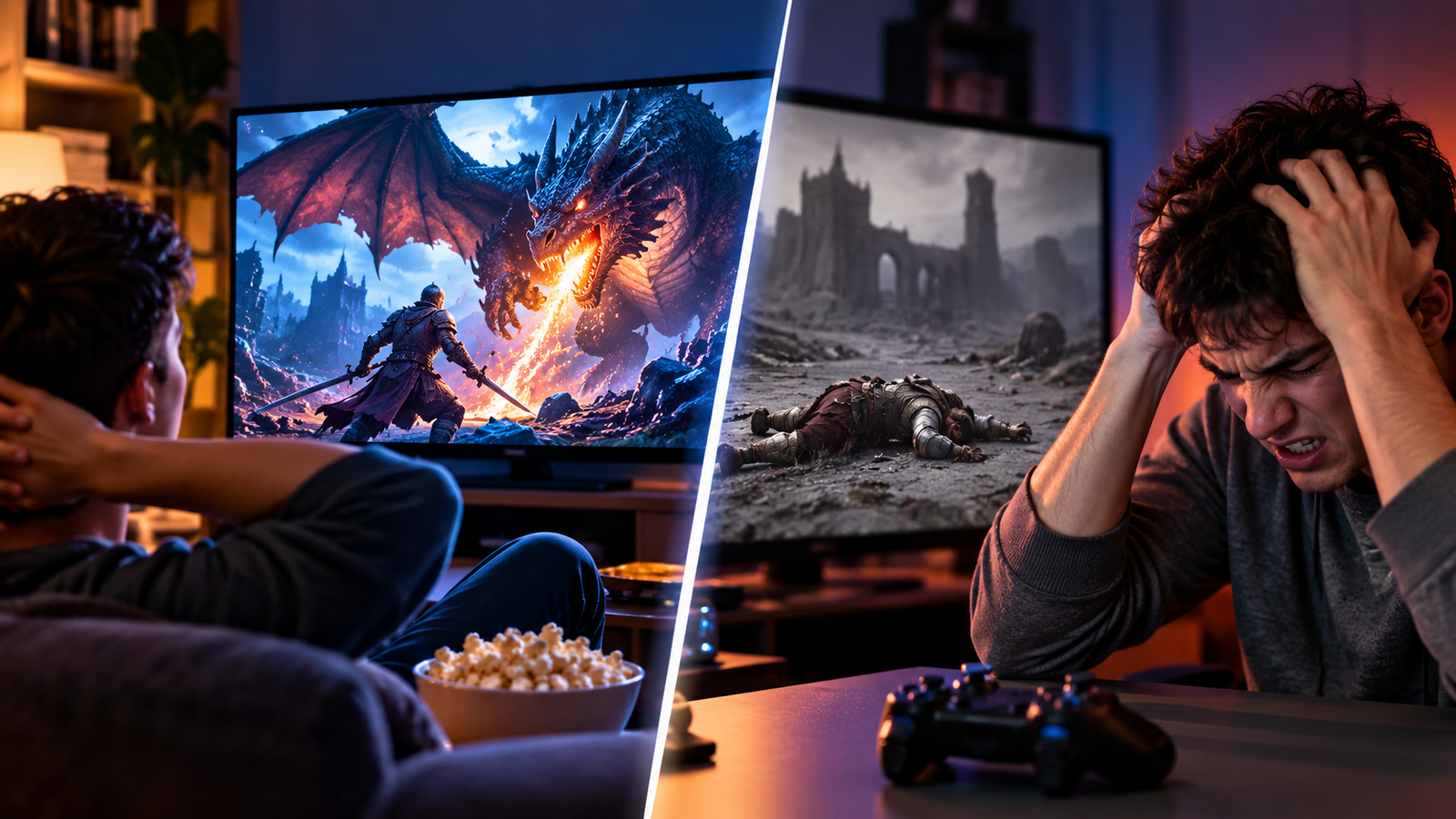
Video games are made for play, but that does not mean every game feels best when we hold the controller. Some games can feel far more fun when we watch another person play them. This may sound strange at first. After all, games are an active form of entertainment. The player makes choices, controls the character, solves problems, and shapes the result.
Yet watching a game can offer a very different kind of fun. A viewer can enjoy the story, skill, humor, drama, and surprise without the stress that comes with control. A difficult game may feel tiring when we play it, but exciting when we watch an expert handle it.
The reason is simple: playing and watching ask different things from us. Playing gives us control and personal achievement. Watching lets us enjoy the result without the same effort.
Watching Removes the Hard Work
When we play a game, we have to do a lot more than simply enjoy it. We must learn the controls, understand the rules, make choices, manage resources, and deal with mistakes. Some games also ask us to repeat the same task many times before we can move ahead.
A viewer does not have to deal with these problems. They can sit back and focus on the parts that matter most to them. If a strategy game has a complex system, the viewer can enjoy a smart move without spending hours learning every rule.
This creates a strange but useful difference. A game can be hard to play but easy to enjoy as a show. The effort stays with the player, while the viewer gets the result.
Viewers Can See the Bigger Picture
A player often has a narrow view of a game. Their attention stays on the next move, the next enemy, or the next problem. They may not know what is about to happen.
A viewer has more distance. They can notice details that the player may miss. In a competitive game, for example, a viewer may see that one player has set a trap for another. The player may only notice the danger after it is too late.
This is one reason professional games can be so exciting to watch. Skilled players make choices that may seem simple at first. With a closer look, the viewer can see the thought behind each move. Position, timing, prediction, and strategy can turn a basic match into a tense contest.
Failure Feels Different
Failure has a very different effect on a player and a viewer.
When we fail in a game, the mistake belongs to us. We may lose progress, repeat a level, or face the same challenge again. After several failures, the fun can fade and frustration can take its place.
When another person fails, the same event can feel funny or exciting. A streamer who falls from the same platform ten times may make an audience laugh. The viewer has no personal loss, so the mistake becomes part of the entertainment.
This distance can make failure more enjoyable. The viewer can laugh at a bad choice, feel tense during a close escape, and cheer when the player finally succeeds.
Some Games Work Better as Stories
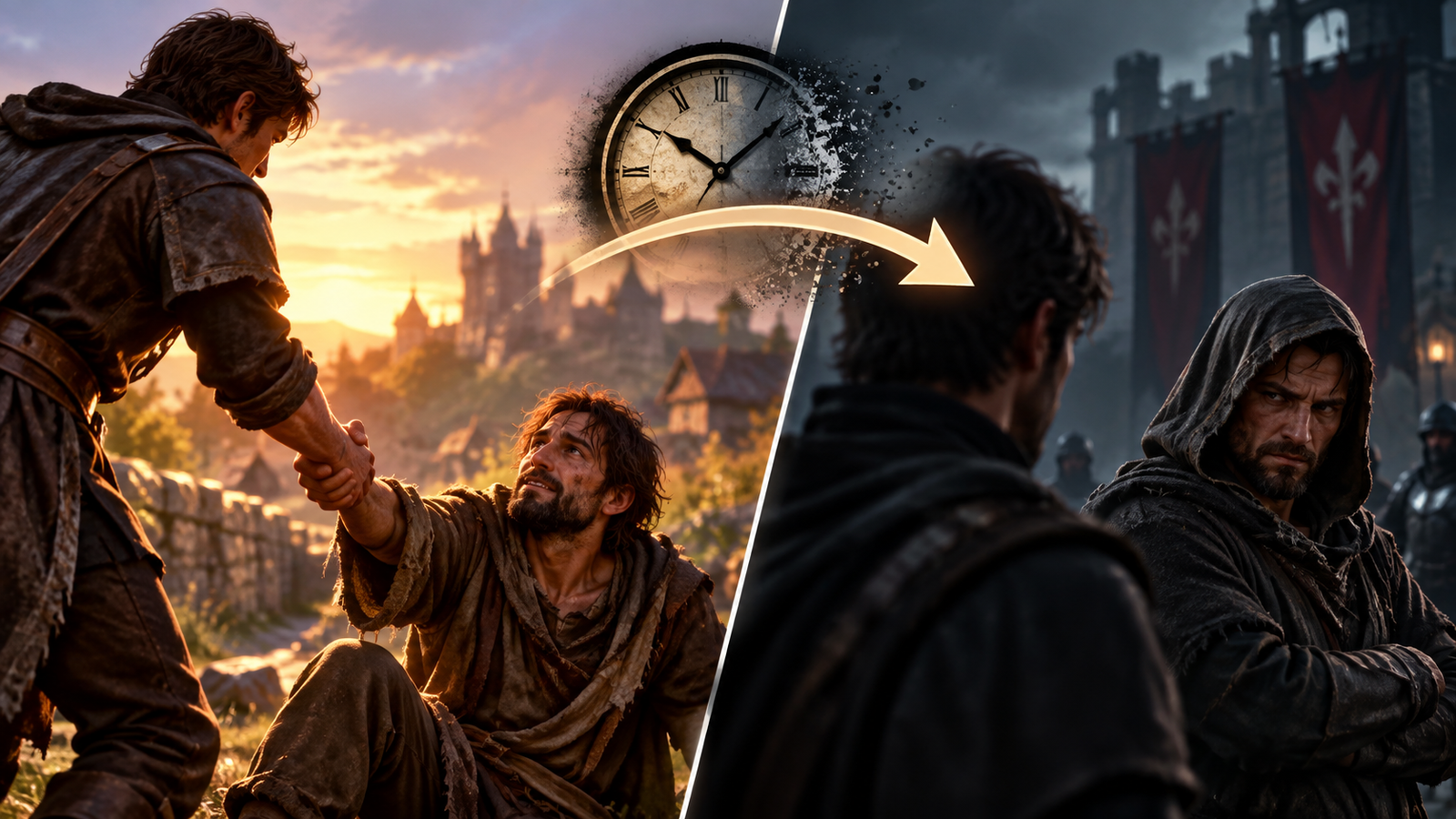
Some games have strong worlds, characters, music, and dramatic scenes. Their greatest appeal may come from the story rather than the act of control.
A person may love the world of a game but dislike its combat system. They may enjoy the characters and plot but find the controls slow or difficult. In such a case, watching someone else play can offer the best parts without the parts that cause frustration.
This is similar to the difference between watching a sport and playing it. A person can enjoy a football match without ever wanting to play football. The same idea works with games. We can enjoy what a game creates without enjoying every part of the process that creates it.
The Person Behind the Game Matters
A game can become much more fun when another person adds their own personality to it. This is especially clear with streamers and video creators.
A streamer can add jokes, reactions, stories, and comments. Their response to a surprise can be just as entertaining as the event itself. A scary game, for example, may become funny when the player reacts in an unexpected way.
At that point, the audience is not only watching a game. They are also watching a person deal with the game. The personality of that person can create a social experience around something that was once a single-player activity.
This helps explain why even simple games can attract large audiences online. The game provides the situation, while the player provides another layer of entertainment.
Skill Can Be More Fun to Watch
Some games have a very high skill level. Fighting games, MOBAs, RTS games, and speedrunning can take years to master. A new player may understand the basic rules but still need a huge amount of practice before they can perform at a high level.
This creates an interesting gap between understanding a game and mastering it.
A viewer can enjoy that high level without making the same investment. They can watch a professional player make a difficult move and understand that something special has happened, even if they cannot perform the move themselves.
It is similar to watching a chess grandmaster. A person does not need to play chess at that level to understand that a clever move has taken place. The skill itself becomes part of the entertainment.
Surprise Makes Games Great to Watch
Games can also create moments that no one expects. A careful plan can fail because of one small mistake. A character can fall at the worst possible moment. A strange physics problem can create a funny result. A player can win when defeat seems certain.
These moments are valuable because the viewer does not know what will happen next.
A player may have a clear plan, but the game can respond in an unexpected way. That uncertainty creates suspense. The viewer wants to know whether the plan will work, whether the player will escape, or whether everything will fall apart.
This sense of surprise can make a game feel almost like a live sport.
Some Games Are Better to Play
The opposite is also true. Many games lose a large part of their appeal when someone else plays them.
Games with strong controls, exploration, personal progress, and discovery often depend on direct control. The fun comes from making the choice yourself. Finding a hidden area feels special because you found it. Solving a puzzle feels good because your own mind solved it.
Watching another person do these things can remove much of that feeling.
This is why personal agency matters so much. Some games are built around the idea that the player should feel responsible for what happens. In such cases, watching can never fully replace play.
The Best Games Can Do Both
The most successful games as spectator experiences often work well in both forms. Competitive fighters, survival games, party games, speedrunning games, and sandbox games can create moments that feel great during play and great from the outside.
These games often create stories through player choices. A match can produce a close victory. A survival game can create an unexpected disaster. A sandbox game can lead to a strange situation that no one planned.
The player gets the excitement of control, while the viewer gets the excitement of observation.
Conclusion
The idea that a game can be more fun to watch than to play is not as strange as it first seems. Playing and watching offer two different experiences.
Playing gives us control, personal progress, challenge, and the satisfaction of success. Watching removes much of the effort and lets us focus on skill, story, humor, drama, and surprise.
Sometimes we want to be the person who makes the move. At other times, we simply want to see what happens when someone else makes it.
That is the special strength of games as a form of entertainment. They can work as an activity and as a show. We can enjoy the challenge ourselves, or we can sit back and watch another person face it. In both cases, the same game can create a completely different kind of fun.