









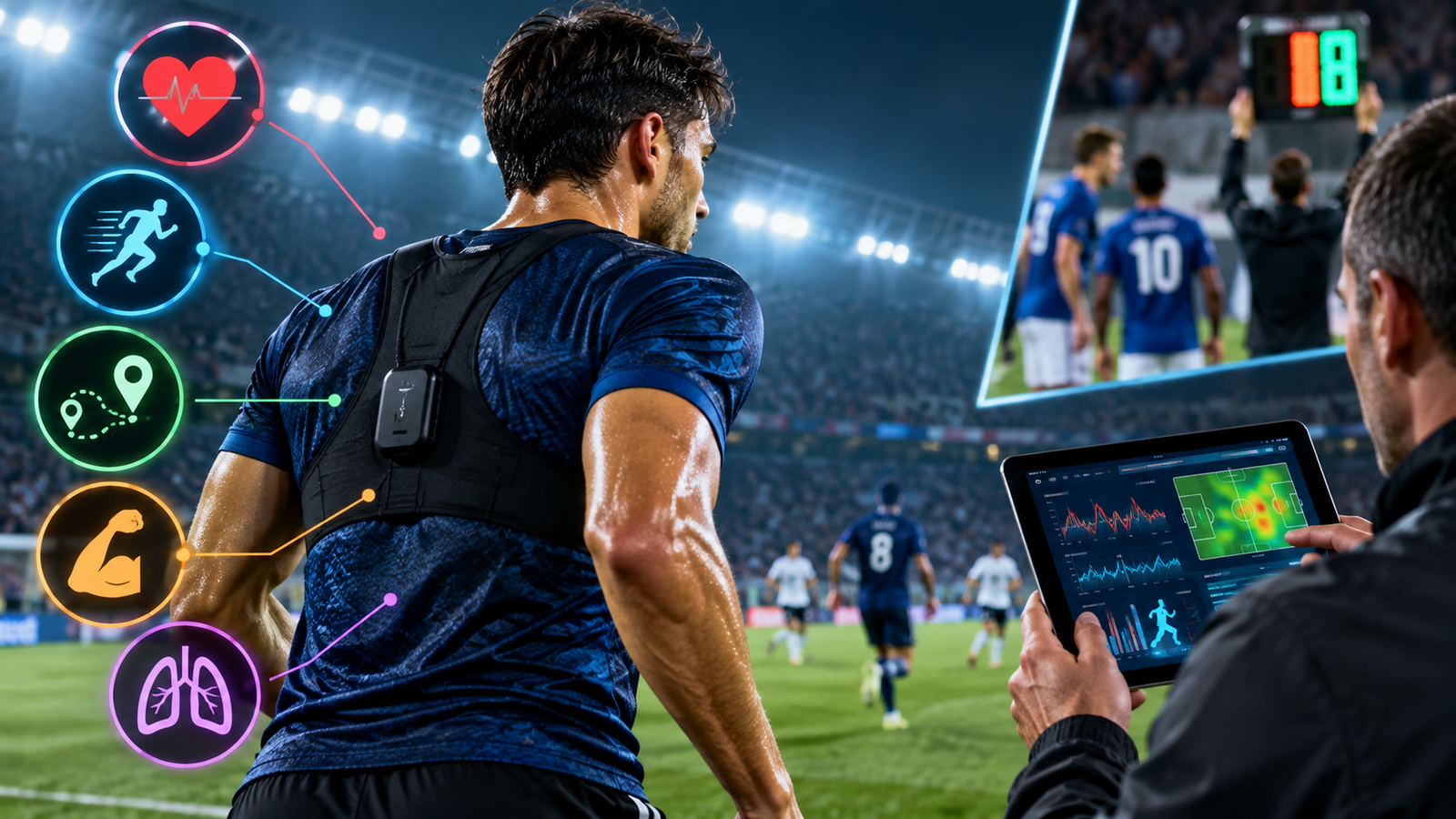
Sports have changed a lot with the use of technology. In the past, coaches mostly depended on what they could see during a game. They watched a player’s speed, movement, body language, and overall performance. Today, wearable devices can give them much more information.
Small sensors worn by athletes can track heart rate, distance, speed, acceleration, workload, and other physical measures. Some systems can also track muscle oxygen levels and sleep. This gives coaches, trainers, and medical staff a clearer view of what is happening to an athlete during a game.
This information can affect decisions such as when to make a substitution, how much work a player should do, and whether an athlete should stay on the field. The main value of wearable data is simple: it can show things that are not always easy to see from the sidelines.
What Wearable Data Can Tell Coaches
Wearable devices can collect two main types of information: internal workload and external workload.
External workload shows the physical work done by an athlete. This can include total distance, running speed, number of sprints, acceleration, deceleration, and impacts. GPS devices and accelerometers are often used for this purpose.
Internal workload shows how the athlete’s body responds to that physical work. Heart rate is one important measure. A player may cover the same distance as another player but have a very different heart rate and physical response.
This difference matters. Two athletes may appear to have done the same amount of work, but one may have a much greater physical strain. Wearable data can help staff see this difference.
Better Decisions About Substitutions
Substitutions are one of the clearest areas where wearable data can help.
Imagine a football player who has covered a very large distance and completed many high-speed sprints. The player may still look active, but the data can show that the physical workload has become very high.
A coach can use this information along with what they see on the field. If the player also shows signs of fatigue, a substitution may become a more serious option.
This does not mean that a wearable device tells the coach when to make a substitution. Instead, it gives the coach another source of information. The final choice can also depend on the score, the time left, the player’s role, the opponent, and the tactical plan.
Understanding Fatigue
Fatigue can be difficult to judge from the outside. A player may look fine but have a high physical load. Another player may appear tired even after a lower amount of work.
Wearables can help staff compare physical work with the body’s response. Heart rate can show exercise intensity, while GPS and accelerometer data can show movement and workload.
This can give coaches a better idea of how much stress a player has faced during a match. Research on wearable sensors has shown that internal and external workload data can help staff assess fatigue and fitness in real time.
The information can also help with player rotation. A coach may decide that a tired midfielder should take fewer high-intensity actions while another player takes on more defensive or pressing work.
More Personal Tactical Decisions
Not every player responds to a game in the same way. A defender, midfielder, and striker can have very different physical demands. Even two players in the same position may respond differently.
Wearable data can help coaches understand these differences.
For example, one midfielder may have a high workload because of repeated sprints and defensive runs. Another midfielder may have covered less distance but still have a high heart rate. Their tactical needs may therefore be different.
This allows coaches to make decisions based on the individual athlete rather than treating every player in the same way.
Helping With Injury Management
Wearable data can also have a role in injury prevention and recovery. Coaches and medical staff can track changes in workload and movement over time. If an athlete has a large change from their normal pattern, staff may take a closer look.
However, wearable data should not be treated as a perfect injury prediction tool.
A 2020 review found that GPS-based distance measures were common in workload research, but differences in injury definitions, workload measures, and study quality made it difficult to draw strong conclusions about the exact relationship between workload and injury.
This is why medical staff need to combine wearable data with other information. A player’s injury history, physical examination, training record, and personal feedback can all matter.
Real-Time Information During a Match
One major benefit of modern wearable technology is access to data during competition. Older methods often focused on analysis after a game. Modern systems can provide information much closer to real time.
A wearable system can collect data, send it to a central platform, and turn it into information that coaches and staff can understand. This can create a simple decision process: data comes from the player, staff review it, and the information becomes one part of an in-game decision.
This can be especially useful when a game becomes intense. A coach may not notice every sprint, acceleration, collision, or change in physical output. A sensor can record these events throughout the match.
Heart Rate Adds Another Layer
Movement data only tells part of the story. Heart rate can add information about how hard the athlete’s body is working.
Heart rate is an important measure of exercise intensity and physical effort. Wearable systems can record heart rate through chest sensors or optical sensors. Some sports devices can also measure other body signals.
This information can help staff understand the difference between external work and internal response. A player who has not covered a huge distance may still have a strong physical response because of the nature of the match.
Some wearable systems can also measure muscle oxygen saturation and sleep. These measures can give staff more information about recovery and physical condition.
The Data Still Needs Human Judgment
More data does not always mean better decisions.
A wearable device can produce large amounts of information, but someone still needs to understand what that information means. Different devices can measure the same factor in different ways. A number on a screen also has little value if coaches do not know how it relates to that particular athlete.
A 2024 survey of 72 team-sport practitioners found that 87.5% used wearable data to help decide training plans. However, only 50% said they used the data to influence decisions during competition.
This shows an important point. Wearable technology is already useful for training, but its role in actual competition decisions is still developing.
The Future of In-Game Decisions
The future may bring even more detailed athlete data. Smaller sensors, better batteries, stronger data systems, and improved analysis can make wearable technology easier to use during games.
Artificial intelligence may also help staff turn large amounts of raw data into simple information. Instead of asking coaches to study hundreds of numbers, future systems may highlight unusual changes in workload or physical response. Research has already examined the role of machine learning and artificial intelligence in turning wearable data into useful sports decisions.
Still, technology should support human judgment rather than replace it. A game has many factors that a sensor cannot fully understand. Team tactics, the score, the opponent, player confidence, and the importance of a particular moment all matter.
Conclusion
Wearable data is changing the way sports teams understand athletes. GPS can show distance and speed. Accelerometers can record movement and impacts. Heart rate can show the body’s response to exercise. Other sensors can provide information about muscle oxygen, sleep, and recovery.
Together, these measures can give coaches a clearer picture of what is happening to a player during a game.
The biggest change is not that technology makes decisions for coaches. Instead, it gives them more information before they make those decisions. A coach can combine data with experience, match conditions, tactics, and direct observation.
When used in the right way, wearable technology can help teams understand fatigue, manage workload, support player health, and make more informed in-game choices. Its value comes not from the amount of data it produces, but from how well that data can support a real decision at the right moment.
ALSO READ: Why Some Games Are More Fun to Watch Than to Play