









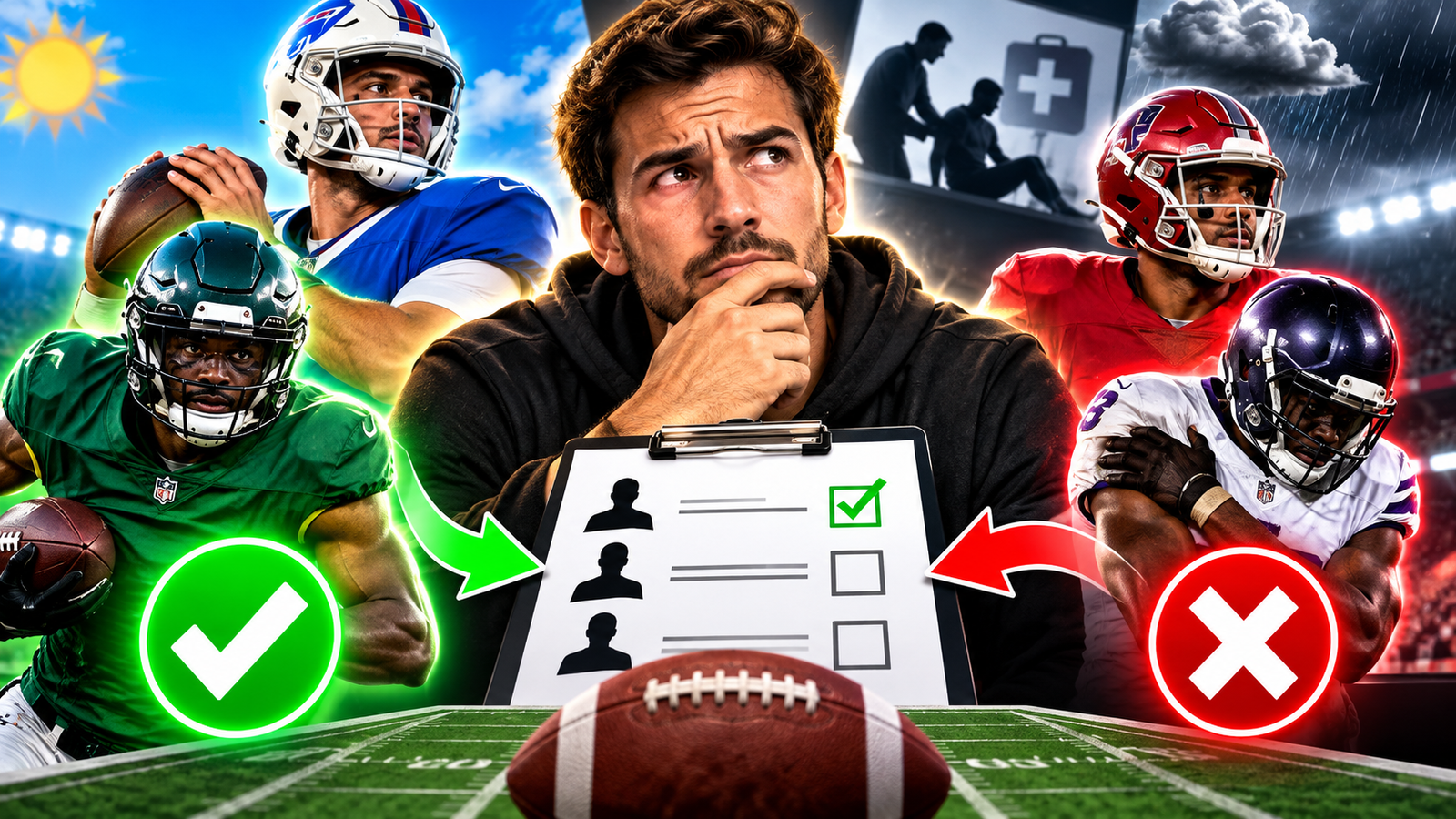
Fantasy football can feel simple at first. You pick your team, set your lineup, and wait for the games to start. But one choice before game day can have a big effect on your week.
That choice is your final lineup check.
A player may look like a clear starter on Monday. By Sunday, the situation can change. An injury may appear. A coach may change his plan. The weather may turn bad. A backup player may get a bigger role.
This is why your work should not stop after you set your team. A final check before game day can help you avoid a bad start and give your team a better chance to score more fantasy points.
Check Your Players One More Time
The first thing to do is simple. Look at every player in your starting lineup.
Do not only check the big names. Check every position.
A star player can still have a poor fantasy day if he has a tough matchup or carries an injury. At the same time, a less famous player may have a great chance if his role has grown.
Look at the latest team news. Check if each player is healthy and expected to play. If there is any doubt, take that news seriously.
You do not need to make a huge change every week. In many cases, your first lineup choice may still be the right one. The final check is there to catch new facts, not to make you panic.
Injuries Can Change Everything
Injuries are one of the biggest factors in fantasy football.
A player who misses practice during the week may face a late decision before the game. A player with a limited role may also have fewer chances to score points.
You should also look at injuries around the player.
A running back may lose value if his offensive line has several key injuries. A wide receiver may have a tougher day if his quarterback is not available. A quarterback may have less value if his main targets are out.
The opposite can also happen.
If a key player is ruled out, another player may get more work. A backup running back could get more carries. A second wide receiver could see more passes. A tight end could get extra targets.
The key is to watch the role, not only the name.
Look at the Matchup
The matchup matters because not every defense gives up the same type of fantasy points.
A strong running game may face a defense that has trouble against the run. A wide receiver may face a weak secondary. A quarterback may face a defense that allows plenty of passing yards.
This does not mean you should always start a player because his matchup looks easy.
Football has too many factors for one number to tell the whole story. Still, the matchup can help you make a close call when two players look similar.
For example, if you have two wide receivers with similar roles, the player with the better matchup may deserve more attention.
Do Not Ignore Player Form
Recent form can also help.
Look at what a player has done in his last few games. Has he seen more touches? Has his target share gone up? Has he scored more fantasy points? Has his role changed?
Past results do not guarantee what will happen next. But they can show how a team has used a player.
A running back who has moved from a small role to a larger one deserves attention. A receiver who has become a regular target near the goal line may also have extra value.
Try to focus on opportunity rather than one big fantasy score.
A player can score twice in one game because of two unusual plays. That does not always mean he will repeat that result. A player who gets steady touches and targets may offer a more useful base.
Watch the Weather
Weather can matter more than many fantasy managers expect.
Heavy rain, strong wind, snow, or very cold conditions can affect a game. Bad weather may make passing harder. Strong wind can be a problem for kickers and quarterbacks.
A normal forecast does not mean you need to change your lineup. But severe weather can be a reason to review your options.
You should also remember that weather does not affect every player in the same way.
A strong running game may remain useful in bad conditions. Short passes can also have value when deep throws become harder.
Use weather as one part of your decision rather than the only reason for a change.
Pay Attention to Late News
The final hours before a game can bring useful information.
Coaches may speak to the media. Teams may release injury updates. Beat reporters may share details about player roles. A player who looked uncertain earlier in the week may become a clear starter.
This is why the time before kickoff matters.
You do not need to check news every few minutes. That can create more stress than value. Instead, check close to the start of each game, especially when you have a player with an injury concern.
If your player has a late game, remember that you may have fewer replacement choices after the early games begin.
Think About Your Bench
Your bench is more important than it may seem.
Before you lock your lineup, check who sits behind your starters. If one of your starters has a late kickoff and carries some risk, make sure you have a backup option who can still play later.
This simple habit can save you from a difficult situation.
If your questionable player gets ruled out after your other options have already played, you may have no way to replace him. A little planning can prevent that problem.
Your bench does not need to be full of famous players. It needs to give you useful choices when something changes.
Do Not Chase Last Week’s Score
One common mistake is to chase a player after one huge game.
Fantasy managers often see a player score a lot of points and assume the same result will happen again. That can lead to a rushed lineup change.
Instead, ask why the player had that result.
Did he get more touches? Did another player leave the game? Did he score on a long play? Did the team change its plan?
If the reason for the big score is unlikely to repeat, you should be careful.
One game can provide useful information, but it should not control your entire decision.
Trust Your Process
The final lineup check should make you more prepared, not more nervous.
Once you have checked injuries, matchups, player roles, weather, and late news, make your choice and move on.
You will never know exactly what will happen in a football game. A player can have a great matchup and still score very few points. Another player can face a tough defense and have a huge day.
That is part of fantasy football.
Your goal is not to predict every result. Your goal is to make a smart choice with the information you have before the game starts.
The Final Check Before Kickoff
Game day gives you one last chance to improve your lineup.
Check your starters. Check injury news. Look at player roles. Review the matchups. Watch major weather concerns. Make sure your bench gives you backup choices.
Most of all, do not make a change just because you feel nervous.
A good fantasy decision comes from useful information and a clear reason. If the facts support your original lineup, keep it. If new information changes the situation, make the move.
That final decision may take only a few minutes, but it can save you from a lineup mistake and give your fantasy team the best chance to have a strong week.