







A game does not need a huge map to feel huge. It does not need endless roads, giant cities, or massive mountains on the screen. Sometimes, all it needs is the right sound.
Sound has a special role in games. Your eyes only show you what sits inside the frame. Your ears can tell you about things far beyond it. You may hear a door close in another room, a deep roar from far away, or the soft sound of wind across a large open area. Your mind then creates a picture of the space.
This is one of the most useful tricks in game sound design. Sound can make a small digital space feel much larger than it really is.
Your Ears Can See Beyond the Screen
Think about a dark room in a horror game. You cannot see what sits behind the wall, but you may hear footsteps on the other side. The sound gives the room another layer.
Now imagine those footsteps have a lot of echo. They sound as if they come from a large hallway. Your brain does not need to see that hallway. The echo gives you enough information to imagine it.
This works because our brains use sound to understand space in the real world. A small room has a different sound from a large hall. A narrow tunnel has a different echo from an open field. Game audio can copy these natural clues.
The result is simple but powerful. You hear a bigger world than the screen can show.
Echo Creates a Sense of Space
One of the strongest tools for this effect is reverb, which is the sound that remains after a noise takes place.
Clap your hands inside a small bedroom and the sound ends quickly. Clap inside a large empty building and the sound may bounce around for much longer. Those extra reflections tell your brain that the space is large.
Game designers use this idea with care. A gunshot inside a tiny room may sound sharp and short. The same gunshot inside a huge warehouse may have a long tail.
That small change can completely alter how the player sees the same action.
A cave can feel deep because a voice comes back with a long echo. A castle can feel grand because footsteps travel across its stone halls. A huge underground chamber can feel endless even if the player can only see a small part of it.
The player does not need a giant view. The sound does part of the work.
Distance Makes the World Feel Real
Sound also helps the player understand distance.
A nearby explosion should sound loud and clear. A distant explosion should sound softer and less direct. The difference tells the player that something happened far away.
This can work with many sounds. A dog bark may come from a distant street. A train may pass somewhere beyond a hill. Thunder may roll across the sky. A large machine may hum from deep inside a building.
These sounds add space outside the player’s direct view.
This is especially useful in open-world games. A city can feel alive because you hear traffic several streets away. A forest can feel wide because birds, animals, and distant sounds come from different directions.
The player starts to feel that the world continues beyond the visible area.
Silence Can Make a Space Feel Huge
One of the most surprising tools in sound design is silence.
When a game removes most sound, your brain starts to focus on every small noise. A single footstep may suddenly feel important. A faint wind sound may suggest a massive empty area.
Silence can also create a strong contrast.
Imagine a player walks through a loud, crowded city. Cars pass, people talk, machines hum, and music fills the area. Then the player enters an empty underground tunnel. Most of those sounds disappear.
The sudden quiet makes the tunnel feel isolated.
That space may not be physically large at all. Yet the lack of sound can make it feel deep, lonely, and unknown.
Low Sounds Add Weight and Power
Low-frequency sounds are another major part of this trick.
Deep sounds are often linked with large objects and powerful events. A giant door may have a deep rumble. A huge creature may produce a low growl. A spaceship may have a heavy engine sound. An earthquake may come with a deep vibration.
These sounds can make an event feel much larger than the visual effect alone.
This is why a giant monster may feel less impressive if its sound is weak. The model can look enormous, but without a strong audio response, the brain may not feel the same sense of scale.
Sound gives the visual size emotional weight.
Direction Helps Build a Larger World
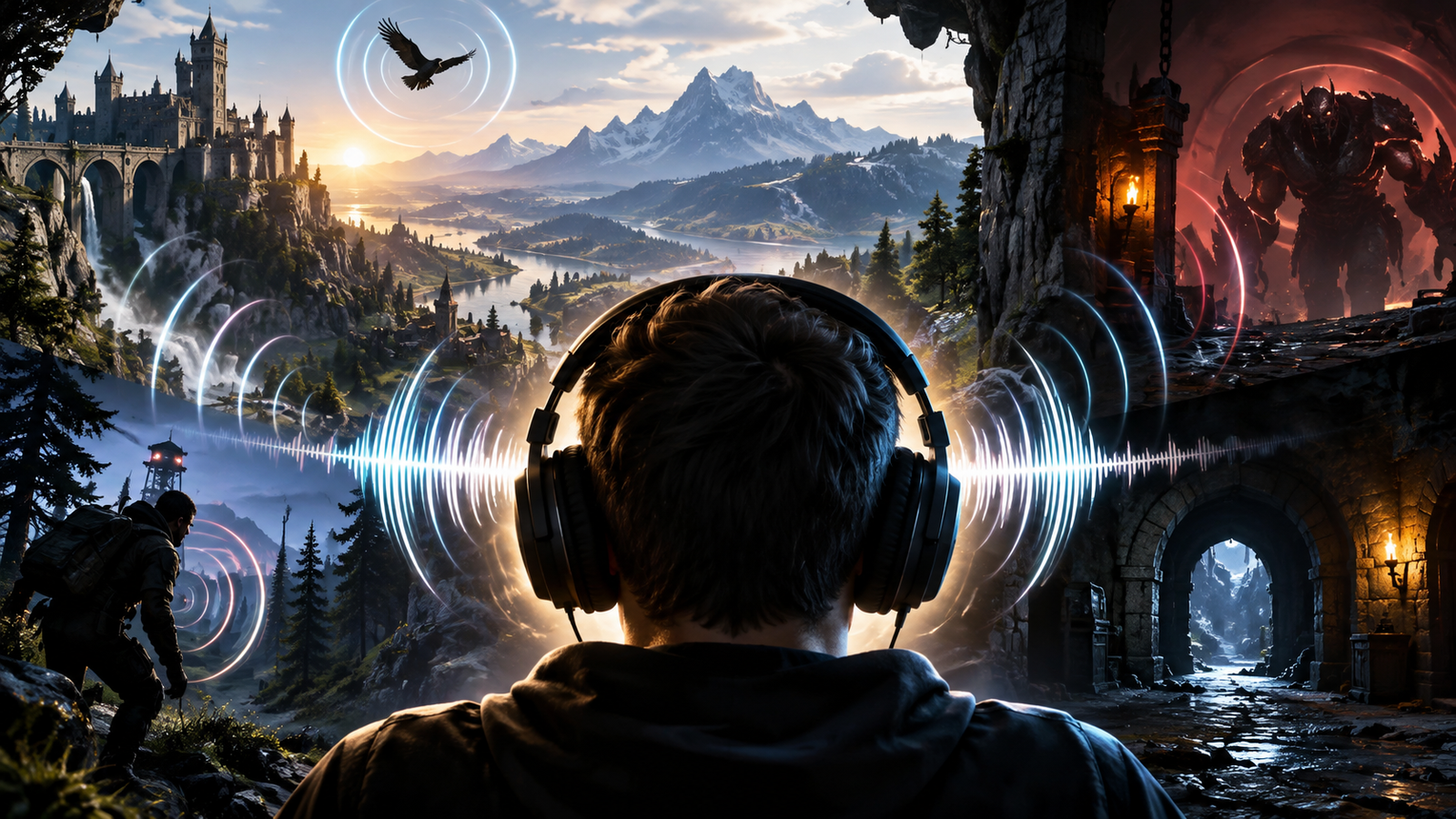
Modern games can also place sounds around the player.
You may hear a helicopter above you, footsteps behind you, water to your left, and an explosion far ahead. Each sound gives you another point in the virtual space.
This creates a mental map.
Even if the player cannot see these objects, the audio tells them that they exist. The world begins to feel three-dimensional rather than flat.
This is one reason good headphones can change the way a game feels. Small differences in direction, distance, and volume become easier to notice.
The Trick Is Not Just Loud Sound
A common mistake is to think that bigger sound means louder sound.
It does not.
If every sound is loud, nothing feels special. A quiet footstep can make a later explosion feel much more powerful. A soft wind can make a sudden roar feel enormous.
Good sound design uses contrast.
The game may move from silence to noise, from a dry sound to a long echo, or from a close sound to a distant one. These changes give the player clues about size and distance.
The trick is not to make everything sound big. It is to make the right sounds feel big.
Sound Can Suggest Things You Never See
Perhaps the most useful part of this technique is that sound can suggest events that the game never shows.
A designer does not need to create a giant army on screen. Distant voices, footsteps, metal sounds, and movement can suggest that many people are nearby.
A game does not need to show an entire storm. Strong wind, rain, thunder, and distant rumbles can make the weather feel much wider than the visible scene.
This saves resources while also adding mystery.
The player’s imagination fills the gaps.
Why This Trick Works So Well
The human brain is very good at reading sound as a clue about the world. We use sound to judge distance, direction, size, material, and space every day.
Games take those familiar clues and place them inside a digital world.
That is why a good soundscape can make a simple room feel like part of a huge building. It can make a short tunnel feel endless. It can make a small forest feel like a vast wilderness.
The screen shows you one part of the world.
Sound tells you that there is more beyond it.
The Real Power of Game Sound
Great game sound design is not just about music, explosions, or realistic effects. It is about helping the player understand and feel the world.
Echo can suggest depth. Distance can suggest scale. Silence can suggest emptiness. Low tones can add weight. Direction can create a sense of space. Small sounds can hint at events far beyond the screen.
Put all of these ideas together, and a game can feel much larger than its actual map.
That is the real trick.
You do not have to show the whole world to make players believe it is there. Sometimes, you only have to let them hear it.
ALSO READ: Why Touches and Targets Can Mislead Fantasy Managers