








Most people play games because they want to win. A win feels good. It proves that your plan worked and your skill was enough. But some of the most addictive games use a strange idea: they make losing feel like a reason to play again.
This does not mean that players enjoy every loss. A bad loss can make someone close the game at once. The key is what the game does after failure.
A smart game can make a loss feel useful. It can show you how close you were, what went wrong, or what you can do better next time. The player then thinks, “I almost had it. One more try.”
That simple thought can keep a player at the game for hours.
A Loss Does Not Have to Feel Like the End
In many games, a loss means the end of an attempt. But it does not have to mean the end of progress.
A player may lose a battle but gain experience. They may fail a level but unlock a new item. They may fall in rank but learn a better way to deal with an enemy. The game gives the player something to take from the loss.
This changes the meaning of failure.
Instead of thinking, “I failed, so I wasted my time,” the player can think, “I failed, but now I know more than I did before.”
That small change has a huge effect. The player sees the next attempt as part of the same journey rather than a fresh start.
The Near-Miss Effect
One of the strongest tools in game design is the near-miss.
Imagine that a boss has one percent of its health left when it defeats you. You were almost there. You saw the end. You could almost taste the victory.
That type of loss can feel much more powerful than a total defeat.
The brain can focus on what was almost achieved. The player does not see the loss as proof that the goal is too hard. Instead, the player sees it as proof that the goal is possible.
The thought becomes simple: “I was so close last time.”
That feeling can push a player into another attempt at once.
Progress Makes Failure Easier to Accept
Good games often make sure that a player keeps some form of progress after a loss.
This may come through XP, unlocked skills, new gear, higher stats, story progress, or a better score. Even when the main goal remains unfinished, the player can see that the attempt had value.
This is important because people do not like to feel that their effort was wasted.
Suppose a player spends twenty minutes on a difficult level and loses at the end. If the game sends that player back with nothing, the loss may feel harsh.
But if the player earns XP, learns a new skill, and keeps a useful item, the same loss feels different.
The player lost the battle, but the player did not lose everything.
Fast Retries Keep the Desire Alive
Time also plays a major role.
If a player has to wait ten minutes after every loss, the desire to try again can fade. The mind gets time to move to something else.
Fast retries create a very different cycle.
You lose. You see what went wrong. You press a button. You try again.
There is almost no space between failure and the next chance.
This makes the loss feel less like a stop and more like a short pause. The player stays focused on the same goal.
A quick restart can turn one failed attempt into five, ten, or twenty attempts without the player noticing how much time has passed.
The Power of Uncertain Rewards
Some games also use rewards that do not arrive in a fixed pattern.
A player may know that the next match could give a rare item. A chest may contain one of many rewards. A difficult enemy may drop something useful, but the exact result is not certain.
This creates a sense of surprise.
The player cannot know exactly when the best reward will appear. That uncertainty can make each new attempt feel worth a try.
The important point is not simply the reward itself. It is the question in the player’s mind: “What will I get this time?”
That question can make repeated play much harder to resist.
Loss Aversion Adds More Pressure
There is another powerful force at work: loss aversion.
People often care more about losing something they already have than gaining something new.
Games can use this idea through ranks, streaks, limited resources, points, or other forms of progress.
A player who has reached a high rank may feel a strong need to protect it. A player with a long win streak may want to keep it alive. A player who has spent hours building a character may not want to give up.
This can make a loss feel personal.
The player is not only trying to win the next match. They are also trying to recover what they lost.
Mastery Makes Failure Useful
The deepest part of this system is mastery.
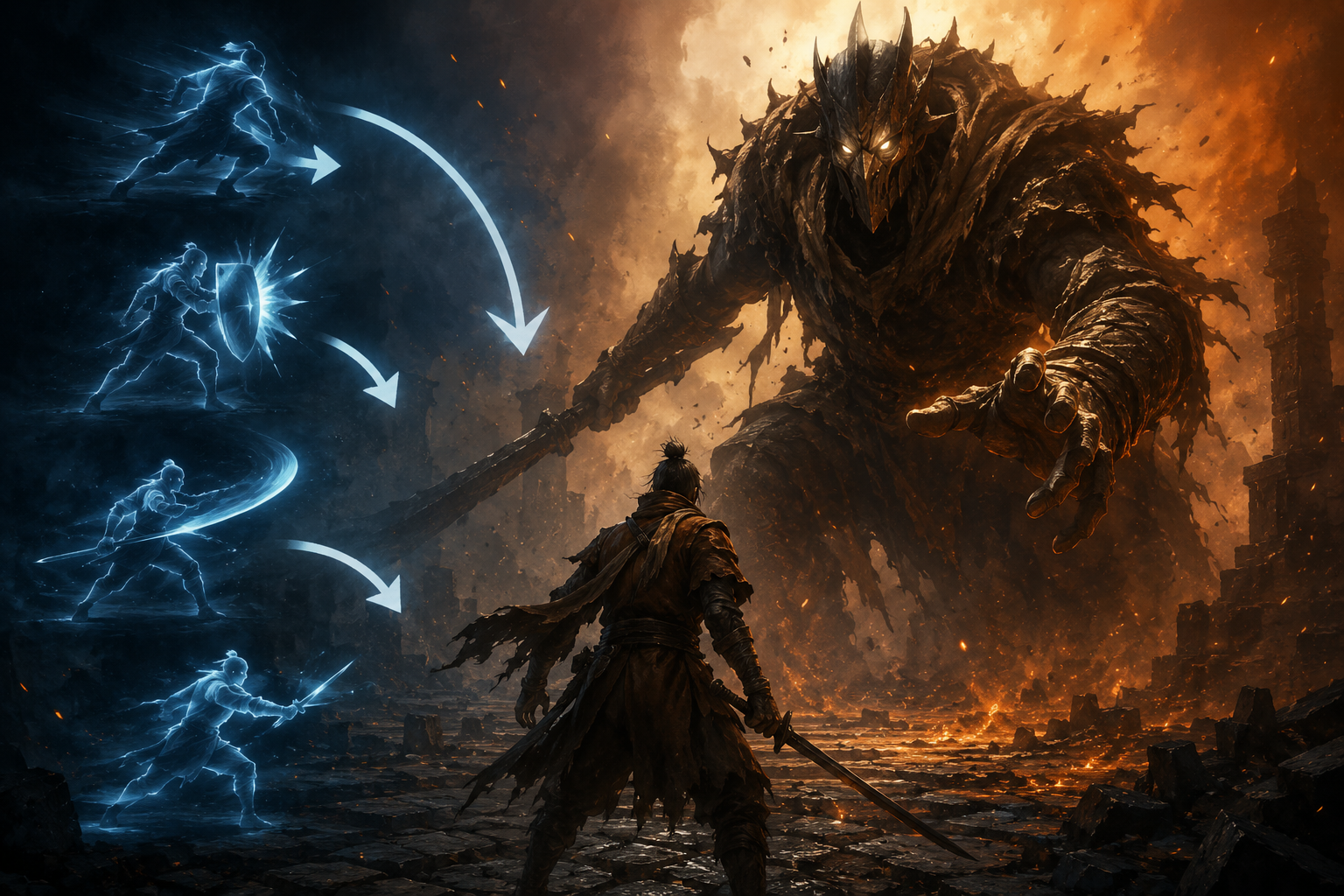
A difficult game can teach the player through failure. You may learn when an enemy attacks, where a trap appears, which move is safe, or which strategy does not work.
The next attempt then has a clear purpose.
You are not simply pressing the same buttons and hoping for luck. You are using new knowledge.
This creates a strong cycle:
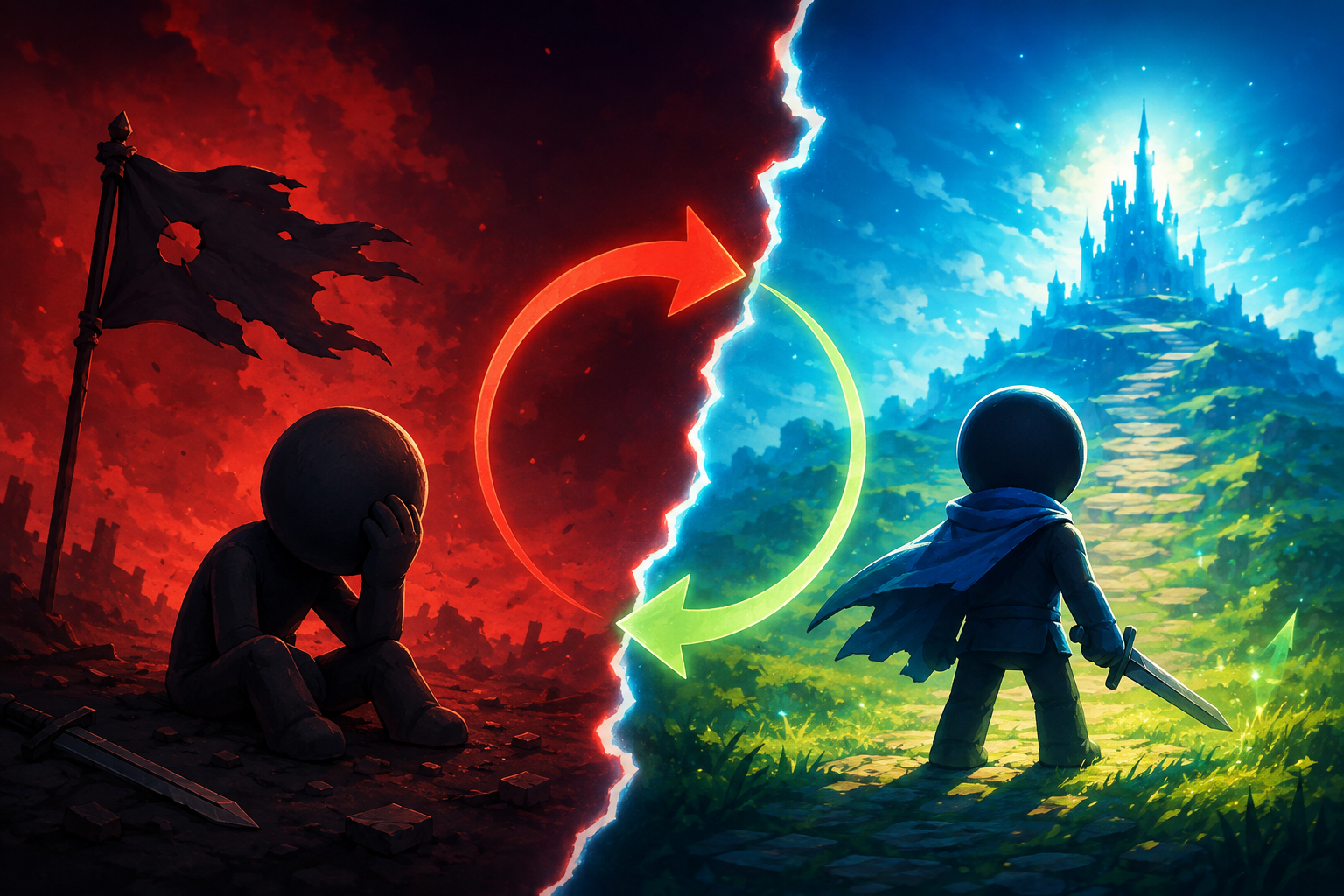
You lose. You learn. You change your plan. You try again. You get closer.
Each loss can add another piece to your understanding.
That is why some hard games can feel fair even when they defeat you many times. The player can see a path from failure to improvement.
Why “Almost” Can Be Better Than “Won”
A strange part of this design is that a player does not always need a win to feel satisfied.
If the player beats a difficult boss on the first try, the challenge ends very fast. There may be little reason to repeat that exact attempt.
But if the player gets close, the challenge remains alive.
The game creates an open question: “Can I do it next time?”
That question can be stronger than the reward from a single victory.
The player starts to chase the moment when all the lessons from past failures finally come together.
The Perfect Failure Loop
The best version of this mechanic does not simply punish players. It gives failure a purpose.
A strong game can make the player feel that every attempt has value. A loss may reveal a mistake, provide progress, offer a reward, or show that victory is within reach.
The player then returns with a better plan.
That is the real trick behind addictive loss loops. The game does not make failure itself fun. It makes failure feel unfinished.
The player thinks the next attempt could fix the last one.
And that is enough to press “try again.”
When This Mechanic Goes Too Far
There is also a darker side to this design.
If a game uses near-misses, uncertain rewards, loss pressure, and endless retries without care, the player may keep playing even after the fun is gone.
A good game should make the player feel that skill and choice matter. If the system relies only on pressure, fear of loss, or endless rewards, it can become tiring.
The strongest designs give players a real sense of control. Failure should teach something. Progress should feel meaningful. Another attempt should feel like a choice, not a trap.
Why Losing Keeps Us Playing
The most effective games understand a simple truth: people do not always quit because they lose. They quit when they feel that another attempt has no value.
Give the player a reason to try again, and failure can become part of the fun.
A near-miss says victory is close. Progress says the effort mattered. A fast retry keeps the player in the moment. An uncertain reward adds surprise. Loss aversion creates a reason to recover. Mastery gives failure a lesson.
Together, these systems create a powerful loop.
You lose, but you learn.
You fail, but you progress.
You fall short, but you get closer.
Then the game asks one small question:
“Want to try again?”
For many players, that is all it takes.
ALSO READ: WNBL Plans Big Rule Changes to Make Basketball More Exciting