









WWE has many match types. Some are simple. Some are built around weapons, cages, teams, or special rules. But one match type has a lot of room to grow in 2026. That match type is the Three Stages of Hell Match.
The idea is simple. Two wrestlers face each other three times in the same match. Each stage has different rules. A wrestler must win two stages to win the whole contest. This gives the match a natural story. It does not feel like three separate matches. It feels like one long fight that gets harder with each stage.
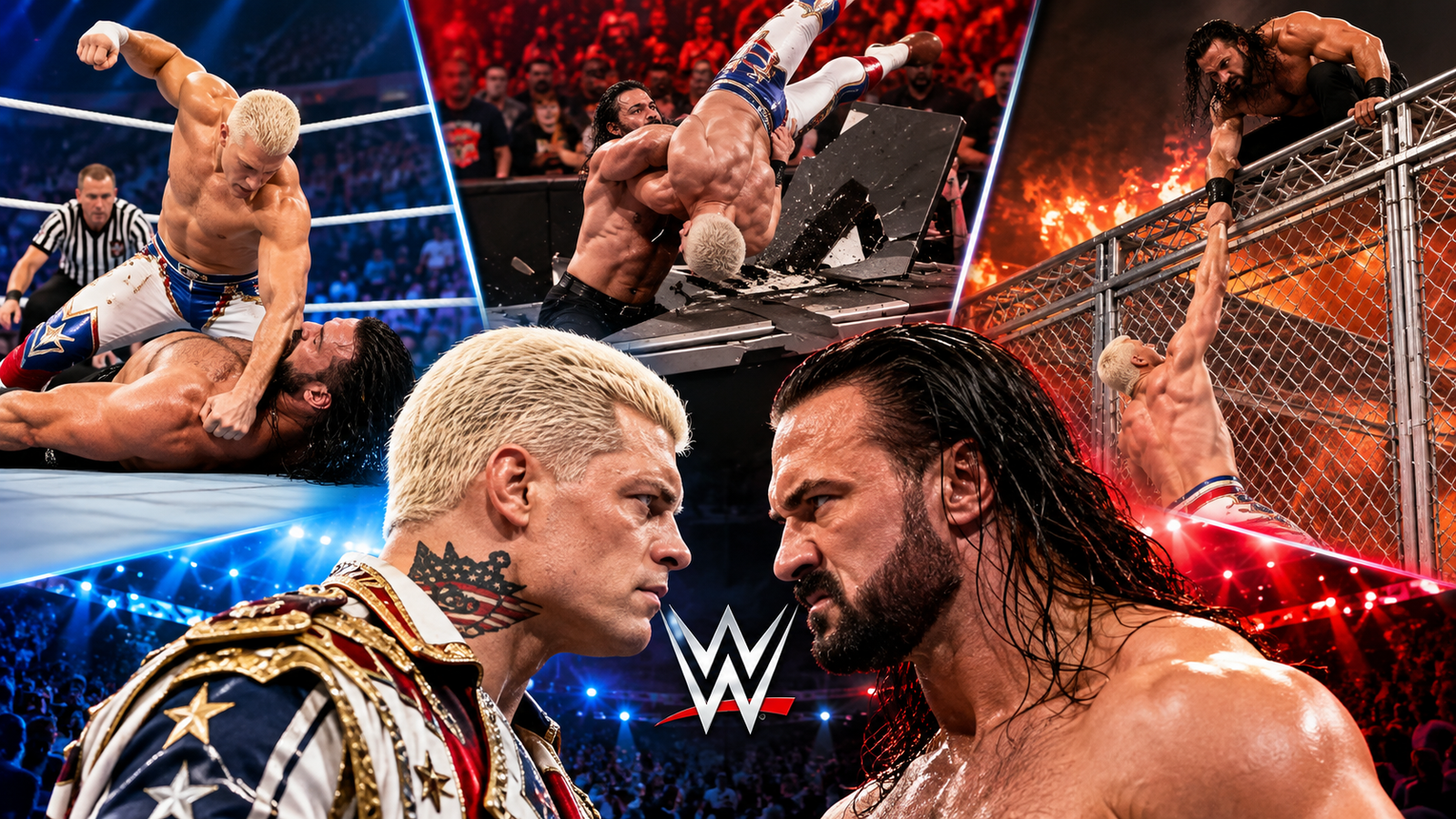
WWE already showed how much this format can offer in 2026. On January 9, Drew McIntyre faced Cody Rhodes for the Undisputed WWE Championship in a Three Stages of Hell Match on SmackDown in Berlin. The three stages were a traditional singles match, a Falls Count Anywhere Match, and a Steel Cage Match. McIntyre won the first fall, Rhodes took the second, and McIntyre won the final stage after Jacob Fatu returned and attacked both men. McIntyre then escaped the cage and won the title.
Why the Format Works
The biggest strength of a Three Stages of Hell Match is its sense of progress. A normal singles match has one clear start and one clear finish. A special match can add weapons or a cage, but the basic structure stays the same.
Three Stages of Hell gives WWE another option.
The first stage can focus on pure wrestling. The second can add chaos. The third can become the final test of both men. Each stage can have a different mood, which keeps the crowd interested.
This can also help a long feud. WWE does not have to tell the whole story with words. The match itself can tell part of the story.
One wrestler may win the first stage through skill. The other may fight back in the second stage. By the third stage, both men can look tired and hurt. The final part then feels like a true battle for survival.
That is what makes the format different from a normal No Holds Barred Match or Steel Cage Match.
The 2026 Cody Rhodes and Drew McIntyre Match
The Cody Rhodes and Drew McIntyre match gave WWE a strong example of this format.
The first stage was a traditional singles match. McIntyre won after a low blow behind the referee’s back and a Claymore Kick. The second stage was Falls Count Anywhere. Rhodes fought back and won that fall after a Cross Rhodes through the announce table.
The final stage was a Steel Cage Match. Both men had already gone through two hard falls, but neither could stop. McIntyre hit a superplex from the top of the cage. Rhodes later hit two Cross Rhodes, while McIntyre kept finding a way to survive.
Near the end, Jacob Fatu returned and attacked both men. Rhodes became distracted by Fatu, which gave McIntyre the chance to escape the cage and win the Undisputed WWE Championship.
The match also had a clear story before it took place. McIntyre and Rhodes had a bitter feud, with McIntyre even burning a personal picture of Rhodes and his late father, Dusty Rhodes, on SmackDown. WWE then revealed the three stages as a traditional match, Falls Count Anywhere, and a Steel Cage Match.
That made the match feel like more than a random collection of rules.
WWE Could Take It Further
The format can become even more useful if WWE adds one important idea: choice.
For example, the first stage could be a normal singles match. The second stage could be a No Disqualification Match. After that stage, the wrestler who wins could choose the rules for the final stage.
That small change could add a new layer to the story.
A strong wrestler could choose a Steel Cage Match. A technical wrestler could choose a Submission Match. A wrestler with a speed advantage could choose Falls Count Anywhere.
The winner would not only have to beat the other wrestler. They would also have to make the right choice at the right time.
That could make the final stage feel less predictable.
The First Stage Should Stay Simple
The first stage should not have too many rules. A basic singles match is a good choice because it gives the crowd time to understand the two wrestlers and their styles.
It also creates a clear base for the rest of the match.
If one wrestler wins the first stage, the other has to change the plan. That can create a natural shift in the story. The wrestler who loses has to take more risks because another loss would end the match.
This is one reason the format can work well for major title feuds.
The Second Stage Can Bring Chaos
The second stage is where WWE can raise the level.
Falls Count Anywhere is one option. No Disqualification is another. WWE could also use a Submission Match or another rule that fits the feud.
The key is that the second stage should feel different from the first. The audience should feel that the match has moved to another level.
The Cody Rhodes and Drew McIntyre match did this with Falls Count Anywhere. Their fight left the ring and moved through the arena. Rhodes eventually won the second fall with a Cross Rhodes through the announce table.
That type of change can make the second part feel fresh without making the match hard to follow.
The Final Stage Should Feel Special
The third stage is the most important part.
By this point, both wrestlers have already spent a lot of energy. The final rule should make the audience feel that there is no easy way out.
A Steel Cage Match is one strong choice. A Last Man Standing Match could also work. A Submission Match could fit a feud with a personal or technical story.
The final stage should also last long enough to matter. If it ends too fast, the first two stages lose some of their value.
The audience should feel that the wrestlers have reached the final part of the fight.
Other Match Types Still Have Value
Three Stages of Hell is not the only match type WWE could use more often.
An Iron Man Match could work well, especially with a 30-minute limit instead of the usual 60 minutes. A Submission Match could also fit wrestlers with very different styles.
A Gauntlet Match has value as well. WWE already uses the format, but it can become a strong way to build a wrestler before a major title match.
The Lumberjack Match can also work well in faction-based feuds. WarGames remains useful for major team stories, but it has more impact when WWE does not use it too often.
Falls Count Anywhere is another good choice, especially for large WWE arenas where the wrestlers can use the full space.
The Main Problem WWE Must Avoid
There is one major risk with Three Stages of Hell.
WWE cannot use it for every big feud.
If the match becomes common, the idea will lose its special feel. The format works best when the feud has enough history and emotion to justify such a large match.
It should feel like the end of something important.
The match also needs clear rules. Fans should know what each stage means and what each wrestler needs to do. Too many changes can make the match feel confusing instead of exciting.
A Match Built for Big Feuds
The real strength of Three Stages of Hell is that it can combine several match ideas into one story.
The first stage can show skill. The second can show toughness. The third can show who can survive when there is almost nothing left.
That makes it useful for world title feuds, personal rivalries, and major grudge matches.
The January 2026 match between Cody Rhodes and Drew McIntyre showed that WWE can still make the format feel important. McIntyre won the Undisputed WWE Championship after two different types of matches and a final Steel Cage battle. The result also helped create more story material for Rhodes, McIntyre, and Jacob Fatu after the match.
A Strong Option for WWE in 2026
WWE has a huge list of match types. The challenge is not to create a new rule every time. Sometimes, an older idea can work better with a fresh approach.
Three Stages of Hell is one of those ideas.
It gives WWE a clear beginning, middle, and end. It can mix wrestling with chaos. It can give both wrestlers moments to shine. Most of all, it can make a major feud feel like it has reached its final chapter.
The Cody Rhodes and Drew McIntyre match showed what the format can do. With better stage choices and less predictable rules, WWE could make it even stronger.
In 2026, the Three Stages of Hell Match does not need a complete redesign. It only needs the right story, the right wrestlers, and three stages that each add something new.
When those parts come together, the match can feel less like a collection of stipulations and more like one complete WWE story.
ALSO READ: The Fantasy Decision You Should Make Before Game Day