







The plank may look like one of the easiest exercises at the gym. You get into one position, stay there, and wait for the clock to move. There is no heavy weight, no fast movement, and no complex routine to learn.
Yet, the plank is also one of the core exercises that many people perform incorrectly.
A person can hold a plank for two minutes and still get less benefit than someone who holds a proper plank for 30 seconds. The reason is simple. The goal is not just to stay in the position for as long as possible. The real goal is to keep the body firm while the core works hard to stop unwanted movement.
Good plank form can make the exercise much more useful. Poor form can reduce the work on the core and may place extra stress on the lower back.
What Makes the Plank a Core Exercise?
The main job of the core is not only to help the body bend or twist. It also helps keep the spine and pelvis stable when the body faces force or movement.
A plank trains this ability.
When you hold a plank, your abdominal muscles must stay firm. Your glutes also need to stay tight, while your shoulders, back, and legs help keep your body in one strong line.
This is why the plank is better seen as an exercise that trains your body to resist movement. Your goal is to stop your hips from dropping, your back from arching, or your body from shifting out of position.
The longer you stay in a poor position, the less useful the exercise becomes.
Mistake One: Raising the Hips Too High
One of the most common plank mistakes is a very high hip position.
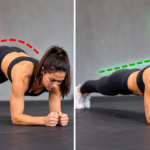
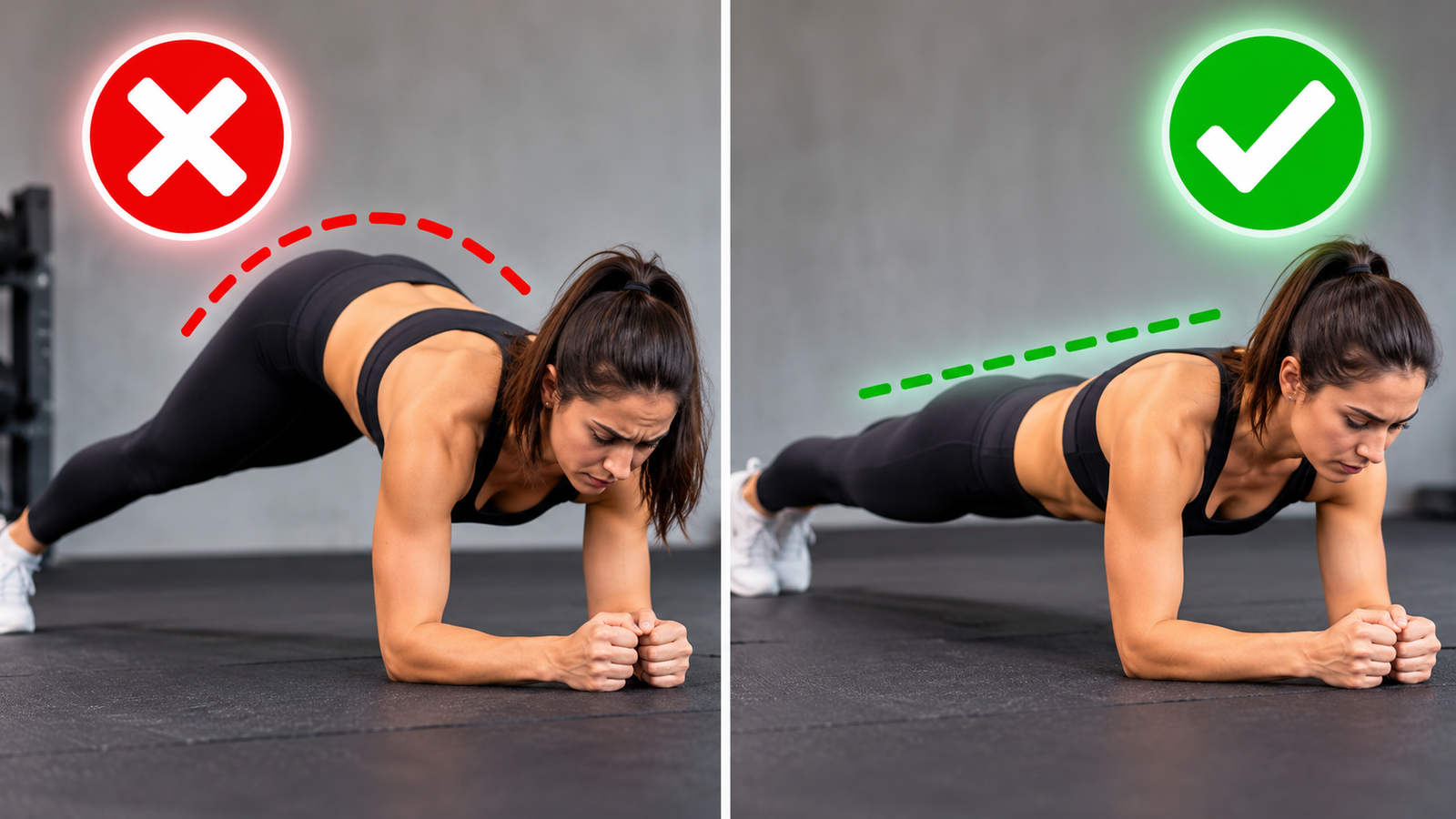
Instead of keeping the body in a fairly straight line, some people push their hips toward the ceiling. This can make the plank feel much easier because the core does not have to work as hard.
The position may still look like a plank, but the demand on the core can drop.
Your body should form a strong line from your head through your shoulders, hips, and legs. This does not mean that every person’s body will look exactly the same. Small differences are normal. The main goal is to avoid a large bend at the hips.
If your hips rise far above the rest of your body, reset your position and create more tension through your abs and glutes.
Mistake Two: Letting the Hips Sag
The opposite problem is also very common.
Some people let their hips drop toward the floor as they get tired. This creates an arch in the lower back and takes some of the work away from the core.
A sagging hip position can also place extra stress on the lower back.
If you feel most of the effort in your lower back rather than your stomach, check your position. Squeeze your glutes, tighten your abs, and gently tuck your pelvis.
You do not need to force your hips far upward. You simply need enough control to keep your body in a strong position.
Mistake Three: Forgetting to Breathe
A common mistake is to hold the breath during a hard plank.
It may feel natural to stop breathing when the abs become tired. However, controlled breathing is an important part of a good plank.
Try to breathe slowly while you keep your stomach firm. You do not need huge breaths. Calm, steady breaths can help you maintain control without losing your body position.
If you cannot breathe without losing your form, the plank may already be too difficult or too long for your current level.
Mistake Four: Relaxed Abs and Glutes
A plank is not just about lying still on your elbows and toes.
Your whole body should have some level of tension.
Your abs should feel firm. Your glutes should be tight. Your legs should stay active. Your shoulders should support your upper body without your chest simply collapsing toward the floor.
A useful thought is to brace your stomach as if someone is about to punch you in the stomach.
That simple idea can help you create the tension that makes the plank a real core exercise.
Mistake Five: Poor Head and Neck Position
People often forget about the head during a plank.
Some look far ahead, which can push the neck upward. Others allow the head to drop too much. Both can take the body away from a comfortable, neutral position.
Try to keep your head in line with your spine. Your eyes can look toward the floor a short distance in front of your hands or elbows.
Your neck should feel relaxed rather than forced.
The plank should challenge your core, not create unnecessary tension in your neck.
Mistake Six: Chasing a Longer Time
Many people treat the plank like a test of endurance.
They want to reach one minute, two minutes, or even longer. Time can be useful, but it should not be the main goal if your form starts to fall apart.
A 30-second plank with strong form can be more useful than a two-minute plank with high hips, a sagging back, relaxed abs, and poor breathing.
Once your body can no longer maintain the correct position, the set has lost much of its value.
Instead of asking, “How long can I hold this?” ask, “Can I keep the right position for this entire set?”
That change in focus can make a big difference.
How to Do a Proper Plank
Start with your elbows under your shoulders. Place your forearms on the floor and extend your legs behind you.
Push the floor away with your forearms. This can help create space around your shoulders and give your upper body more support.
Next, tighten your abs as if you expect a punch to the stomach. Squeeze your glutes and keep your legs active.
Check your hips. They should not sit too high or drop toward the floor.
Keep your head and spine in a neutral position. Look toward the floor rather than far ahead.
Then breathe slowly.
You should feel strong tension through your stomach and body, but you should not feel that your lower back is taking over the exercise.
What a Good Plank Should Feel Like
A proper plank should feel like a full-body effort.
Your stomach should work hard to keep your trunk stable. Your glutes should help control your pelvis. Your shoulders and arms should support your upper body. Your legs should remain firm.
At the same time, the position should stay controlled.
If your lower back starts to hurt, your hips drop, or you cannot keep your abs tight, stop the set. Rest and try again with a shorter hold.
There is no prize for staying in a poor position.
Quality Matters More Than the Clock
The plank is a simple exercise, but simple does not mean easy.
Its value comes from how well you control your body. A proper plank asks your core to resist movement while the rest of your body helps create a stable position.
That is why form matters so much.
Keep your elbows under your shoulders. Keep your hips controlled. Brace your abs. Squeeze your glutes. Keep your head neutral. Breathe slowly.
Most importantly, do not sacrifice form just to add more seconds to the clock.
A shorter plank with strong technique can give you a better challenge than a much longer plank with poor form. Once you learn to focus on control rather than time, the plank becomes a far more useful exercise for your core.
ALSO READ: The Sound Design Trick That Makes Games Feel So Much Bigger!