








Fatigue does not always feel obvious. A person may feel fine, yet their body and mind may already show signs of tiredness. Their heart rate may change. Their breathing may become less steady. Their movements may slow. Their attention may drop. These small changes can appear before a person says, “I am tired.”
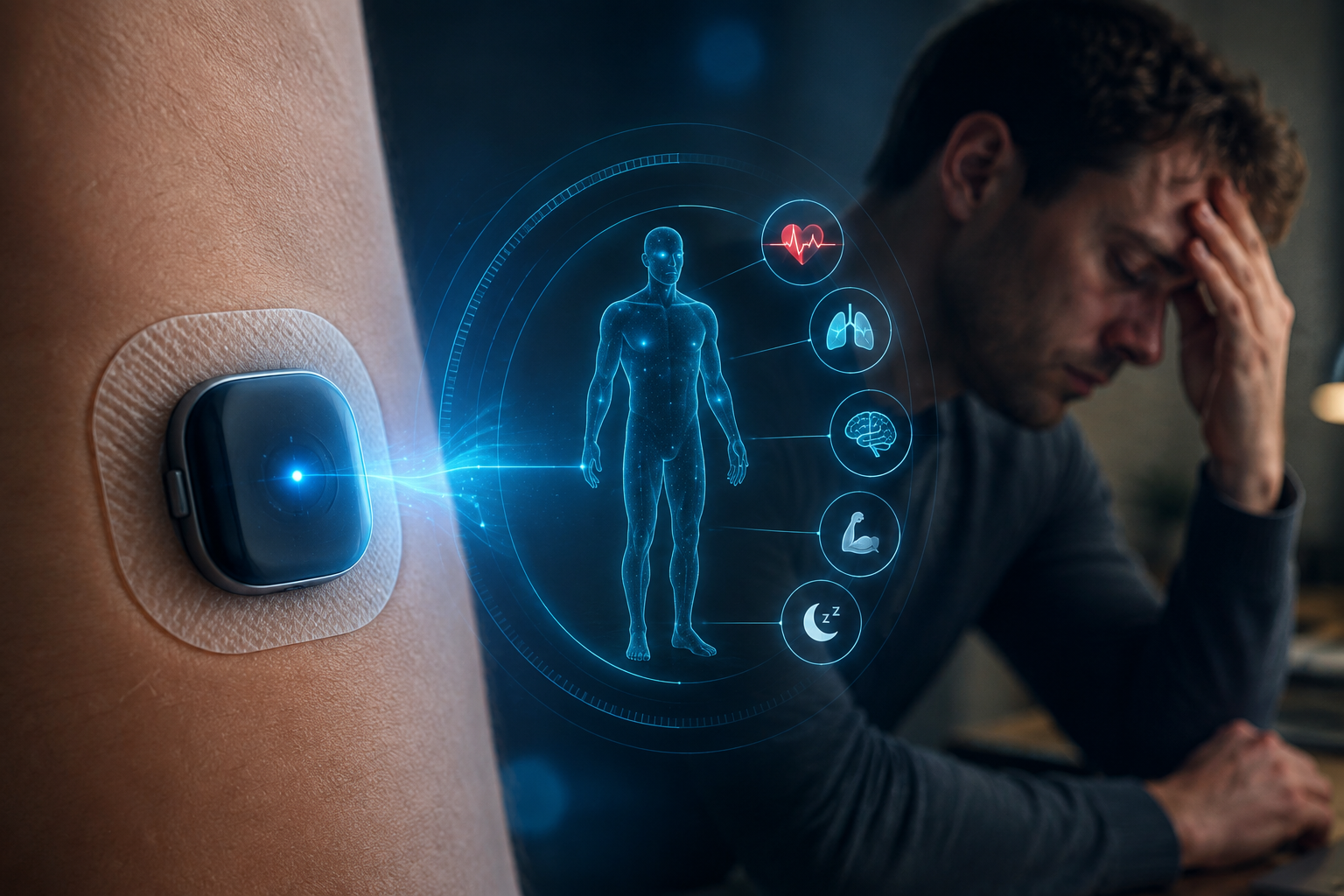
This is where a new class of sensors may help. Small devices on the wrist, skin, head, or body can collect signals from a person without the need for a blood test. Software can then study these signals and look for patterns linked to fatigue. Research suggests that this approach may help find fatigue before it turns into a serious safety problem.
The idea is simple: instead of asking only how tired a person feels, a sensor can also look at what the body says.
What the Sensor Can See
Fatigue has many forms. Physical fatigue may appear after hard work or exercise. Mental fatigue can arise after long hours of focus, stress, or poor rest. Because fatigue has more than one cause, one body signal may not tell the full story.
Researchers have studied several signals for this reason. These include heart rate, heart rate variability, breathing rate, body motion, muscle activity, brain signals, skin response, skin temperature, and eye movement. Devices can collect some of these signals through the skin or other parts of the body.
Some newer systems also look at chemicals in body fluids. Sweat, saliva, and fluid under the skin can contain substances that change with physical stress and fatigue. These substances can include lactate and cortisol. A small sensor may check such changes without the need for a full blood sample.
This matters because a blood test can take time, need special tools, and may cause discomfort. A small body sensor can offer a much easier way to collect data during normal life.
Why Heart and Breath Matter
The heart can give useful clues about the state of the body. Heart rate is easy to measure, but heart rate variability can also add useful detail. This value looks at changes in the time between heartbeats. Breathing rate can add another layer of information.
A pilot study with 27 healthy people and 405 days of data found that both physical activity and vital signs had a useful role in the study of fatigue. The vital signs included heart rate, heart rate variability, and respiratory rate. The researchers also found that vital signs had a stronger role than physical activity data when the system tried to predict mental fatigue.
The study used machine learning to find patterns in the sensor data. One model had a weighted precision of 0.70 ± 0.03 and a recall of 0.73 ± 0.03. A second approach, based on hand-made features, had a weighted precision of 0.70 ± 0.05 and a recall of 0.72 ± 0.01. These results do not mean that a sensor can diagnose fatigue with certainty. They show that body data can contain useful clues that software can detect.
Sweat May Reveal More Than Expected
The skin can also provide a rich source of information. Sweat contains several substances that can change with physical effort and body stress. Researchers have built flexible sensors that can collect sweat and check substances such as lactate, glucose, and cortisol.
This type of sensor can sit close to the skin. Some designs use a tiny fluid path that moves sweat toward a sensing area. The sensor then turns a chemical change into a signal that a device can read.
Cortisol has special interest because its level can rise during physical stress. Researchers have tested skin sensors with special materials that can detect cortisol. Other work has explored sensors for lactate and other substances linked to physical effort.
Still, this technology has limits. A change in a body chemical does not always mean fatigue. Illness, exercise, stress, food, sleep, and other factors can affect the same signals. That is why one measurement may not be enough.
AI Can Join the Clues
This is where artificial intelligence can make a major difference. A sensor may collect thousands of small data points, but raw data alone is hard to understand. AI can search for patterns across many signals at once.
For example, a system may see a small rise in heart rate, a change in breathing, less body motion, and a change in sleep quality. None of these signs alone may prove fatigue. Together, however, they may form a pattern that suggests a person needs rest.
A 2025 review found that a mix of ECG, EEG, EMG, and motion data can improve real-time fatigue detection. The review also found that machine learning and deep learning can help find fatigue patterns in sensor data.
This multi-sensor approach may be more useful than a single sensor. Fatigue is complex, so the system needs a broad view of the person rather than one simple number.
The Technology Still Has Problems
The idea sounds powerful, but the technology is not yet perfect. Sensors can collect noisy data. A loose device, fast movement, sweat, poor contact with the skin, or other outside factors can affect the result.
There is also a major problem with research quality. A large review of 612 studies found that only 60 met its selection rules for wearable fatigue research. Many of the studies took place in labs and lasted for short periods. This makes it hard to know how well a fatigue sensor will work during real work, travel, sport, or daily life.
Another review assessed 43 recent studies and noted major gaps in real-world fatigue detection. The researchers stressed the need for better data quality, stronger tests, and systems that work outside controlled lab conditions.
Privacy is another concern. A device that can spot fatigue may collect very personal information about health, sleep, stress, and daily habits. Any real-world system must protect that data and make its purpose clear to the user.
A Future Early Warning System
The most useful role for a fatigue sensor may not be to label someone as “tired.” Its real value may be as an early warning tool.
A truck driver could receive a warning before severe drowsiness. A worker on a long shift could get a signal that their alertness has fallen. An athlete could use body data to avoid too much strain. A doctor could use long-term sensor data to study fatigue patterns in a patient.
The goal is not to replace human judgment. It is to add another source of information.
Fatigue often hides behind routine. People can get used to poor sleep, long hours, stress, or hard physical work and may stop noticing how much it affects them. A sensor may spot changes that the person has learned to ignore.
The technology still needs more research, better sensors, stronger AI models, and careful privacy rules. Yet the direction is clear. The body gives off many small signals before fatigue becomes obvious. With the right sensor and the right software, those signals may become an early warning system that helps people stop, rest, and stay safe.
ALSO READ: India’s Mixed Disability Team Wins at Lord’s in Style