






Sports are an important part of our lives. They help us stay fit, build strong bodies, and keep our minds fresh. Whether a person plays football, cricket, basketball, tennis, or any other sport, good physical fitness is very important. But have you ever thought about what helps an athlete run faster, jump higher, hit harder, or play for a long time without feelin’ tired?
The answer lies in the science of sports performance. It is the study of how the human body works during physical activity and what helps a person perform better in sports. It explains how strength, speed, endurance, flexibility, and coordination help athletes reach their goals.
Every sport needs a different set of physical skills. A sprinter needs great speed, while a marathon runner needs strong endurance. A gymnast needs flexibility and balance, while a weightlifter needs great muscle strength. These skills work together to help athletes perform well.
What Is Sports Performance?
Sports performance means how well a person can perform a sport or physical activity. It depends on many things, such as physical fitness, mental strength, proper food, enough rest, and regular practice.
A good athlete does not depend only on natural talent. Hard work, discipline, and the right training also play a major role. Even a person with great natural ability needs proper practice to improve their skills.
For example, a football player must run across the field, pass the ball, defend against other players, and shoot at the goal. All these actions need different physical skills. The player must have strength, speed, endurance, flexibility, and good body control.
Sports science helps athletes understand their bodies and find better ways to train. It also helps coaches plan exercises that match the needs of each player.
The Role of Strength in Sports
Strength is the ability of our muscles to produce force. It helps us lift, push, pull, jump, and perform many other physical actions. It is one of the most important parts of sports fitness.
Strong muscles help athletes perform better and control their bodies with ease. For example, a wrestler needs strength to hold an opponent, while a basketball player needs leg strength to jump high. A cricket player needs arm and shoulder strength to throw the ball with force.
Strength also helps protect the body from injuries. Strong muscles support the joints and help the body handle physical pressure. This is useful in sports where players often run, jump, fall, or make sudden moves.
There are different ways to build muscle strength. Weight training, push-ups, squats, pull-ups, and other simple exercises can help. However, athletes must choose exercises that suit their age, fitness level, and sport.
It is also important to follow the correct method. Too much exercise or poor technique can cause injuries. A good coach can help athletes choose safe exercises and improve their strength step by step.
The Importance of Speed
Speed is the ability to move the body or a part of the body in a short time. It is very important in sports where quick action can decide the result.
A sprinter needs speed to reach the finish line first. A football player needs quick feet to pass defenders. A badminton player must move fast to reach the shuttlecock before it touches the ground. In cricket, a batter needs quick reflexes to face a fast ball.
Speed is not only about how fast a person can run. It also includes reaction time. Reaction time means how quickly a person responds to a signal or action. For example, a goalkeeper must react fast when an opponent shoots the ball towards the goal.
Athletes can improve their speed through short-distance runs, sprint practice, quick footwork exercises, and reaction drills. Proper rest is also necessary because the body needs time to recover after hard exercise.
Good running technique can also help. Correct body posture, strong leg movements, and proper arm action allow an athlete to move with better control.
What Is Endurance?
Endurance is the ability to continue physical activity for a long time without too much tiredness. It helps athletes stay active throughout a match, race, or sports event.
A marathon runner needs excellent endurance to run a very long distance. A football player needs it to stay active throughout a 90-minute match. A cyclist also needs strong endurance to ride for long distances.
There are two main types of endurance: cardiovascular endurance and muscular endurance.
Cardiovascular endurance refers to how well the heart and lungs supply oxygen to the body during exercise. When a person runs, swims, or cycles, the heart works harder to send oxygen-rich blood to the muscles.
Muscular endurance refers to the ability of muscles to perform repeated actions for a long time. For example, a swimmer uses muscular endurance to move their arms and legs again and again during a race.
Regular running, cycling, swimming, and brisk walks can help improve endurance. Athletes must increase their exercise time and effort slowly. This helps the body adjust to physical activity and reduces the risk of injury.
The Value of Flexibility
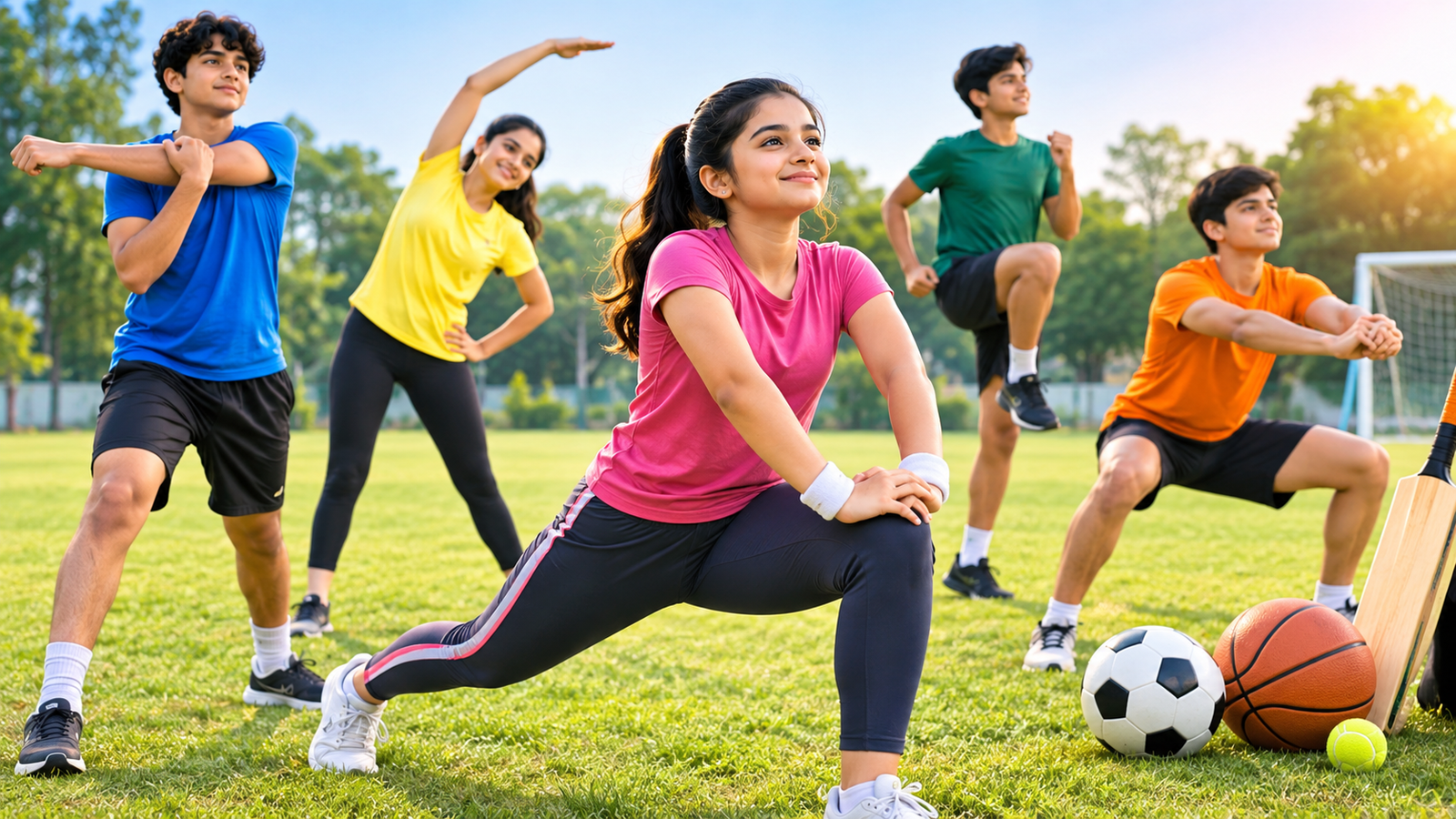
Flexibility is the ability of our joints and muscles to move through a wide range of motion. It allows the body to bend, stretch, twist, and move with ease.
Flexibility is important in many sports. A gymnast needs a high level of flexibility to perform difficult body movements. A football player needs it for quick turns and kicks. A swimmer also needs flexible shoulders and legs for smooth movement in water.
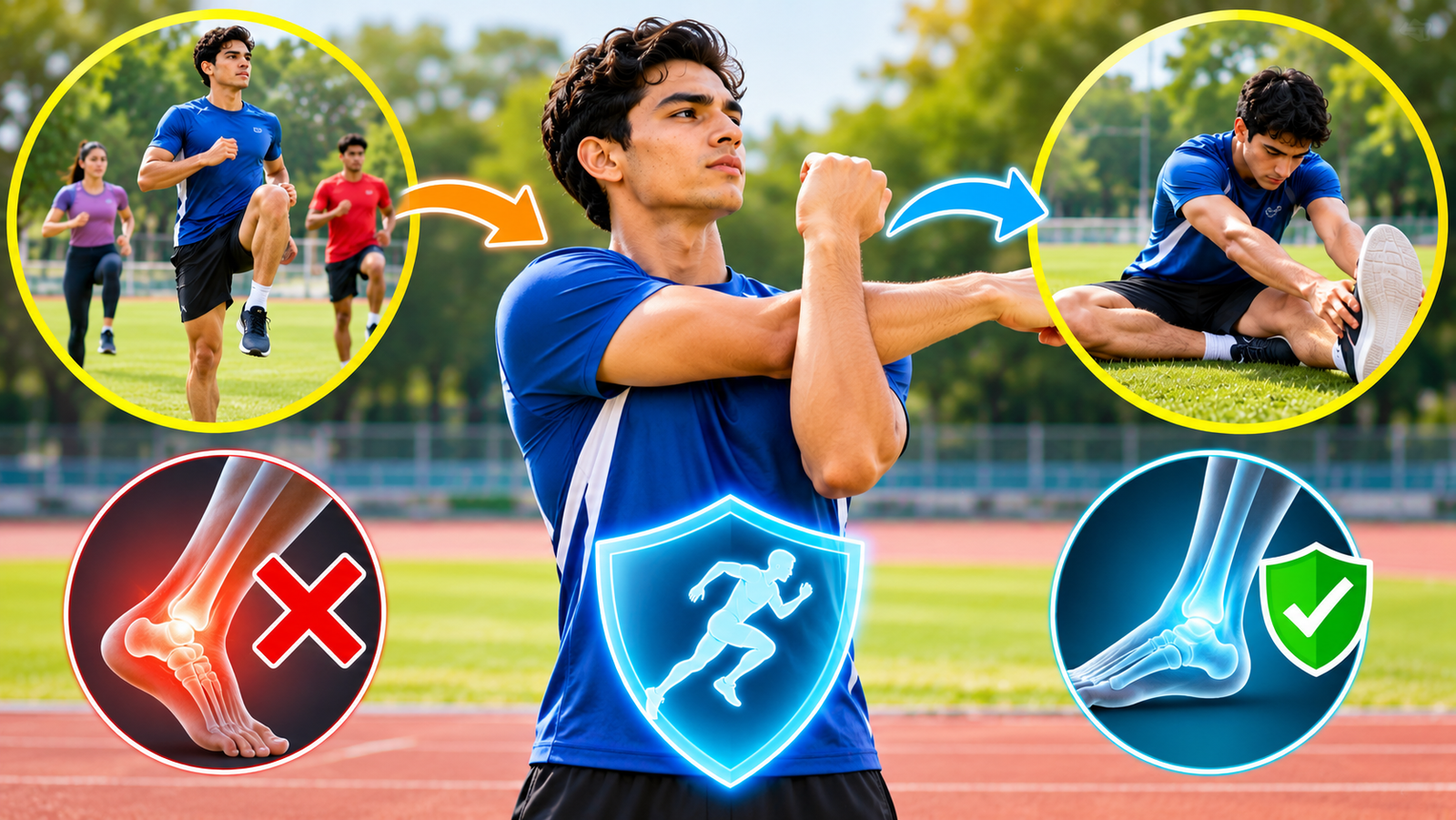
Good flexibility can help athletes move better and reduce muscle tightness. It may also lower the risk of certain injuries, especially when it forms part of a proper fitness routine.
Stretching exercises can help improve flexibility. Some athletes use simple stretches before and after exercise, based on their needs. Gentle movements before a sports session help prepare the body. Slow stretches after exercise can help improve joint movement over time.
However, athletes should never force their bodies into a stretch. Sudden or painful movements can cause harm. Each person has a different level of flexibility, so progress should be slow and safe.
Why Coordination Matters
Coordination is the ability to use different parts of the body together in a smooth and controlled way. It helps a person perform actions with better timing and accuracy.
Almost every sport needs good coordination. A cricket batter must watch the ball, move the body, and swing the bat at the right moment. A basketball player must run, control the ball, and pass it to a teammate. A tennis player must move the feet and use the racket at the correct time.
Hand-eye coordination is the ability to use the hands and eyes together. It is very useful in sports such as cricket, tennis, badminton, and basketball.
Foot-eye coordination helps players use their feet with proper control while they watch the ball. Football is a good example of a sport that needs this skill.
Balance is also an important part of coordination. It helps athletes keep control of their bodies while they run, jump, turn, or stand on one leg.
Athletes can improve coordination through ball games, skipping, balance exercises, and simple movement drills. Regular practice helps the brain and body work together more effectively.
How These Five Skills Work Together
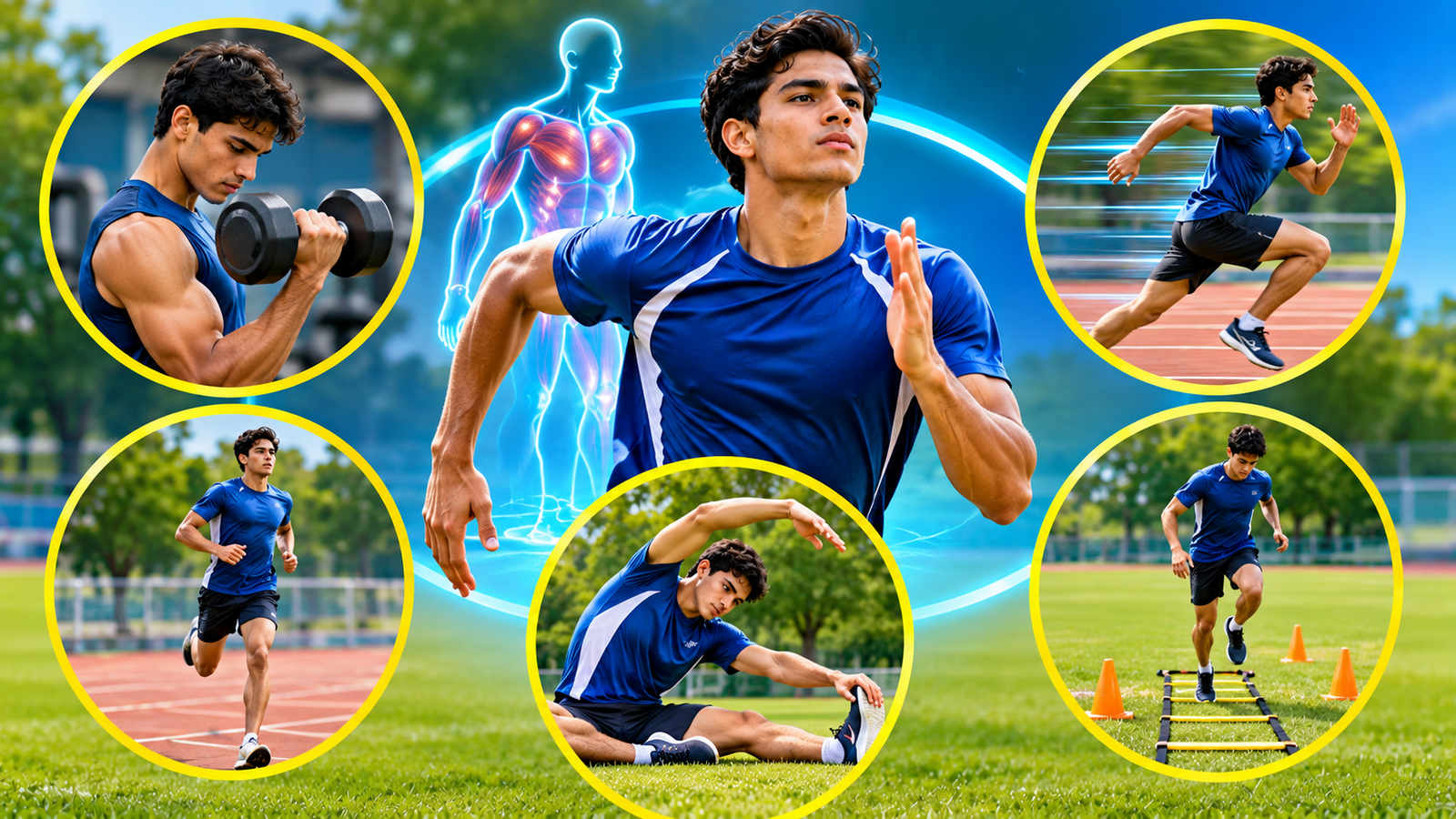
Strength, speed, endurance, flexibility, and coordination are not separate skills. They work together to improve sports performance.
Take the example of a football player. The player needs strength to protect the ball, speed to move past an opponent, and endurance to stay active throughout the match. Flexibility helps with quick turns and kicks, while coordination helps the player control the ball and pass it accurately.
A basketball player also needs all five skills. Strength helps with jumps and physical contact. Speed helps with quick movement across the court. Endurance allows the player to stay active for the full match. Flexibility supports smooth movement, while coordination helps with dribbling, passing, and shooting.
The level of each skill depends on the sport. A weightlifter may need more strength, while a long-distance runner may need more endurance. Still, a balanced level of all five skills can help most athletes perform better.
The Role of Food and Water
Exercise alone is not enough for good sports performance. The body also needs healthy food and enough water.
Food gives the body the energy it needs for physical activity. Carbohydrates are a major source of energy, while proteins help repair and build muscles. Healthy fats also support many important body functions. Fruits, vegetables, whole grains, milk, nuts, and other healthy foods can form part of a balanced diet.
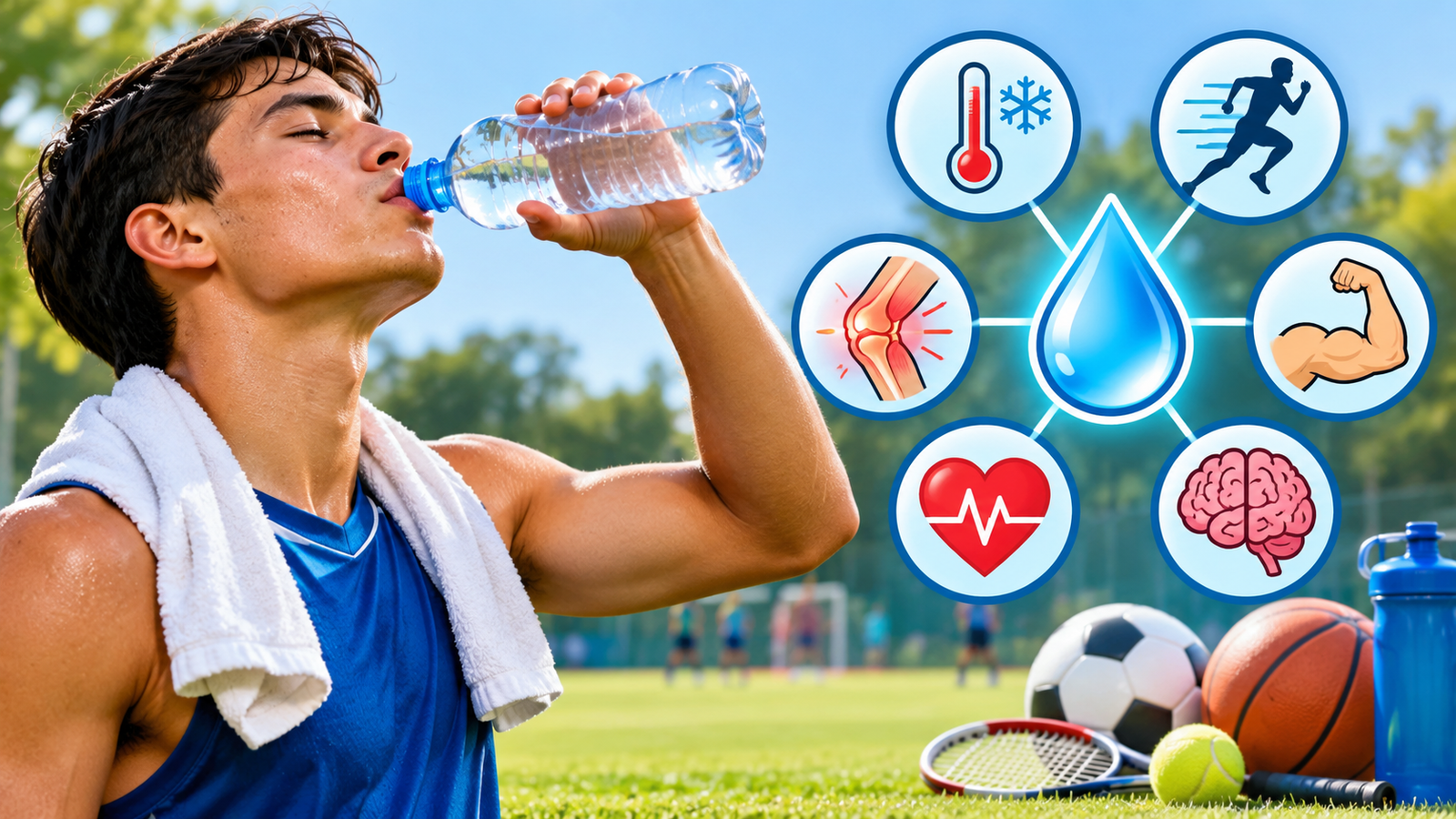
Water is just as important. During exercise, the body loses water through sweat. If an athlete does not drink enough water, they may feel weak, tired, or dizzy. In some cases, a lack of water can also affect sports performance and health.
Athletes should drink water at regular times throughout the day, not just when they feel thirsty. The amount of water needed depends on the weather, the type of sport, and the level of physical activity.
A balanced diet and good water habits help the body stay ready for exercise and recovery.
The Importance of Sleep and Rest
Rest is a very important part of sports training. The body needs time to repair muscles and recover after exercise.
During sleep, the body carries out many important repair processes. Good sleep also helps the brain stay alert and improves focus, memory, and reaction time.
Athletes who do not get enough sleep may feel tired and lose focus during practice or competition. They may also have a higher risk of injury.
Rest days are also useful. They give muscles and joints time to recover after hard exercise. Without enough rest, too much training can cause pain, poor performance, and physical stress.
A good sports routine should include regular exercise, enough sleep, healthy food, and proper rest. All these things work together to support better performance.
How Sports Science Helps Athletes
Sports science helps athletes understand how their bodies work and how they can improve their performance in a safe way.
Coaches and sports experts use different methods to check fitness levels. They may test an athlete’s speed, strength, endurance, flexibility, and coordination. These tests help them understand which areas need more attention.
Modern technology also plays a useful role. Fitness watches can record heart rate, distance, and activity levels. Video tools can help coaches study an athlete’s movements and correct mistakes. Some sports teams also use special equipment to check speed and physical effort.
These tools help athletes and coaches make better training plans. However, technology alone cannot make a person a good athlete. Hard work, discipline, proper guidance, and regular practice remain very important.
The Importance of Mental Strength
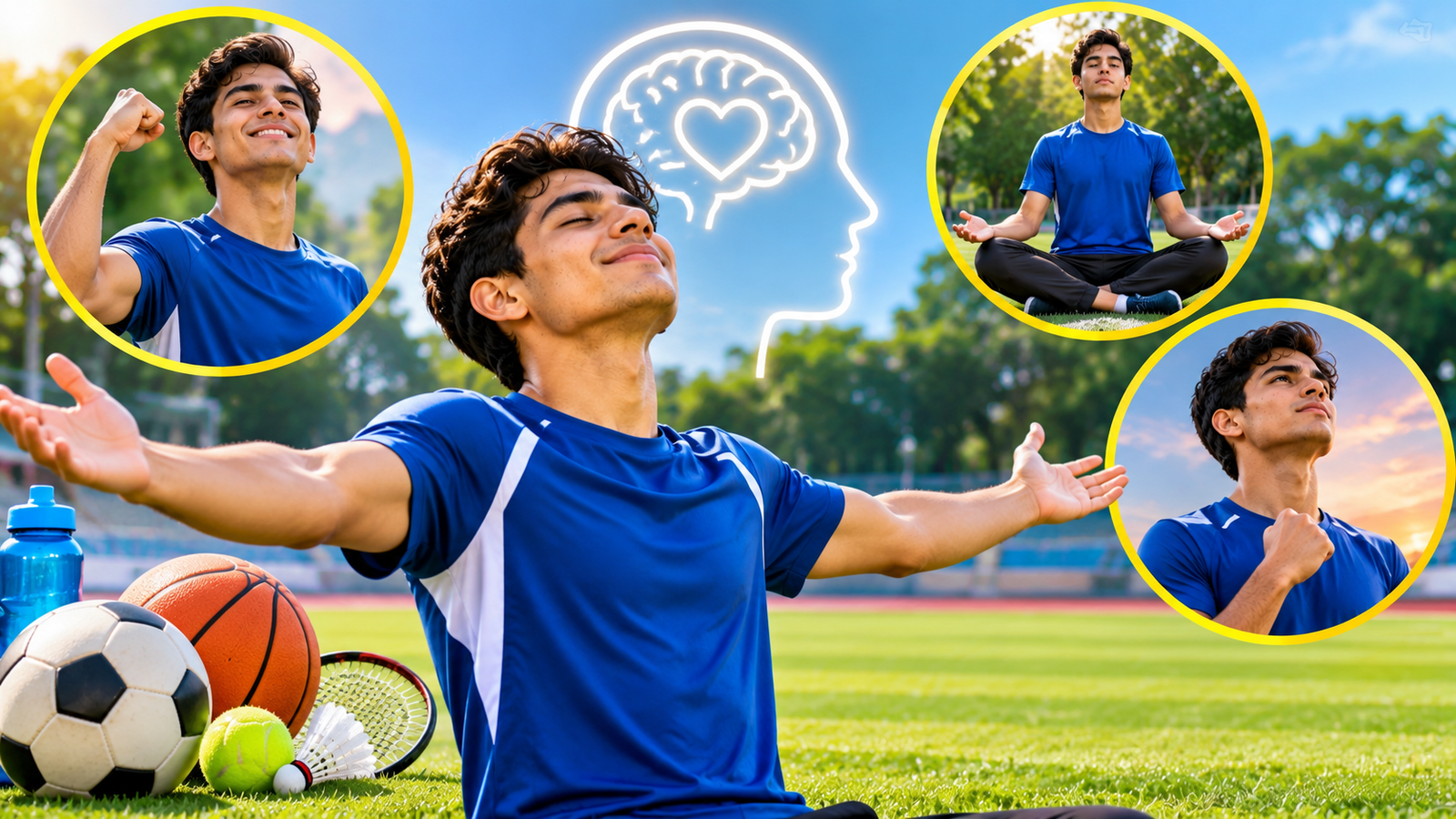
Physical fitness is only one part of sports performance. Mental strength also plays a major role.
Athletes often face pressure before and during competitions. They may feel nervous, tired, or disappointed after a poor result. Mental strength helps them stay calm, focus on their goals, and continue their efforts.
Confidence is another important part of good performance. When athletes trust their skills, they can make better decisions and perform with more control.
Teamwork also matters in team sports. Players must trust one another, respect their teammates, and work towards a shared goal. Good communication helps a team perform better.
A positive attitude, patience, and self-discipline can help athletes face difficult moments. These qualities are useful not only in sports but also in daily life.
Conclusion
The science of sports performance helps us understand what makes an athlete strong, fast, active, and skilled. Strength helps the body produce force. Speed allows quick movement. Endurance helps a person stay active for a long time. Flexibility allows free body movement, while coordination helps different parts of the body work together.
All five skills are important for good sports performance. Their value may differ from one sport to another, but each one has a special role.
Healthy food, enough water, proper sleep, regular exercise, and mental strength also help athletes reach their full potential. With the right training and good habits, people can improve their fitness and enjoy sports in a safe way.
Sports are not only about medals, trophies, or victories. They also teach us discipline, patience, teamwork, and self-confidence. A person does not have to become a professional athlete to enjoy these benefits. Even simple daily physical activity can help build a healthier and stronger life.
ALSO READ: Sports Nutrition and Hydration for Better Performance