









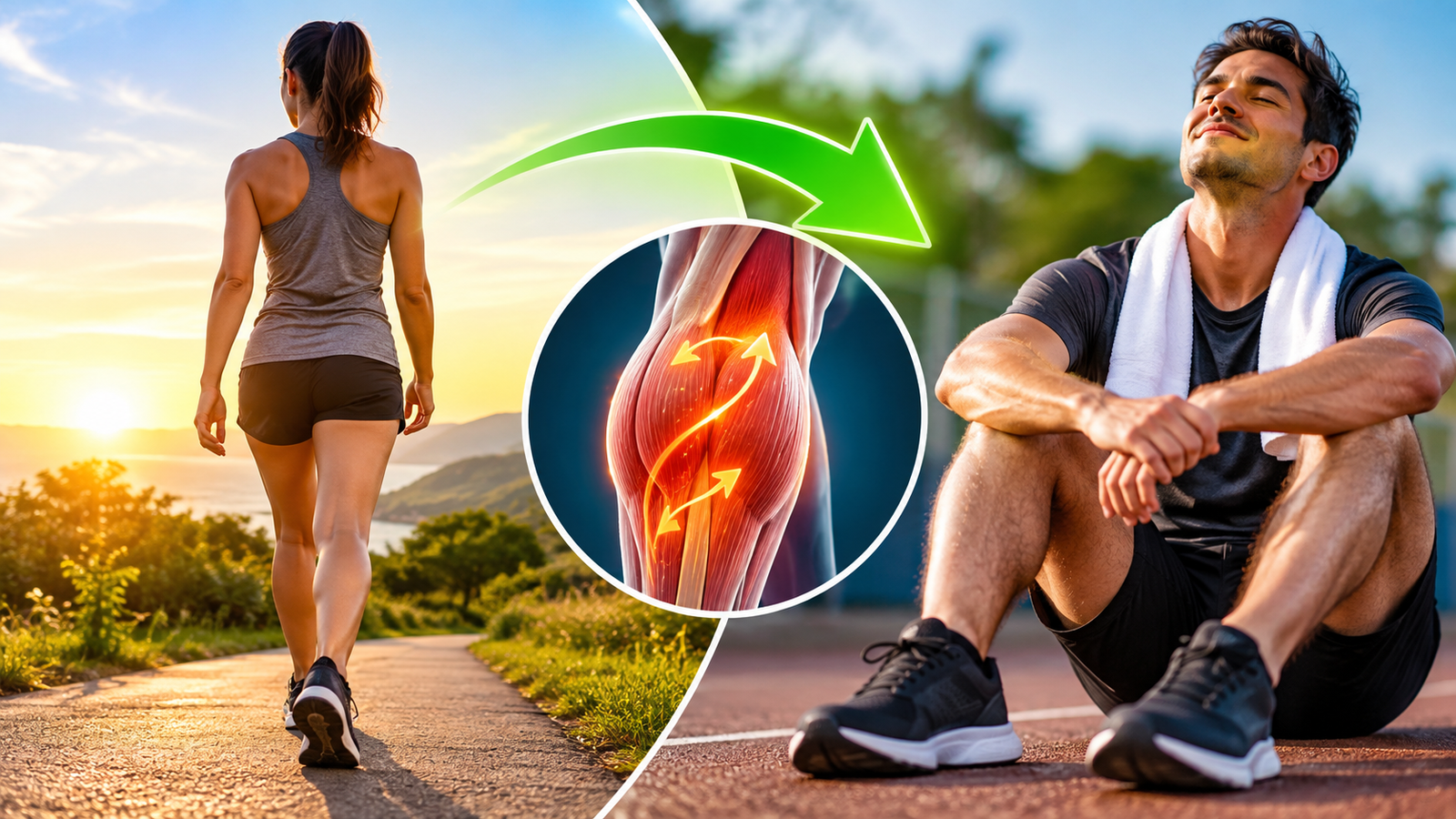
Recovery is a major part of athletic performance. Hard exercise puts stress on the muscles, joints, and nervous system. After a tough workout, the body needs time to repair itself and return to normal. Many athletes think recovery means complete rest. Rest is important, but gentle movement can also help.
Walking is one of the easiest forms of gentle movement. It does not need special equipment, a gym, or a complex plan. It can also fit into almost any daily routine. For athletes, a simple walk may help the body feel less stiff and tired after hard exercise.
Walking does not act as a magic fix. It cannot replace good sleep, proper food, enough fluids, or time away from hard training. Still, when used in the right way, it can be a useful part of a recovery routine.
Why Walking May Help After Exercise
A hard workout can leave the body tired. The legs may feel heavy, the muscles may feel tight, and normal movement may feel less comfortable. Sitting or lying down for long periods may make that stiffness feel worse.
A slow walk gives the body a small amount of movement without the stress of another hard workout. The muscles in the legs work at a low level, and blood moves through the body at a higher rate than it would during complete rest.
This rise in blood flow is one reason athletes may feel better after an easy walk. More blood reaches the muscles, which helps support the normal repair process. It can also help the body return to a relaxed state after exercise.
Walking Can Reduce Muscle Stiffness
Muscle stiffness is common after a hard session. It can be more noticeable after a new exercise, a long run, heavy strength work, or a sport that places a lot of stress on the legs.
An easy walk can help keep the body mobile. The hips, knees, ankles, and other joints move through a normal range without a large load. This gentle activity may make the body feel looser than it would after several hours of complete rest.
The key is the pace. A recovery walk should feel easy. It should not leave you short of breath or make your muscles feel more tired. If a walk adds more stress, it stops being a recovery tool and starts to become another workout.
Does Walking Remove Lactic Acid?
Many people say that light exercise helps remove lactic acid from the muscles. This idea is common, but it is too simple.
Lactate is a normal product of hard exercise. The body can reuse it as fuel and clear it from the blood fairly quickly once exercise stops. The sore feeling that can appear later is not simply a result of lactate left inside the muscles.
This means walking should not be viewed as a way to “flush out” all the waste from hard exercise. Its value comes from gentle movement, better blood flow, reduced stiffness, and a low physical cost.
That distinction matters because it gives athletes a more accurate view of what walking can actually do.
Walking May Help With Heavy Legs
After a hard training session, some athletes describe their legs as heavy or dull. This feeling can make normal movement seem harder than usual.
A short, easy walk may help with this feeling. The repeated movement of the legs supports circulation and gives the body a chance to move without the demands of running, jumping, or heavy lifting.
The effect will not be the same for everyone. Some athletes may feel much better after a short walk, while others may prefer more rest. The goal is not to force activity. The goal is to find a level of movement that leaves the body feeling better rather than worse.
How Long Should You Walk?
There is no single recovery walk that works for every athlete. A useful starting point is 10 to 30 minutes of relaxed walking after a demanding workout or on a recovery day.
The pace should remain comfortable. You should be able to talk without much effort. If your breathing becomes hard or the walk starts to feel like a workout, slow down.
Some athletes may prefer several short walks instead of one longer session. For example, a few 5 to 15 minute walks across the day can provide gentle movement without creating much extra stress.
The right amount depends on your sport, fitness level, recent training load, and current level of fatigue.
Walking and Sleep
Good sleep is one of the most important parts of athletic recovery. During sleep, the body has time to repair tissue, restore energy, and support normal physical function.
An easy walk can also support relaxation. A calm walk outdoors may help reduce mental stress after a hard day of training. For some people, this can make it easier to settle down later.
Walking is not a treatment for poor sleep, but it can form part of a healthy daily routine. Regular activity, enough rest, and a stable sleep schedule can work together to support recovery.
Walking Does Not Replace Real Recovery
Walking has clear limits. An athlete cannot use a daily walk to make up for poor sleep, poor nutrition, or too much training.
The body still needs enough calories and protein to repair muscle. It also needs enough fluids to maintain normal function. After a very hard session, proper rest remains important.
Athletes should also understand the difference between normal soreness and pain. Mild muscle soreness after exercise is common. Sharp pain, strong joint pain, swelling, or pain that keeps getting worse may point to an injury. In such cases, a walk is not automatically the right answer.
Walking on a Recovery Day
A recovery day does not always need to mean a full day on the couch. For many athletes, gentle movement can make the day feel easier.
A relaxed walk can provide some activity without the same load as a normal training session. It can also help break up long periods of sitting, especially for athletes who spend much of the day at a desk, in a car, or at home.
The main rule is simple: recovery activity should support recovery. If you finish the walk more tired than before, the session was probably too long or too fast.
The Bigger Picture
Athletic recovery is not based on one habit. It comes from several basic factors that work together. Training creates the need for recovery, while sleep, food, fluids, rest, and sensible activity help the body respond to that demand.
Walking fits into this picture because it offers movement with very little extra strain. It is easy to control, easy to stop, and suitable for many athletes.
It also has another benefit: consistency. A simple habit that an athlete can follow often has more value than a complex recovery plan that is hard to maintain.
Final Thoughts
So, can walking really improve athletic recovery? Yes, it can be a useful recovery tool, especially when the walk stays easy.
Walking may support blood flow, ease stiffness, reduce the feeling of heavy legs, and help with relaxation. It can also keep the body mobile without adding much training stress.
However, walking does not speed up every part of recovery by itself. It cannot replace sleep, good nutrition, hydration, or proper rest. It also should not be used to push through serious pain.
For most athletes, the best approach is simple. After a hard workout, try 10 to 30 minutes of relaxed walking. On a recovery day, use an easy pace and pay attention to how your body feels. If the walk helps you feel better, it can be a useful part of your routine. If it makes you feel more tired or causes pain, give your body more rest.
Sometimes, the simplest recovery habit can be one of the easiest to keep.
ALSO READ: Why Physics Games Create Unplanned Magic