








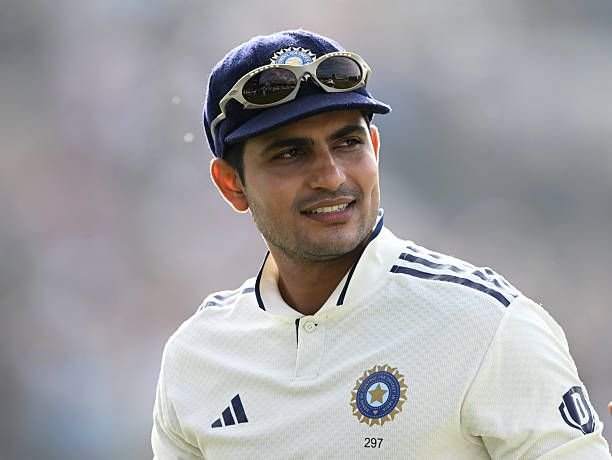
India stands at a turning point in Test cricket. After the era of senior leaders, selectors handed the responsibility to Shubman Gill. His appointment sparked debate across cricket circles. Some see him as the future, while others question his readiness.
This discussion requires a balanced look at performance, leadership traits, and long-term planning.
Recent Performance and Current Standing
Gill has already made a strong statistical case for himself. During the 2025 England Test series, he scored 754 runs in five matches. No Indian captain has ever achieved that number in a single Test series. He dominated bowlers in challenging overseas conditions and showed remarkable composure.
His overall Test record includes 2843 runs in 40 matches at an average of around 41.8, with 10 centuries. These numbers reflect consistency rather than short bursts of form.
As captain, Gill has led India in 8 Test matches. He has won 4, lost 3, and drawn 1. This gives him a win percentage of roughly 50. That figure does not place him among the elite yet, but it shows a stable start rather than failure.
In recent IPL 2026 matches, Gill continued to demonstrate leadership presence. He played a crucial 70-run innings in a tight match and guided his team through pressure. However, he also faced penalties for slow over-rates, which raised concerns about tactical efficiency.
Reports also mention recurring fitness concerns, particularly neck issues. These developments add complexity to his leadership evaluation.
Batting Strength Drives Leadership Authority
A Test captain must lead with performance, and Gill clearly does that. His England series proved that he can deliver when responsibility increases. He did not just score runs; he dominated situations where India needed stability.
His technique suits all conditions. He plays pace well, handles swing, and shows patience in long innings. These traits matter in Test cricket more than in any other format.
When a captain performs consistently, the dressing room responds positively. Players trust decisions more when the leader contributes directly. Gill has already built that credibility.
His batting also allows India to build around him for the next decade. This stability strengthens the argument for his captaincy.
Youth and Long-Term Vision
Gill’s age plays a major role in this decision. At around 25, he offers India a long-term leadership option. Selectors do not need to change captains frequently if he settles into the role.
Teams like Australia and England have benefited from long captaincy tenures. Stability allows strategies to mature and players to grow under consistent leadership.
Gill represents a generational shift. He understands modern cricket dynamics, fitness demands, and player management styles. He communicates with younger players effectively and adapts quickly to changing situations.
India does not just need a captain for today. India needs a leader for the next 8 to 10 years. Gill fits that requirement better than most alternatives.
Calm Personality and Modern Leadership Style
Gill maintains composure in high-pressure situations. He does not show visible frustration or panic on the field. This calmness influences team behavior.
Modern cricket rewards leaders who remain composed rather than overly aggressive. Gill follows that approach. He listens, observes, and reacts instead of forcing decisions.
This style contrasts with more intense leaders like Virat Kohli. Both styles can succeed, but Gill’s approach suits a younger team environment.
Teammates respond well to leaders who communicate clearly. Gill shows signs of building that connection early in his captaincy journey.
Tactical Growth Still in Progress
Gill has not yet mastered tactical leadership. He has shown promise, but he still needs refinement.
Slow over-rate penalties highlight issues in time management and field adjustments. These details matter in Test cricket, where small decisions shape sessions and matches.
He sometimes delays bowling changes or sticks with plans longer than necessary. Experienced captains often sense momentum shifts faster.
However, these flaws do not define his potential. Most successful captains improved over time. Early struggles often shape stronger leadership instincts later.
Gill remains in the learning phase. His progress will determine his long-term success.
Workload and Fitness Concerns
Gill carries multiple responsibilities. He leads India in Tests and ODIs and also captains an IPL franchise. Along with that, he serves as a key batter in all formats.
This workload increases physical and mental pressure. Test cricket already demands long hours and sustained concentration.
Recent reports about recurring injuries raise concerns. A captain must remain consistently available. Frequent absences disrupt team stability and strategy.
If Gill manages his workload carefully, he can sustain performance. If not, both his batting and leadership may suffer.
Experience Gap in High-Pressure Situations
Gill has played only a limited number of matches as captain. He has not yet faced enough high-pressure Test scenarios, especially in overseas series deciders.
Experienced captains build instinct over years. They understand pitch behavior, player psychology, and match flow deeply.
Gill still develops that instinct. He sometimes relies more on planning than intuition. Over time, he will need to balance both.
This experience gap remains one of the strongest arguments against rushing his captaincy.
Alternatives to Gill as Test Captain
India has several potential options if selectors reconsider their choice.
Jasprit Bumrah offers exceptional tactical awareness. He reads the game well and makes sharp decisions. However, injuries limit his availability. Fast bowlers rarely sustain long captaincy careers.
KL Rahul brings experience and composure. He has led India in multiple formats and understands overseas conditions. However, his inconsistent form weakens his case for long-term leadership.
Rishabh Pant provides aggression and match-winning ability. He can change games quickly, but his decision-making still lacks consistency.
Ravindra Jadeja offers experience and tactical understanding. However, his age limits long-term planning.
None of these options combine youth, performance, and long-term potential the way Gill does.
Final Assessment of Gill’s Captaincy
Gill deserves the Test captaincy, but not because he has already mastered the role. He deserves it because he offers the best long-term solution.
He has already proven his batting strength under pressure. He has shown composure and leadership qualities. He has gained early experience across formats.
At the same time, he needs improvement in tactical awareness, workload management, and consistency in decision-making.
India must support him rather than judge him prematurely. Senior players like Bumrah, Jadeja, and Rahul can guide him during this transition.
Conclusion
Gill’s captaincy represents a strategic investment rather than a finished product. India has chosen potential over immediate perfection.
If he continues to evolve, he can become one of India’s finest Test captains. If he struggles to adapt, selectors may revisit alternatives.
For now, Gill stands as the best blend of talent, temperament, and future vision.