




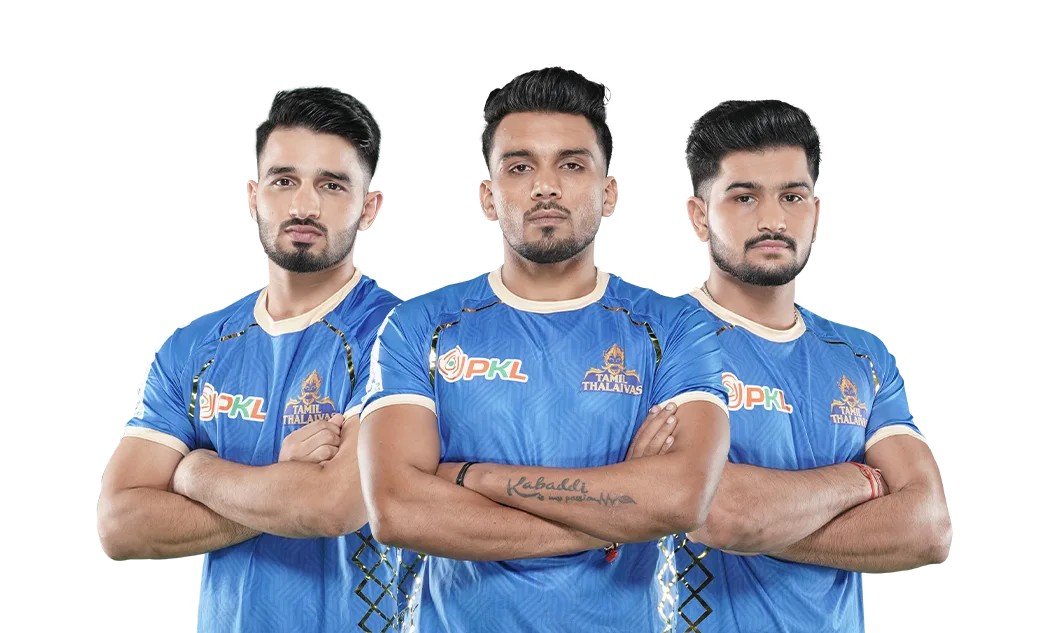
When the 2025 Pro Kabaddi League began, the Tamil Thalaivas stood tall on the edge of promise. The team had everything: talent, star power, fresh strategies, and a hunger to finally claim the respect their fans had long demanded. They had restructured their core, added experience to their youth, and carried the fire of redemption. Every headline before the first whistle sang the same tune — this is the Thalaivas’ year.
But by mid-season, that hopeful rhythm turned into chaos. The story no longer centered on bold raids or brilliant tackles. Instead, the whispers of discord grew louder, and soon those whispers roared. What began as a team’s sporting ambition transformed into a soap opera of accusations, management control, broken trust, and heartbreak.
This is the story of how a kabaddi franchise’s dream season collapsed under its own weight — and how the Tamil Thalaivas found themselves battling not rivals on the mat, but each other.
1. The Grand Beginning
Every season brings new hope, but the 2025 campaign felt different for the Thalaivas. The management promised a new era. They had learned from the mistakes of earlier seasons, they said. They wanted to move beyond mediocrity.
The marquee signing of star raider Pawan Sehrawat became the symbol of that ambition. His reputation carried weight — a man who could turn games single-handedly. Fans believed he would become the spine of the Thalaivas. Alongside him, young stars and experienced defenders filled the squad. The team looked balanced, lethal, and ready to storm the playoffs.
Behind closed doors, though, cracks already existed. Players felt that management interference ran deep. The coaching staff whispered that autonomy was shrinking. But optimism can be a powerful silencer. No one wanted to jinx the season before it even began.
2. The First Whiff of Trouble
The first few matches didn’t deliver the fairy-tale start. The Thalaivas stumbled through their openers — sometimes due to unforced errors, sometimes due to lack of chemistry. The fans still cheered. After all, early missteps happen in every season. But inside the locker room, tensions rose.
Small disagreements between players and management started surfacing. The coach, Sanjeev Baliyan, pushed for consistency in team selection, but his suggestions met resistance. Some analysts, acting on behalf of higher management, reportedly overrode tactical calls. A few players found themselves benched without explanation. The whispers grew into frustration.
Still, the team fought on, desperate to prove critics wrong. They trained harder. They made promises to fix things internally. But every victory felt fragile, and every defeat deepened the cracks.
3. The Spark That Lit the Fire
Mid-season, the world of kabaddi woke up to a bombshell: Pawan Sehrawat — the team’s poster boy, their star raider, their biggest investment — had been sent home on disciplinary grounds.
The announcement shocked fans, pundits, and even players. No one saw it coming. One day Pawan led the attack, and the next he vanished from the squad list. The management offered only a curt statement about “disciplinary reasons.”
But Pawan refused to stay silent. Within hours, he released a public response. His words carried anger and disbelief. He said he had done nothing wrong. He accused the team of tarnishing his name. “If any of these allegations are true,” he declared, “I will stop playing kabaddi altogether.”
Social media exploded. Fans demanded answers. Teammates avoided microphones. The league itself scrambled to control the narrative. But the damage was done.
The season’s story had changed. Tamil Thalaivas were no longer chasing victory — they were fighting to prove who was telling the truth.
4. When the Walls Started Talking
As the controversy deepened, more voices joined in. Coach Sanjeev Baliyan, respected and experienced, decided to speak. He revealed that he and the captain, Arjun Deshwal, had no control over team selection. He said the management handed them a “first seven” lineup before every match.
“I don’t pick the team,” he said bluntly. “I get told who will play.”
Arjun Deshwal, who tried to hold the squad together through weeks of tension, eventually echoed the coach’s frustration. He explained that leadership without decision-making power felt hollow. “If the people who play have no voice,” he said, “how can a team perform?”
The revelation stunned the kabaddi world. Fans began asking hard questions. Why hire a coach if he can’t select his own players? Why appoint a captain who can’t lead independently?
Players who sat on the bench confirmed what everyone suspected — selections were inconsistent. Fit athletes watched games from the sidelines while others, struggling for form, started matches.
The image of unity shattered completely. What had begun as a sporting story became a spectacle of internal politics.
5. The Collapse on the Mat
A team divided off the mat cannot unite on it. The Thalaivas’ performances began to mirror their chaos. Simple errors crept in. Communication between raiders and defenders faltered. Defensive chains broke down. Attacks lacked conviction.
The coach’s frustration grew visible. The captain’s voice grew sharper. Players began playing for survival rather than for victory.
Match after match slipped away. Once the league’s dark horse, the Thalaivas sank toward the bottom of the table. Commentators spoke of “lack of focus,” but insiders knew it wasn’t focus — it was fatigue from constant internal friction.
Fans who once flooded arenas with blue jerseys now watched in silence. The team that had promised to rise instead crumbled in front of them.
Then came the breaking point — a post-match interview after a crucial loss. Both the coach and captain openly criticized the interference from above. They claimed their hands were tied. Their words confirmed what everyone had suspected all season: the team no longer operated as one unit.
6. The Fallout: Anger, Accusations, and Aftermath
The fallout spread quickly. Fans raged online, accusing the franchise of betraying their trust. They demanded transparency. “We support Tamil Thalaivas, not Tamil Politics,” read one viral tweet.
Inside the management circle, panic brewed. The owners released statements denying any wrongdoing. They insisted the coach had full authority. They portrayed the controversy as “a misunderstanding.” But few believed it. The damage ran deeper than press releases could fix.
For players, the situation became unbearable. Trust vanished. Some spoke privately of wanting to leave once the season ended. Others just wanted silence. The locker room grew colder with every defeat.
By the final whistle of the regular season, Tamil Thalaivas stood 10th out of 12. The season of hope ended in humiliation.
What followed was inevitable — the sacking of Coach Sanjeev Baliyan. The team called it “a decision for future improvement,” but everyone knew it was damage control. The coach walked out with his head high, refusing to bow. The fans, divided in opinion, watched the fallout unfold like a slow-motion car crash.
7. The Real Questions Behind the Controversy
Every scandal hides a series of deeper truths. The Tamil Thalaivas saga raised crucial questions that still echo across the league.
- Who controls a kabaddi franchise?
When management overrules the coach, the very foundation of sport — merit and performance — collapses. - What happens when communication breaks?
When the coach, captain, and players speak different languages of intent, chaos replaces strategy. - Can talent survive toxicity?
Even a player of Pawan Sehrawat’s caliber couldn’t thrive in such an atmosphere. Talent doesn’t flourish in confusion. - Do fans deserve honesty?
They fill arenas, buy merchandise, and bleed team colors. They deserve truth, not half-baked statements. - Can the Thalaivas rebuild?
Every collapse brings an opportunity to rise — but only if those responsible learn from it.
These questions don’t belong only to Tamil Thalaivas. They belong to every professional team where power and passion collide.
8. Lessons in Fire: What the Thalaivas Must Learn
To rebuild, the Thalaivas must confront themselves. They must understand why their season turned into a cautionary tale.
- Respect the Coach – The coach stands as the tactical spine of any team. When management ignores him, chaos wins.
- Empower the Captain – A captain leads not by title, but by authority. Stripping him of voice destroys his ability to inspire.
- End the Power Games – Analysts and management should support, not dictate. The mat belongs to the players and the coach.
- Communicate Honestly – Fans and players deserve transparency. Silence breeds rumor; rumor breeds distrust.
- Protect Player Dignity – Labelling a star “undisciplined” without clarity stains careers. Respect must never become collateral damage.
If the Thalaivas internalize these lessons, they can transform pain into progress. If not, history will repeat itself.
9. The Road Ahead: Rebuilding or Relapsing
The off-season now carries enormous weight. The Thalaivas must find a new head coach — someone strong enough to demand autonomy, yet patient enough to navigate internal politics. They must rebuild morale, restore credibility, and craft a vision everyone believes in.
Pawan Sehrawat’s future also remains uncertain. Will he reconcile or move elsewhere? His talent guarantees offers, but his experience in this saga will shape how he chooses his next home.
Meanwhile, the management faces scrutiny. They must decide what kind of team they want to be: one that controls from above or one that empowers from within.
For the players still wearing the blue and yellow, the challenge feels heavier than ever. They need to cleanse the past, rebuild trust, and remind fans why the Thalaivas name once meant pride.
As rumors swirl about new signings and potential leadership changes, one thing remains clear — the Tamil Thalaivas cannot afford another season like this. Redemption won’t come from words. It will come from unity.
10. The Broader Lesson: Beyond the Thalaivas
This controversy doesn’t end in Chennai. It ripples across the entire Pro Kabaddi League. It shows what happens when ambition outgrows alignment.
Kabaddi thrives on teamwork, intuition, and instinct. One misstep, one break in chain, and the game collapses. A franchise works the same way. When egos replace structure, even the strongest line-ups fail.
The Thalaivas’ implosion stands as a mirror to every team — a reminder that discipline doesn’t only belong on the mat. It belongs in the boardroom too.
If the league wants to protect its credibility, it must learn from this storm. Teams must uphold clear hierarchies, empower coaches, and prioritize players’ voices. Only then will kabaddi continue to grow as a truly professional sport.
11. A Flicker of Hope
Despite the wreckage, hope still lingers in the dust. Tamil Thalaivas fans remain loyal. They fill arenas, chant names, and refuse to abandon the team. Their faith keeps the franchise alive.
Inside the players, a quiet fire burns — the desire to prove that this controversy won’t define them. They want to fight again, to reclaim pride, to remind the world that kabaddi belongs to those who sweat for it, not those who politicize it.
If management listens — truly listens — the Thalaivas can rise from the ashes. They can rebuild stronger, cleaner, united. And when that day comes, the same fans who wept through this season will roar again.
12. The Final Whistle
The Tamil Thalaivas didn’t just lose matches in 2025; they lost something far more valuable — trust. But trust, once broken, can still be rebuilt.
This controversy stands as both tragedy and opportunity. It exposes the dangers of control without compassion and leadership without communication. It shows how quickly success collapses when power silences passion.
But it also shows resilience. The players kept fighting, even when confusion reigned. The fans kept supporting, even when disappointment stung. The coach spoke the truth, even when it cost him his job.
In the end, perhaps the Tamil Thalaivas’ greatest victory won’t come from a championship trophy. It will come when they reclaim their identity — when they walk onto the mat not as a collection of fractured individuals, but as one team that learned, endured, and rose.
Because in sport, as in life, failure doesn’t end the story. It begins the rewrite.
And somewhere, deep in the heart of Tamil Nadu, the roar of “Thalaiva, Thalaiva!” still waits — ready to echo once more when redemption finally arrives.
Also Read – Archers Parneet Kaur and Kushal Dalal Clinch Mixed Compound Gold