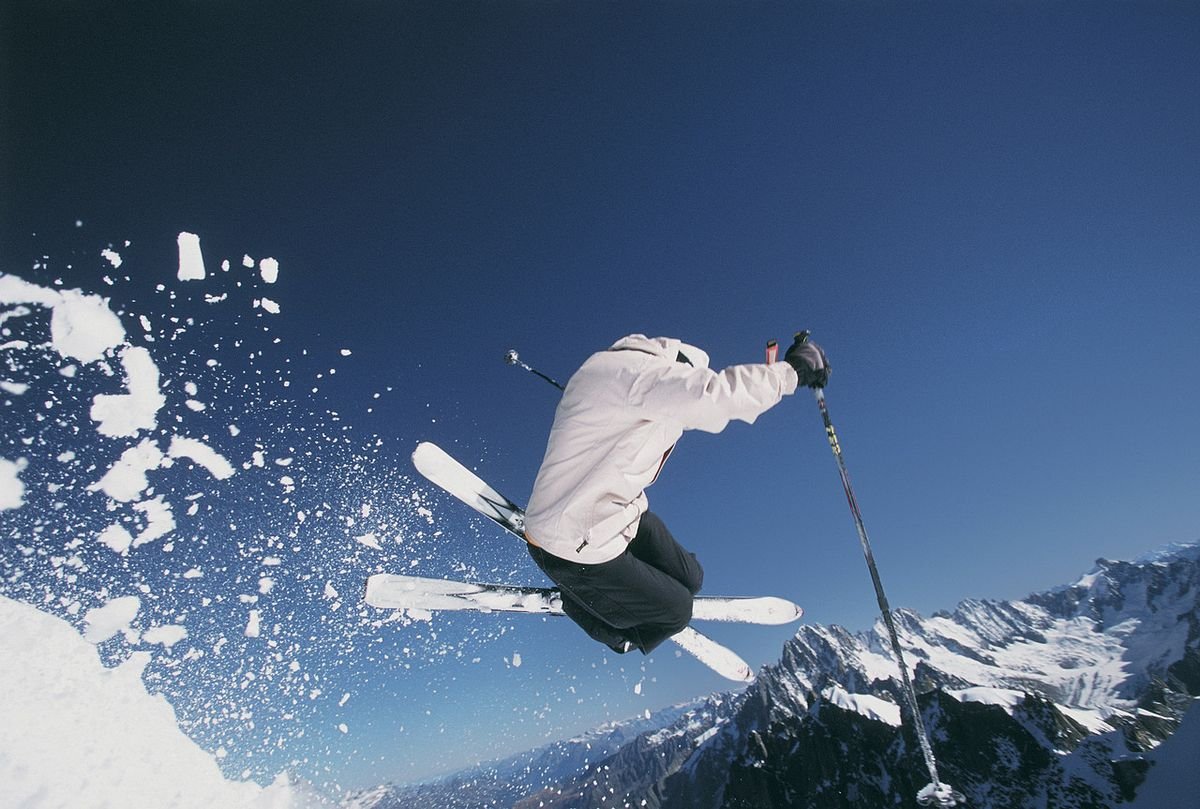




Under the bright Alpine sky of the Winter Olympics 2026, one athlete delivered a performance that redefined courage in elite sport. A ski jumper who had wrestled with a lifelong fear of heights soared down the inrun, launched into open air, and captured Olympic gold with a breathtaking final jump. The moment fused vulnerability and triumph in front of millions of viewers around the world.
Every ski jumper understands the risk that towers beneath the start gate. The ramp rises high above the outrun, and the inrun drops at a steep angle that demands total commitment. This champion carried an added burden. Since childhood, towering balconies and glass elevators triggered vertigo and racing thoughts. Yet the same athlete chose a discipline that requires full trust in gravity, timing, and body control dozens of meters above the snow.
That paradox shaped a remarkable Olympic story.
A Fear Faced, Not Hidden
Many competitors manage nerves before major events. This gold medalist confronted something deeper. Early training sessions often ended with hesitation at the top of the hill. Coaches recall long pauses before takeoff, steady breathing exercises, and quiet self-talk. Instead of hiding the fear, the athlete addressed it directly with sports psychologists and visualization drills.
Training focused on repetition and routine. The jumper practiced climbing the tower slowly, step by step, until the height felt familiar. Visualization sessions recreated the sensation of wind against the helmet and skis gliding over icy tracks. Each successful jump built a memory of control that pushed anxiety into the background.
Progress did not arrive overnight. Some days brought frustration. Gusty winds amplified tension. Crowded competitions intensified pressure. Still, the athlete refused to retreat from the sport. Each setback fueled stronger resolve.
The Olympic Stage in Italy
Italy’s dramatic mountain setting added grandeur to the Olympic ski jumping venue. Snow-draped peaks framed the large hill, and thousands of fans packed the stands with flags and cowbells. Television cameras captured every movement, from the quiet focus at the start bar to the explosive extension at takeoff.
During qualification rounds, the eventual champion delivered consistent distances that signaled serious intent. Judges rewarded clean telemark landings and stable flight posture. Commentators noted the calm expression behind the goggles, unaware of the internal battle that had shaped that composure.
In the final round, margins tightened. A rival from Poland launched a massive jump that electrified the crowd. A Swiss contender followed with elegant style points that briefly pushed the leader board into a tie. Pressure intensified as the Italian evening light faded into a cold blue glow.
Then the moment arrived.
The Golden Jump
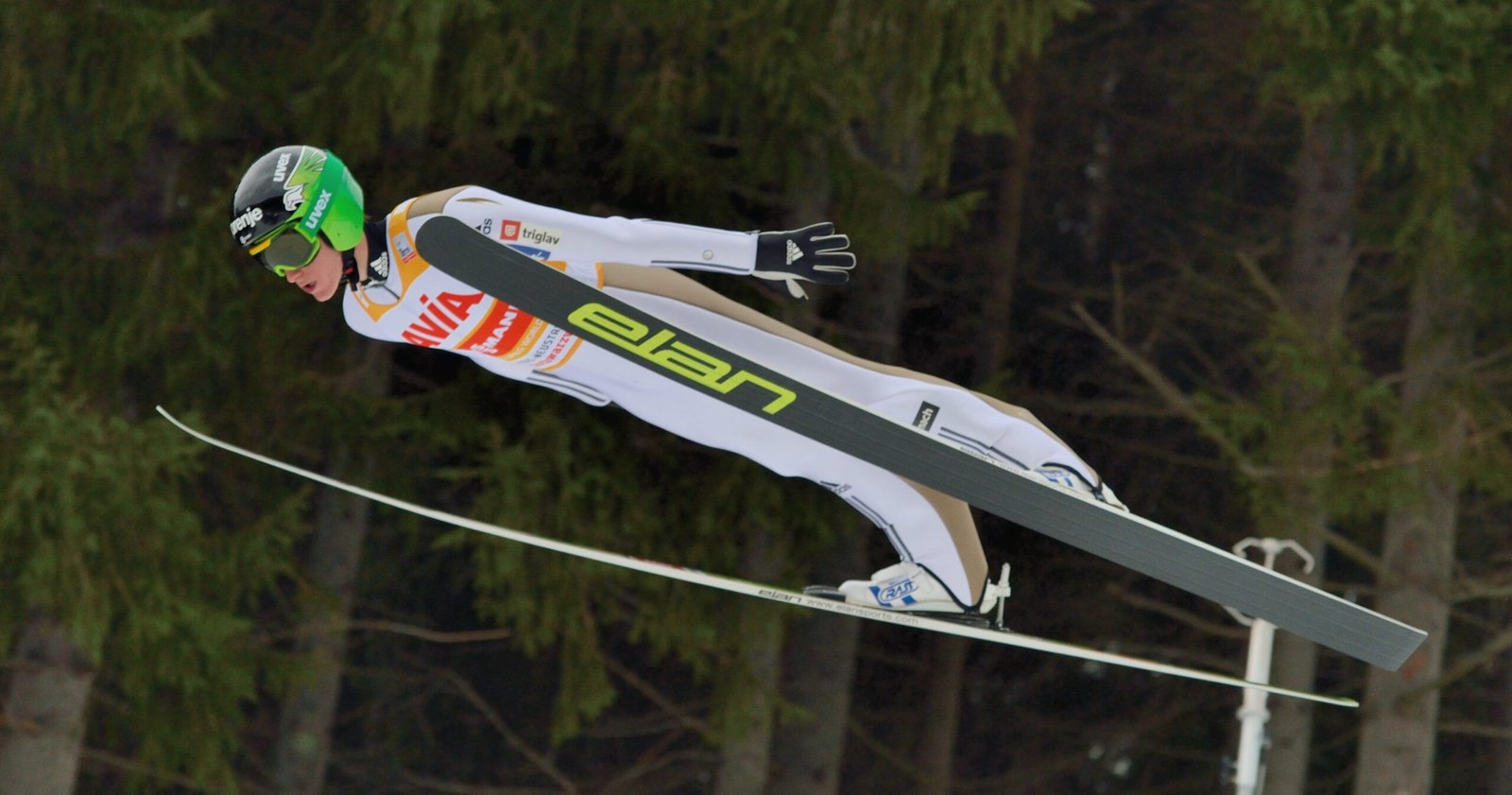
The athlete settled onto the start bar, leaned forward, and focused on a single cue: commitment. No trace of hesitation slowed the push-off. Skis locked into the icy tracks as gravity accelerated the descent. The jumper maintained aerodynamic precision, chin low, arms aligned, body compact.
At the edge of the takeoff table, timing proved flawless. Legs extended with explosive power. The jumper rose into the air and transitioned smoothly into a classic V-style position. Skis angled outward, torso hovered steady, and the body floated above the landing slope with quiet authority.
Distance markers flashed past. The crowd sensed something extraordinary. The jumper maintained balance through subtle ankle adjustments and controlled core tension. As the landing zone approached, the athlete prepared for a decisive telemark.
Skis touched down cleanly. One ski slid forward in a textbook telemark stance. Arms steadied. No wobble disrupted the glide. Applause erupted before the jumper reached the outrun’s end.
Scoreboards confirmed the achievement seconds later. Judges awarded high style marks, and distance points pushed the total beyond every rival. Gold belonged to the athlete who once feared even looking down from a balcony.
Emotion at the Finish
Tears filled the athlete’s eyes as realization settled in. Teammates rushed forward with embraces. Coaches who had witnessed years of psychological work shared wide smiles. The champion pointed toward the sky, then toward the fans, acknowledging both personal growth and public support.
During the medal ceremony, the gold medal rested against a racing heart that had once pounded with anxiety at similar heights. The national anthem echoed across the mountains, and the athlete stood tall on the highest step of the podium. That image captured more than athletic excellence; it captured transformation.
Mental Strength as Competitive Edge
This Olympic victory highlighted a truth that sports science continues to emphasize: mental training shapes performance as strongly as physical conditioning. The champion treated fear not as a weakness but as a challenge to master. Instead of allowing anxiety to dictate choices, the athlete built systems to manage it.
Breathing techniques stabilized heart rate before each jump. Focus cues narrowed attention to technical details. Pre-jump routines created a sense of familiarity, even in the intense Olympic environment. Over time, the mind learned to associate height with opportunity rather than danger.
Competitors often speak about flow states in ski jumping. In that state, the athlete experiences seamless motion and heightened awareness. The gold medalist described the final jump as “quiet and clear,” a sign that fear had surrendered to preparation.
Inspiration Beyond the Hill
Fans quickly embraced the story. Social media platforms filled with messages from people who struggle with phobias and self-doubt. Many viewers saw their own fears reflected in the champion’s journey. The victory resonated because it showed that courage does not require the absence of fear. Courage requires action despite fear.
Youth coaches across Europe highlighted the story in training sessions. They encouraged young athletes to discuss mental challenges openly. Parents shared the clip of the golden jump with children who hesitate to try new activities. The athlete’s honesty about anxiety opened conversations that extend far beyond ski jumping.
A Legacy in Motion
Olympic gold secures a place in history, yet this story carries an even broader legacy. The champion plans to advocate for mental health awareness in elite sport. Interviews after the event emphasized gratitude toward psychologists, family members, and teammates who supported the journey.
Future competitions will bring new rivals and fresh pressure. Wind conditions will shift. Hills will vary in profile. Still, the lesson from Italy remains clear: fear can coexist with ambition, and discipline can transform vulnerability into strength.
As the snow settled over the Italian mountains that evening, one image lingered above all others. A ski jumper who once feared heights soared higher than anyone else on the world’s biggest stage. That leap did more than secure a medal. It demonstrated that the human spirit can climb any tower, face any drop, and still choose to fly.