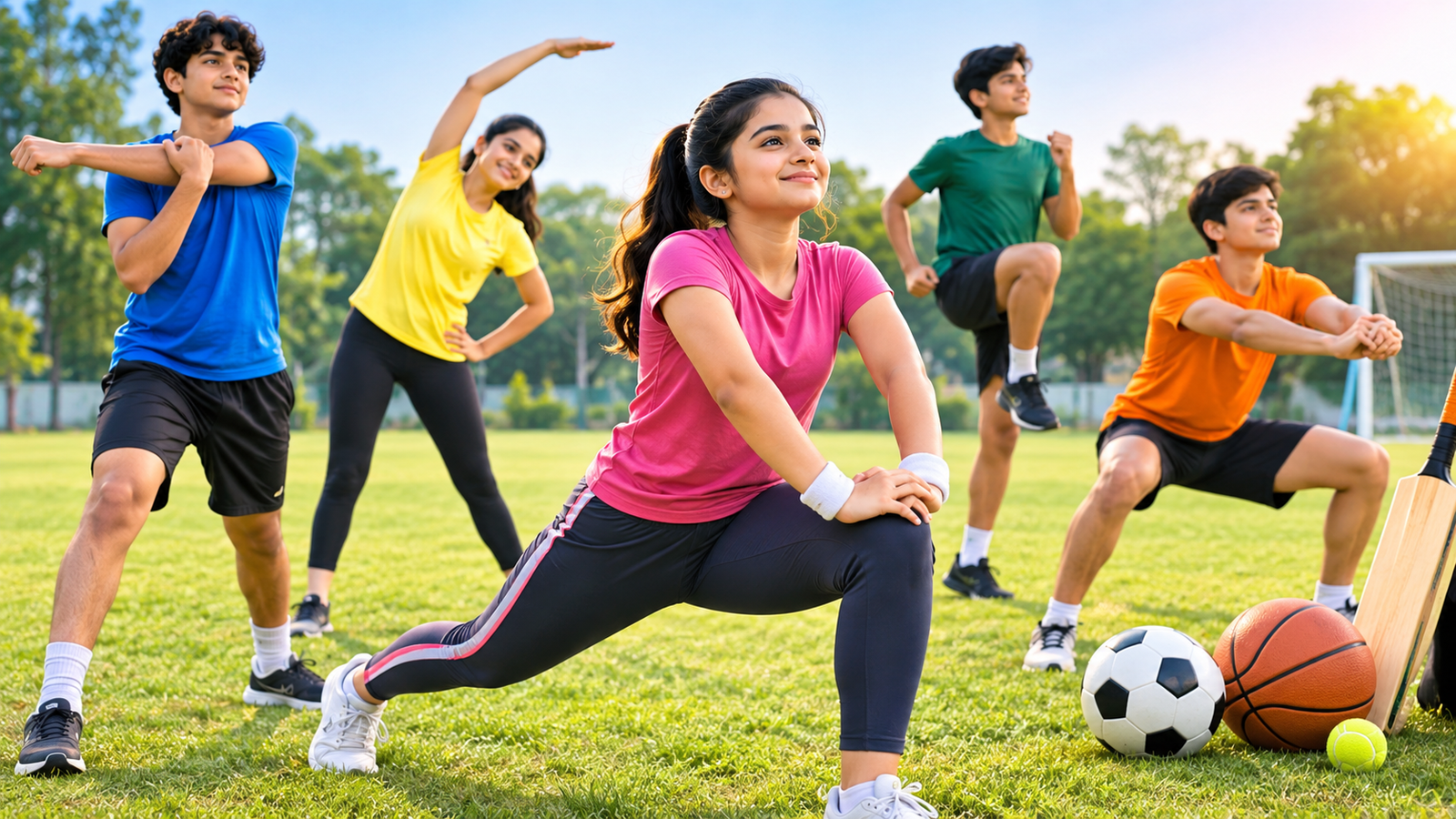









Sports are a great way to stay fit and healthy. They help us build strong muscles, improve our stamina, and keep our minds fresh. Whether a person plays football, cricket, basketball, badminton, or any other sport, physical fitness is very important. However, many people forget one simple thing before and after exercise. That is the need for a proper warm-up and cool-down.
A warm-up is a set of light exercises that a person does before a sport or workout. It prepares the body for more difficult physical activity. A cool-down is a set of gentle movements that a person does after exercise. It helps the body return to its normal state.
Both are important parts of a good sports routine. They help the body prepare for physical effort, support recovery, and lower the risk of certain injuries. Athletes, students, fitness lovers, and even people who do simple daily exercise can benefit from these habits.
What Is a Warm-up?
A warm-up is a short period of light physical activity before a sport or exercise session. Its main purpose is to prepare the body for more intense activity.
When we sit for a long time or stay at rest, our muscles are not ready for sudden physical effort. If we start a hard workout or run at full speed without proper preparation, the body may face extra stress.
A warm-up helps increase blood flow to the muscles. It also raises body temperature and prepares the heart and lungs for more effort. As the body becomes ready, muscles and joints can move with better ease.
For example, a football player may walk or jog for a few minutes before a match. A cricket player may move the arms, stretch gently, and do light runs before practice. These simple steps help the body prepare for the main activity.
A warm-up does not need to be very long or difficult. Even a few minutes of suitable exercise can help, based on the sport, weather, and fitness level of the person.
Why Is a Warm-up Important?
A warm-up is important because it prepares the body for physical activity. It helps the heart, lungs, muscles, and joints adjust to exercise.
When we start with light activity, our heart rate rises slowly. The heart sends more blood to the muscles, which helps them get the oxygen they need. This allows the body to move from a state of rest to a state of activity.
Warm-ups also help improve body movement and control. When the muscles and joints are ready, a person may find it easier to run, jump, turn, or move in different directions.
Another benefit is better focus. A warm-up gives athletes time to prepare their minds for the sport ahead. They can think about their goals, pay attention to their body, and get ready for the task.
It is important to remember that a warm-up does not give complete protection from injuries. However, a proper routine can help reduce some risks when combined with safe sports habits and correct technique.
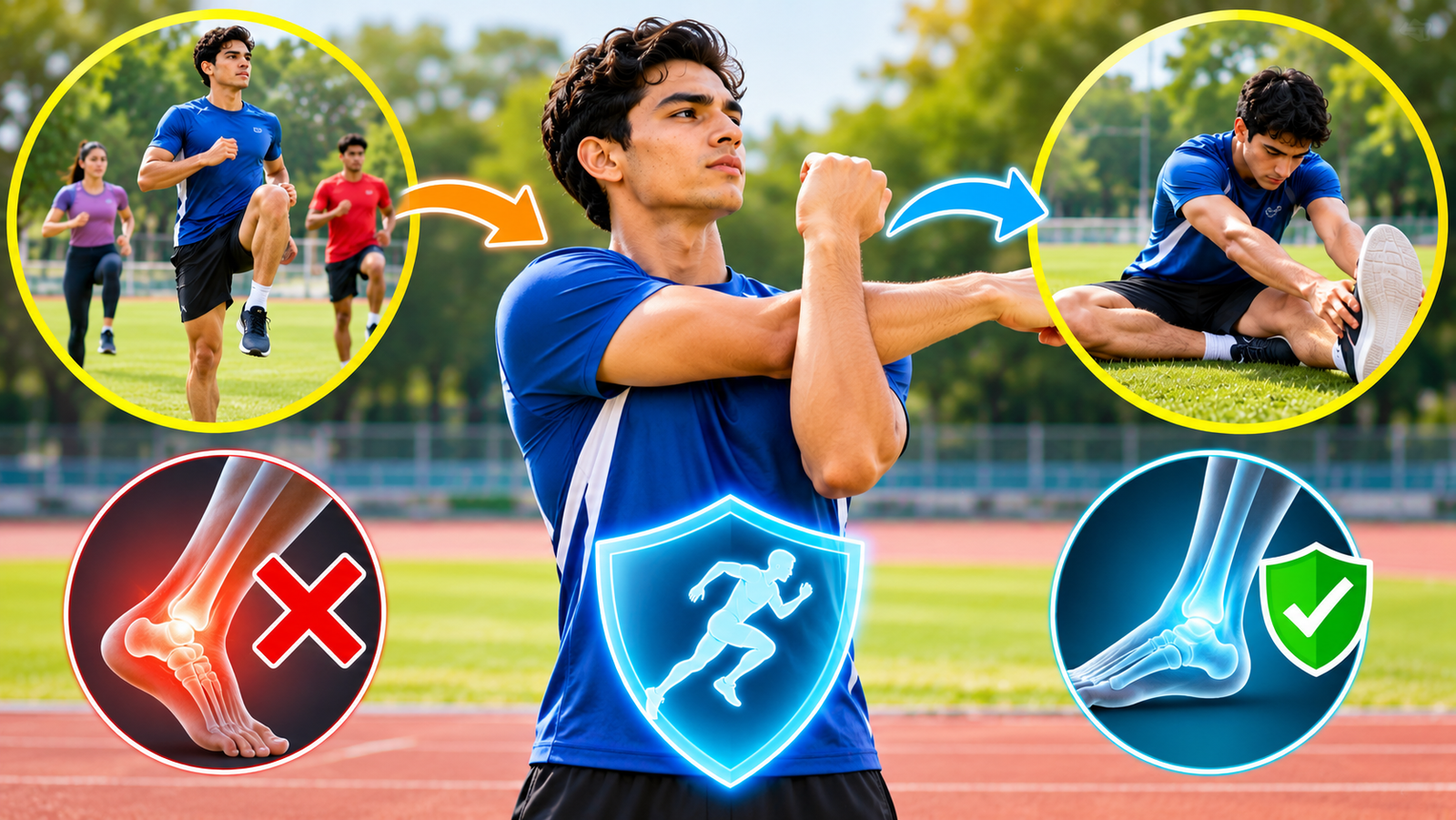
How Warm-ups Help Prevent Sports Injuries
Sports injuries can happen for many reasons. A sudden fall, a wrong body movement, a hard hit, or too much physical effort can cause harm. Some injuries affect muscles, while others affect bones, joints, or ligaments.
A proper warm-up helps the body prepare for the demands of a sport. It allows the muscles to become warmer and more ready for physical work. Warm muscles can move with better ease than cold muscles.
It also prepares the joints for actions such as running, jumping, and turning. This is very useful in sports like football, basketball, tennis, and badminton, where athletes often make quick movements.
A good warm-up can also help improve balance and body control. These skills may lower the chance of certain falls or poor movements.
For example, a basketball player who starts a match without any warm-up may find it hard to make sudden turns or jumps. A few minutes of light activity and sport-based exercises can help prepare the body for such actions.
Still, warm-ups alone cannot stop every injury. Athletes must also use the correct equipment, follow safety rules, avoid excess exercise, and take proper rest.
Different Types of Warm-up Exercises
There are many ways to warm up before sports. The best choice depends on the activity and the person’s fitness level.
A general warm-up may start with a slow walk or light jog. This helps raise the heart rate and body temperature. After that, a person can move the arms, shoulders, hips, knees, and ankles in a gentle way.
Dynamic stretches are also useful before many sports. These are controlled movements that take the body through its normal range of motion. Examples include arm circles, leg swings, walking lunges, and gentle high knees.
Sport-specific exercises are another useful part of a warm-up. They are simple actions that match the sport a person is about to play.
For example, a football player can do short runs, gentle kicks, and quick foot movements. A cricket player can practise light throws and simple bat movements. A badminton player can move from side to side and practise easy racket shots.
The aim is to start slowly and increase effort step by step. A warm-up should never cause pain or make a person feel very tired before the main activity.
The Role of Stretching Before Exercise
Stretching is often part of a warm-up. It helps the body move through a wider range of motion and prepares muscles for activity.
There are two common forms of stretching: dynamic stretching and static stretching.
Dynamic stretching uses active movements. For example, a person may swing the legs, move the arms in circles, or take gentle steps with a high knee lift. These movements help prepare the body for sports that need speed and quick action.
Static stretching means a person holds a stretch in one position for a short time. For example, a person may hold a gentle leg stretch for a few seconds.
Dynamic stretches are often more useful before sports that need quick movement. Long static stretches just before hard exercise may not suit every activity, especially if they take the place of a full warm-up.
The key is to choose the right type of stretch for the sport. Every movement should be slow, controlled, and free from pain. A person should never force a joint or muscle beyond its comfort level.
What Is a Cool-down?
A cool-down is a set of light exercises or gentle movements after a sport or workout. Its main purpose is to help the body return to its normal state after physical effort.
During hard exercise, the heart beats faster, the body temperature rises, and the muscles work harder. After the activity ends, the body needs some time to return to rest.
A cool-down helps this change take place at a gradual pace. For example, after a fast run, a person can walk slowly for a few minutes instead of stop at once.
After the walk, gentle stretches may help reduce muscle tightness and improve flexibility over time. The exact cool-down routine depends on the sport and the level of effort.
A cool-down is simple, but it is an important part of a healthy exercise routine.
Why Is a Cool-down Important?
After hard exercise, the body needs time to slow down. If a person stops all activity at once, they may feel dizzy or uncomfortable, especially after intense exercise.
A gradual cool-down helps the heart rate and breathing return towards normal. It also allows the body to adjust after a period of high physical effort.
A slow walk after a run is a simple example. It keeps the body active at a low level while the heart rate begins to fall.
Cool-down exercises may also help a person feel more relaxed after a sports session. Gentle stretches can reduce the feeling of tightness in some muscles and help maintain a good range of motion.
However, a cool-down does not remove all muscle pain or prevent every injury. It is one part of recovery. Proper sleep, healthy food, enough water, and rest are also important.
How Cool-downs Support Muscle Recovery
During exercise, muscles use energy to help the body move. Hard physical activity can place stress on muscle fibres. After exercise, the body starts its natural repair process.
A cool-down allows the body to move from hard effort to rest in a gradual way. Light activity, such as slow walking, helps the body settle after a tough session.
Gentle stretches can also help some people feel less stiff after exercise. They allow muscles to move through a comfortable range without extra force.
It is important to know that a cool-down does not repair damaged muscles by itself. The body needs enough time, food, water, and sleep for proper recovery.
For example, a runner who has just completed a long race should not stop and sit at once if they feel well enough to walk. A few minutes of slow walking can help the body return to a more relaxed state.
The Difference Between Warm-ups and Cool-downs
Warm-ups and cool-downs are both important, but they serve different purposes.
A warm-up takes place before exercise. It prepares the heart, lungs, muscles, and joints for physical effort. It usually starts with light activity and then moves towards actions that match the sport.
A cool-down takes place after exercise. It helps the body return to its normal state at a gradual pace. It often includes slow walking and gentle stretches.
For example, before a football match, a player may jog, move the legs, and practise short passes. After the match, the same player may walk slowly and do a few gentle stretches.
Both routines should suit the sport and the person’s fitness level. A proper warm-up prepares the body for activity, while a cool-down helps it settle after the effort.
Warm-ups and Cool-downs in Different Sports
Different sports need different types of warm-ups and cool-downs. A routine that suits a runner may not be the best choice for a swimmer or a weightlifter.
In football, players need to run, jump, turn, and kick the ball. Their warm-up may include light jogging, leg swings, short sprints, and simple ball drills. After the match, slow walking and gentle stretches can help the body relax.
In cricket, players need arm strength, quick footwork, and good body control. A warm-up may include light running, shoulder movements, gentle throws, and simple batting practice. After the game, easy walking and gentle stretches can form part of the cool-down.
In badminton, quick footwork and fast arm movements are very important. Players may use light side steps, arm circles, and easy racket shots before a match. After the game, they can walk slowly and stretch the arms and legs with care.
In running, a warm-up may include a brisk walk, light jog, and a few short runs. After a race, a slow walk helps the body return to rest.
In swimming, easy laps and gentle arm movements can help prepare the body. After a hard swim, a few slow laps may serve as a cool-down.
Common Mistakes People Make
Many people know that warm-ups and cool-downs are useful, but they do not always follow them in the right way.
One common mistake is to skip the warm-up and start a hard exercise at once. This can place extra stress on the body, especially if the activity needs quick or powerful movements.
Another mistake is to stretch too hard. Some people try to push their muscles beyond their normal limit. This can cause pain or injury. All stretches should be gentle and controlled.
Some athletes also make the mistake of stop all activity at once after a hard workout. A slow walk or a few minutes of light movement can help the body return to rest more comfortably.
Another problem is to follow the same routine for every sport. A warm-up should match the type of activity. A runner, a football player, and a weightlifter may need different exercises.
People should also avoid exercise when they feel sharp pain, severe weakness, or dizziness. In such cases, they should stop and seek proper medical advice if needed.
How Long Should a Warm-up and Cool-down Last?
The time needed for a warm-up or cool-down can vary. It depends on the type of sport, the weather, the person’s age, and their fitness level.
In many cases, a warm-up of about 5 to 10 minutes is a useful start. It may take longer before a hard match or a tough workout. The aim is to feel ready for exercise, not tired before it begins.
A cool-down may also last about 5 to 10 minutes. It can start with slow walking or light movement, followed by gentle stretches if needed.
These times are general examples, not strict rules. Athletes should follow the advice of a coach or trained fitness expert when they have special needs.
The Role of Coaches and Physical Education Teachers
Coaches and physical education teachers play an important role in safe sports practice. They can teach students the correct way to warm up and cool down.
Many young players do not know which exercises suit their sport. A coach can show them simple movements and explain why each one matters.
Teachers can also make warm-ups a regular part of school sports classes. This helps students build healthy habits from an early age.
Coaches should make sure that exercises suit the age and fitness level of each player. They should also remind athletes not to force their bodies or ignore pain.
With proper guidance, students can learn how to care for their bodies and enjoy sports in a safer way.
Conclusion
Warm-ups and cool-downs are simple but important parts of every sports routine. A warm-up prepares the body before exercise by raiseing its temperature, improveing blood flow, and help the muscles and joints get ready for physical effort. A cool-down helps the body return to its normal state after hard activity.
Both routines can help lower the risk of certain injuries when used with safe exercise habits. They also help athletes prepare their minds, improve body control, and support a healthy approach to sports.
Whether a person plays football, cricket, badminton, basketball, or enjoys a daily walk, these habits can make a real difference. There is no need for complex exercises or special equipment. Simple movements, done with care, can be enough.
Sports are not only about speed, strength, or victory. They are also about health, discipline, and respect for the body. A few minutes before and after exercise can help us care for our bodies and enjoy physical activity with greater confidence. Every athlete, student, and fitness lover should make warm-ups and cool-downs a regular part of their routine.
ALSO READ: Why Warm-Up Matters Before We Play Any Sport