









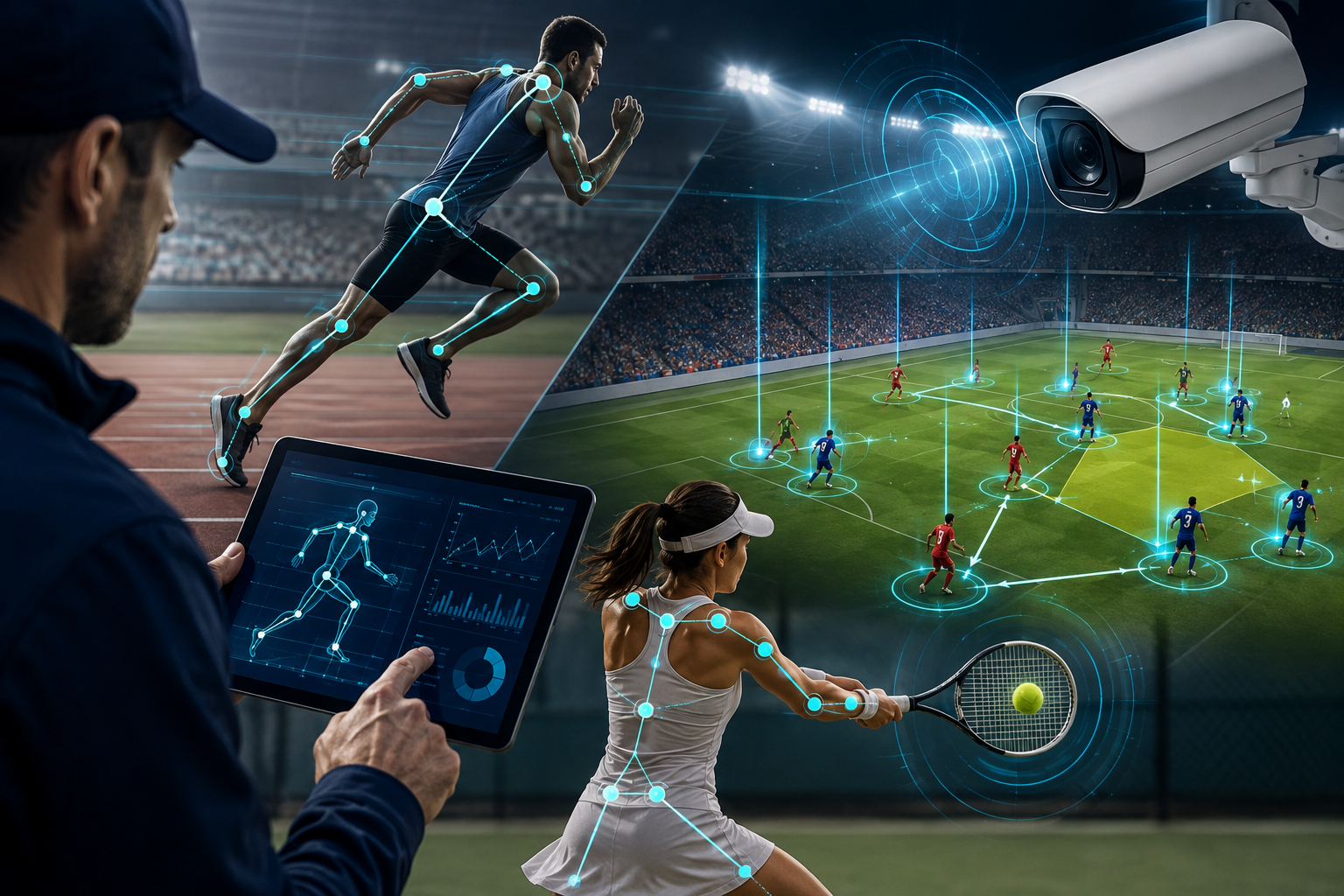
Sports coaching has changed a lot in recent years. Coaches once had to depend mainly on their eyes, experience, and notes to understand an athlete’s performance. Today, technology gives them another powerful tool: computer vision.
Computer vision uses cameras and artificial intelligence to understand what happens inside a video. It can follow athletes, study body movement, measure positions, and find patterns that may be hard for a person to notice. This does not mean that technology replaces the coach. Instead, it gives coaches better information so they can make smarter decisions.
From tennis courts to football fields, computer vision now has a growing role in sports. It can help athletes improve their skills, help teams understand their tactics, and even support efforts to reduce injury risk.
What Is Computer Vision in Sports?
Computer vision is a form of artificial intelligence that allows computers to understand images and videos. In sports, cameras capture an athlete or a whole team. Special software then studies those images and turns them into useful information.
The system can follow a player’s body, identify movement, and study changes from one moment to another. It can also track several players at once during a match.
For a coach, this can provide a much clearer view of what happens on the field or court. A coach does not have to depend only on memory or a quick view from the sidelines. The video can provide evidence that the coach can review later.
Better Analysis of Athlete Technique
One of the biggest benefits of computer vision is its ability to study technique. An athlete may repeat the same action hundreds of times, but small mistakes can be difficult to see.
AI-powered cameras can study body posture, joint angles, foot placement, balance, and other details. This can help a coach understand exactly where an athlete may need improvement.
Take tennis as an example. A computer vision system can study a player’s serve, footwork, racket position, body rotation, and contact point. A coach can use this information to understand the athlete’s technique in greater detail.
This can make training more focused. Instead of giving general advice, the coach can point to a specific part of the movement and explain what needs to change.
More Personal Training
Every athlete is different. Two players may have the same goal but need very different types of training. Computer vision can help coaches understand these differences.
A system can compare an athlete’s movements across different sessions. It may show that a runner has a smooth stride at the start of a session but becomes less efficient when tired.
The coach can then create exercises that address that problem. This gives the athlete a training plan based on actual performance rather than a general idea.
This type of personal feedback can also help athletes understand their own performance. Clear video evidence can make it easier for a player to see what the coach means.
A New Way to Study Tactics
Computer vision is useful beyond individual technique. It can also help coaches understand how a team plays.
In sports such as soccer, basketball, and hockey, the position of players can have a major effect on the result. AI can track player positions and help coaches study formations, passes, defensive shape, space, and movement away from the ball.
For example, a soccer coach may want to know why the team lost control after an attack. Computer vision can help show where players were positioned at that moment and how much space was left open.
This gives coaches a better way to study both good and bad moments. They can use the information to adjust tactics before the next game.
Less Time Spent on Video Review
Video has been part of sports coaching for many years. The problem is that watching a full game can take a great deal of time.
A coach may have to watch an entire match just to find a few important moments. Computer vision can make this process much faster.
AI can identify events and create useful video clips. A coach could ask a system to find every defensive transition after the team lost possession. The system can then bring those moments together instead of making the coach search through the full match.
This gives coaches more time for actual training, discussion, and work with athletes.
Support for Injury Prevention
Computer vision may also have a useful role in injury prevention. Changes in movement can sometimes provide an early sign that something is wrong.
For example, an athlete may start to run differently because of tiredness, weakness, pain, or a change in physical condition. A computer vision system can compare current movement with older video and highlight unusual changes.
It may also find differences between the left and right sides of the body. A coach or sports professional can then take a closer look at the athlete.
However, computer vision should not be treated as a medical diagnosis tool. It can provide useful information, but a qualified medical professional must assess an actual injury or health problem.
Advanced Tools for More Athletes
In the past, advanced sports analysis was mostly available to professional teams. Large clubs could afford expensive cameras, analysts, and specialist staff.
That situation is changing. Better cameras, smartphones, cloud technology, and AI software are making video analysis easier to access.
Schools, amateur teams, smaller clubs, and individual athletes can now use tools that were once limited to elite sports.
This could have a major effect on sports development. A young athlete may not have access to a large performance department, but a camera and AI system can still provide useful information about technique and performance.
The Coach Still Has the Final Say
Even with all these improvements, computer vision cannot replace a good coach.
Technology can tell a coach what happened, but it may not always explain why it happened. An athlete could make a technical mistake because of tiredness, stress, poor confidence, or a problem outside the sport. A computer may not understand that full situation.
A coach knows the athlete as a person. They can choose the right words, build confidence, change a training plan, and understand emotions. These human skills remain extremely important.
The best results come when technology and coaching work together. The computer provides detailed information, while the coach gives that information meaning.
The Future of Sports Coaching
Computer vision is likely to become a bigger part of sports in the years ahead. Cameras may become better at understanding movement, while AI systems may provide faster and more detailed analysis.
Training could become more measurable and personal. Athletes may receive clearer feedback after each session. Coaches may have better tools to study tactics and spot changes in performance.
The goal, however, should not be to collect data simply because technology makes it possible. The real value comes from useful information that helps an athlete improve.
Conclusion
Computer vision is changing sports coaching by giving coaches a clearer view of performance. It can study technique, provide personal feedback, analyze team tactics, reduce video review time, and help identify changes that may relate to injury risk.
Its greatest strength is not that it replaces human coaching. Its strength is that it gives coaches better evidence.
The future of sports coaching may combine cameras, AI, and human experience in a much closer way. The camera can capture what happened, the computer can find important details, and the coach can decide what those details mean.
That combination can make sports training more precise, personal, and effective while keeping the human coach at the heart of the process.
ALSO READ: The 10-Minute Session for Busy Training Days