








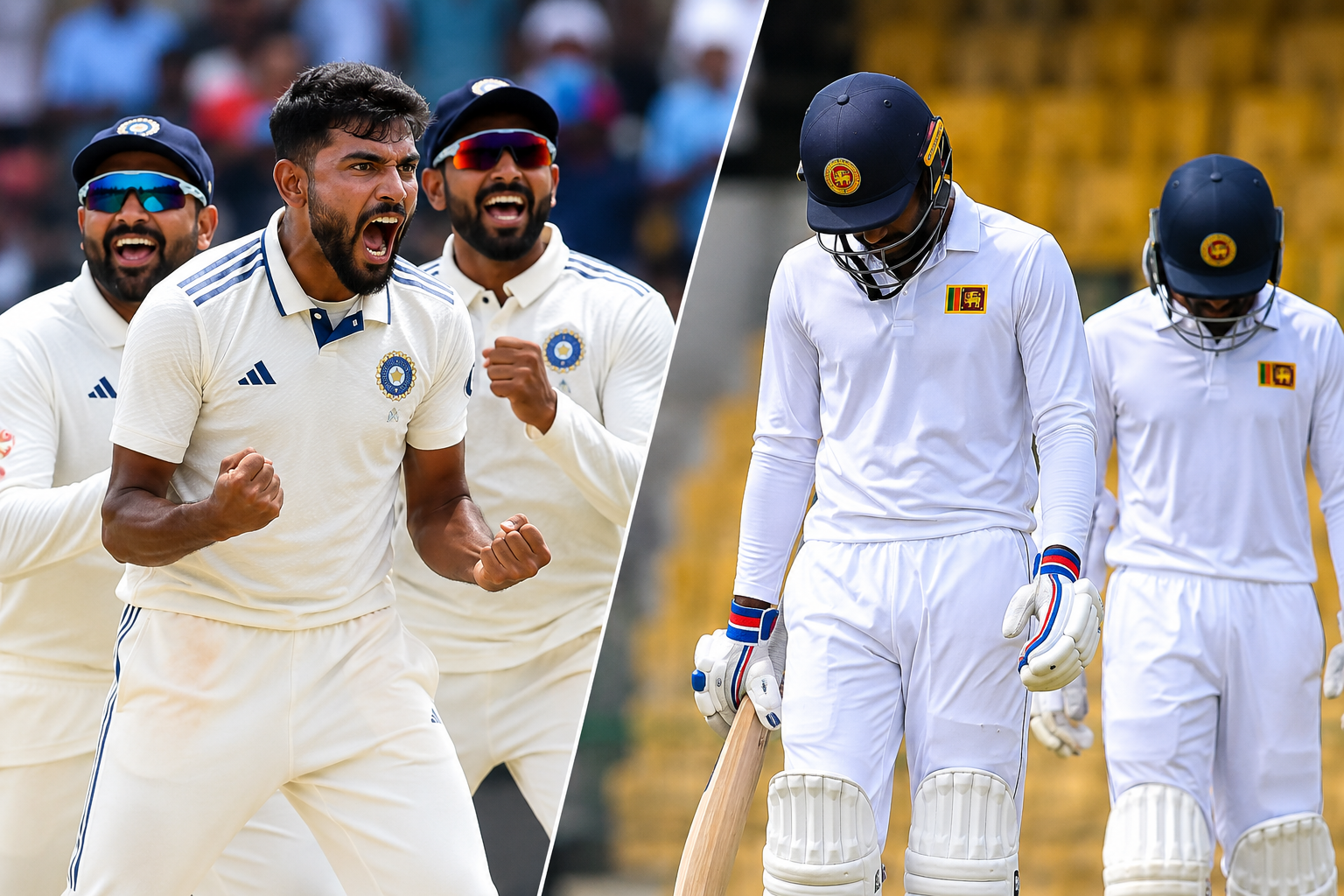
India have put themselves in a superb position in the second Test against Sri Lanka at the Sinhalese Sports Club in Colombo. The visitors bowled Sri Lanka out for 290 on Day 4 and then chose to enforce the follow-on.
India had first declared their innings at 503/9. That gave them a huge first-innings advantage, and Sri Lanka needed a major effort to avoid a second turn at the crease. They fell short of that mark by 213 runs. India now have a clear path toward an innings win, while Sri Lanka must produce a far better effort in their second innings.
The result also shows the difference between the two teams across the match. India have had strong control with both bat and ball. Sri Lanka have shown plenty of courage, especially through their lower order, but that resistance has not been enough to stop India from taking a huge advantage.
Sri Lanka Bowled Out for 290
Sri Lanka began Day 4 at 265/8. They needed 39 more runs to reach the point where they could avoid the follow-on. That task looked possible because Sonal Dinusha was still at the crease after a fine 85 not out on the previous day.
Dinusha continued his brave effort and reached another Test century. He scored 103 from 162 balls before India finally removed him. His hundred was his second of the series and showed how well he has handled the Indian attack.
Yet Sri Lanka could add only 25 runs to their overnight total. The final two wickets fell soon after play began, and Sri Lanka were all out for 290. India needed only 15 minutes to take those last two wickets.
The final stage was a clear example of the pressure India had built. Sri Lanka needed runs from their last pair, but India stayed patient and waited for a mistake.
Dinusha Gives Sri Lanka Hope
Sonal Dinusha deserves special praise for his effort. His 103 was not enough to save Sri Lanka from the follow-on, but it was a superb personal performance.
He had already shown his class earlier in the series. His latest hundred gave him two centuries in the series and confirmed that he has become one of Sri Lanka’s most useful players in this contest.
Dinusha also had support from Lahiru Kumara. The pair added 58 runs for the ninth wicket, which gave Sri Lanka a brief chance to reach the required mark. Their stand also made India’s bowlers work much harder than expected.
However, the pressure eventually told. Kumara became the first of the final two wickets to fall. Debutant spinner Saransh Jain took the catch himself after a top edge found Dhruv Jurel at deep point. That wicket was also Jain’s first in Test cricket.
Dinusha then fell to Jain soon after he reached 103. His dismissal brought Sri Lanka’s first innings to an end at 290.
India Had Set a Huge Target
The base for India’s current position was built with the bat. India declared at 503/9, a total that placed enormous pressure on Sri Lanka from the start.
Devdutt Padikkal made 117, while Dhruv Jurel stayed unbeaten on 115. Jurel’s hundred was his second in Test cricket and his first century outside India. Rishabh Pant also made a quick 63, which helped India add extra runs at a useful rate.
That total gave India the freedom to attack Sri Lanka with their bowlers. Instead of wait for a small lead, India could press for wickets and put the home side under severe pressure.
Sri Lanka’s first innings never reached a stable position. Their top order failed to give the team the sort of platform it needed. The lower order then had to take on a much larger role than expected.
Indian Bowlers Keep the Pressure On
India’s attack also deserves credit for the position at the close of the first innings.
Prasidh Krishna took three wickets for 52 runs, while Manav Suthar took three for 85. Their efforts kept Sri Lanka from a serious recovery. Debutant Saransh Jain then made his mark with the final two wickets.
Jain’s arrival adds another positive point for India. A debut Test can bring plenty of pressure, especially when the match is at a crucial stage. Yet he stayed calm and took the wickets that finished Sri Lanka’s innings.
The Indian attack now has another chance to take ten wickets. With Sri Lanka already 213 runs behind, every wicket will increase the pressure on the home side.
Why India Chose the Follow-On
The follow-on is a bold but logical choice in this situation. India have a lead of 213 runs, and Sri Lanka have already spent a long period at the crease in their first innings.
By asking Sri Lanka to bat again at once, India avoid a fresh trip to the crease themselves. Their bowlers also get another chance to attack while the match remains under their control.
Sri Lanka now face a very difficult task. They must first erase the 213-run deficit. Only after that can they create a target for India.
If India take all ten wickets before Sri Lanka pass the deficit, the match will end with an innings victory for India. That is now the biggest threat faced by the home side.
Sri Lanka Must Find a New Answer
Sri Lanka’s second innings will need a very different approach. Their top order must stay at the crease for a long time and remove the pressure from the lower order.
Dinusha has already done his part with the bat, but he cannot be expected to rescue the team every time. Sri Lanka need major contributions from their main batters if they want to extend this Test.
The pitch, conditions and time left in the match will also matter. India have the advantage of a large lead and a full set of bowlers. Sri Lanka, by contrast, have to score under enormous pressure.
Their first innings showed that they can resist for long periods. The problem was that they did not score enough runs to make India bat again.
India Move Closer to a Series Sweep
India already lead the two-Test series 1-0 after a 165-run win in the first Test at Galle. They now have a strong chance to finish the series with another victory.
The Colombo Test has followed a similar pattern. India have controlled the major parts of the contest, while Sri Lanka have had only short periods of success.
The 503/9 declaration gave India the platform. Sri Lanka’s 290 left them 213 runs behind. The follow-on has now placed the home team under the greatest pressure of the match.
A Huge Challenge Awaits Sri Lanka
Sonal Dinusha’s 103 will remain one of the bright points for Sri Lanka. His effort showed that the home side still have players who can fight under pressure. The lower order also showed plenty of courage.
But Test cricket is about the whole team, not just one or two players. India have had more players contribute at key moments, and that difference has put them close to a major victory.
Sri Lanka now have one clear goal: stay alive in the match. They must first overcome the 213-run deficit and then hope to set India a difficult target.
India, meanwhile, need only ten wickets for an innings win. After a strong total of 503/9, a total of 290 from Sri Lanka and a 213-run lead, the visitors have earned a position of complete control in Colombo.
The next phase will decide whether India complete the job quickly or Sri Lanka can produce one more major fight. For now, though, there is little doubt about which side has the upper hand.
ALSO READ: Jaiswal and Fernando Fined After Colombo Test Clash