







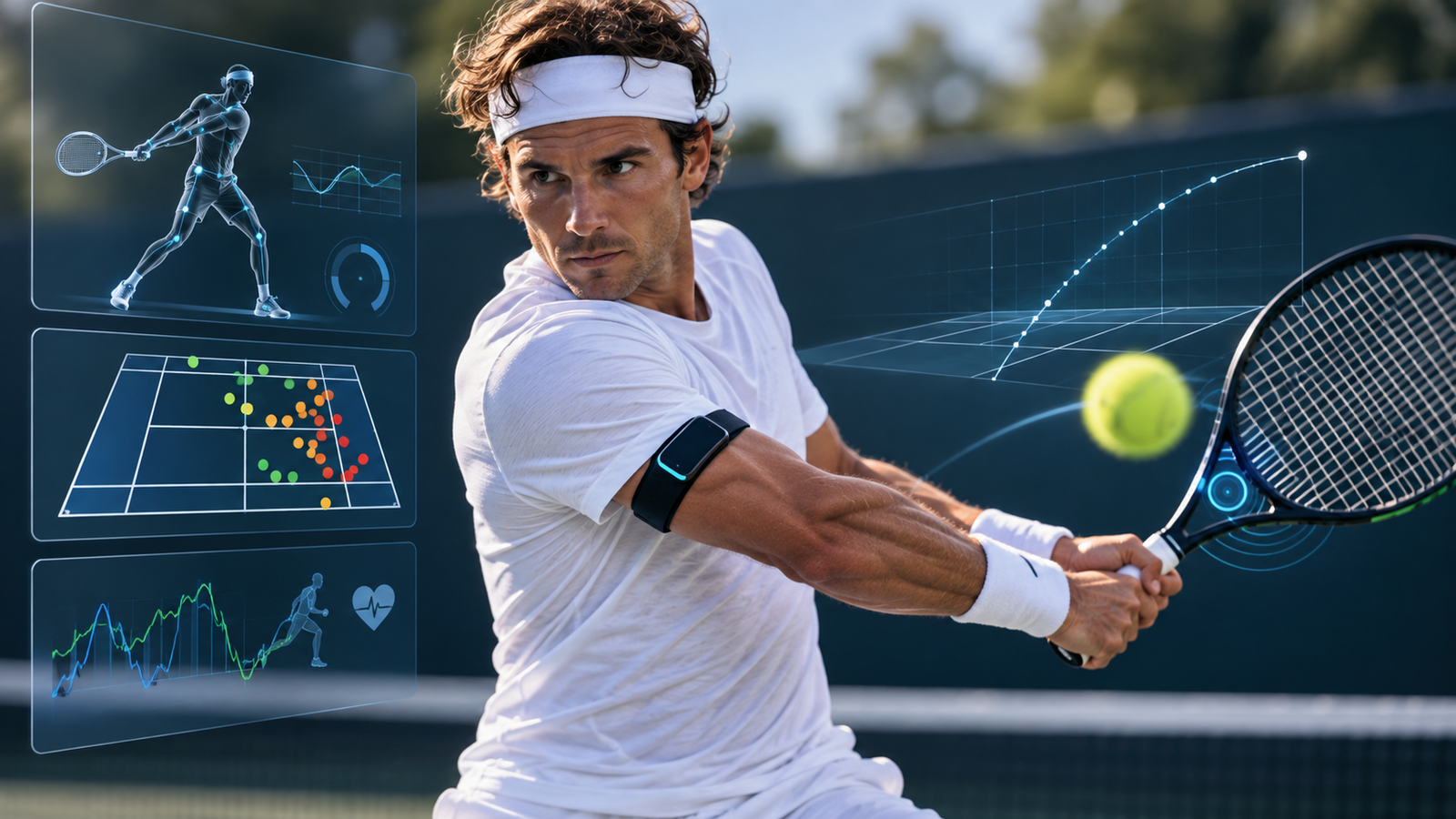
Tennis has changed a lot over the past decade. The basic sport remains the same, but the way players prepare has become far more precise. Coaches no longer rely only on what they see with their eyes. They can now use cameras, sensors, smart rackets, fitness devices, and software to study almost every part of a player’s game.
The International Tennis Federation, or ITF, calls this area Player Analysis Technology, or PAT. It covers devices that collect, store, send, or study player data. These tools can include heart-rate monitors, smart rackets, cameras, and player tracking systems.
The biggest change is simple: tennis practice has moved from guesswork toward clear data. A player can now see what happened, how often it happened, and where a change may help.
AI Video Analysis
One of the biggest advances has come from video and artificial intelligence. A phone or court camera can now capture a player’s strokes and turn that footage into useful data. Modern systems can study the ball, court, player position, shot type, ball speed, and ball path.
This was once a slow task for coaches. They had to watch long match videos and note key points by hand. Research has shown that older video methods could take a lot of time, while advanced computer systems can find key events with far less manual work.
Today, video tools can give players a clearer view of their technique. A coach may show the player where the racket moves, where contact takes place, or how the body position changes from one shot to another. This makes feedback easier to understand.
AI can also spot patterns that a person may miss. If a player loses balance on many backhands or drops court position after a serve, software can help reveal that pattern. The coach can then focus on the real issue rather than rely on a quick visual guess.
Smart Rackets and Racket Sensors
Smart rackets have also changed tennis practice. Small sensors can collect data about racket movement and impact. They can show details such as swing speed, shot type, racket path, and other stroke features.
The ITF has approved several forms of Player Analysis Technology. Its approved list includes the Babolat PLAY AeroPro Drive, with approval dated July 25, 2016.
The value of a smart racket is that it turns an ordinary stroke into measurable information. A player may feel that two forehands are almost the same. The data may show a clear difference in speed, spin, or racket motion.
This can make practice more focused. Instead of a coach saying that a stroke feels too slow, the player can look at actual numbers and work toward a clear target.
Wearable Sensors
Wearable technology has become another major part of modern tennis. Players can wear devices that record heart rate, movement, speed, and physical load. Small sensors can also detect specific strokes and movement patterns.
Research on tennis has shown that wearable sensors can collect stroke and movement data over long periods. One study found that such systems could detect several tennis actions, although accuracy varied by stroke type. For example, the study reported 74% accuracy for backhand slice detection, while volley detection was much lower at 41–44%.
These limits matter. Technology is useful, but it is not perfect. A good coach still needs to check the data and place it in the right context.
The main benefit is the larger picture. A coach can study how a player moves during a full session instead of judging only a few points. This can help reveal fatigue, poor court position, or changes in movement quality.
Better Biomechanics
Biomechanics has become easier to use outside major research centers. In the past, detailed body analysis often needed special cameras, sensors, and costly lab equipment. Now, more tennis programs can use video and motion sensors to study body movement.
Coaches can look at hip rotation, shoulder position, footwork, balance, and racket path. This can help explain why a player has trouble with a stroke. The focus shifts from the final result to the body actions that create that result.
This matters for both performance and safety. If a player has poor movement habits, a coach can spot them sooner and adjust the practice plan. The goal is not just a harder serve or faster forehand. It is a better movement pattern that can last over time.
Data-Based Match Analysis
Another major change is the use of match data. Tennis creates a huge amount of information. Every serve, return, rally, shot location, and court position can tell a story.
Modern systems can sort this information into simple reports. A player may learn that most short balls come after a certain serve pattern. Another player may discover that points drop when the first serve percentage falls below a set level.
This gives practice a stronger link to real matches. Instead of doing the same drills every day, a coach can choose drills that match a player’s actual needs.
The ITF also notes that modern Player Analysis Technology can collect detailed player data in real time. Its systems can include sensors, cameras, and other tools that measure force, movement, and physical data.
Smart Courts and Ball Tracking
Court technology has also improved. Camera systems can track the ball in three dimensions and record its path through the court. Some systems can identify serves, forehands, backhands, bounces, net contact, spin type, and ball speed.
For example, an ITF approval report for SwingVision states that its system can record the ball’s 3D location at racket contact, net contact, and bounce. It can also identify shot type, spin type, and ball speed.
This gives players a much clearer picture of court performance. A coach can study where shots land rather than rely on memory. That can lead to more useful targets during drills.
Remote Coaching and Mobile Tools
The smartphone has also changed access to tennis advice. A player no longer needs a large academy setup to record a session. A phone, tripod, and suitable software can provide a basic video review.
This has made high-level ideas more available to club players. A coach can review footage from another location and send feedback later. Players can also save old sessions and compare them with new ones.
The result is a more continuous record of progress. A player can look back after several months and see whether a technical change has actually worked.
Virtual Reality and New Practice Methods
Virtual reality has started to appear as a new tool for tennis preparation. It can create match-like situations without a real opponent on the other side of the net. This may help players work on reaction, choice, and mental preparation.
The technology is still less established than video analysis or sensors, so its role remains smaller. Still, it shows where tennis practice may go next. Digital systems may offer more realistic match situations, with a player able to face many types of serves, returns, and rally patterns.
What Has Changed Most?
The biggest innovation of the past decade is not one device. It is the way several tools now work together.
A player may have a smart racket for stroke data, a wearable for physical data, cameras for technique, and software for match analysis. The coach can bring all of this information together and turn it into a simple practice plan.
That does not mean technology can replace a coach. Tennis is too complex for that. Numbers can show what happened, but a skilled coach must decide why it happened and what should change.
The ITF still places limits on Player Analysis Technology during competition. Approved devices may be used under its rules, but access to data during a match is controlled in line with tennis rules on coaching.
The Future of Tennis Practice
The next decade may bring even smarter tools. AI may become better at reading body movement, spotting small technical errors, and giving fast feedback. New sensors may become smaller and easier to wear. Camera systems may offer better body and ball data from simple court setups.
Recent research already shows this direction. A 2026 study on AI-based vision systems explored tennis movement recognition despite challenges such as fast action, small technical differences, changing light, and different camera views.
Still, the best future may not be about more data. It may be about better data. Players do not need thousands of numbers. They need a few clear facts that lead to better decisions.
That is the real lesson from the past decade. Technology has made tennis practice more precise, more personal, and easier to measure. But the human side of tennis remains central. A good coach, a clear goal, and smart practice still matter most. Technology simply gives players better information to work with.
Also Read – Could a New Faction Reset WWE’s Midcard Scene?