





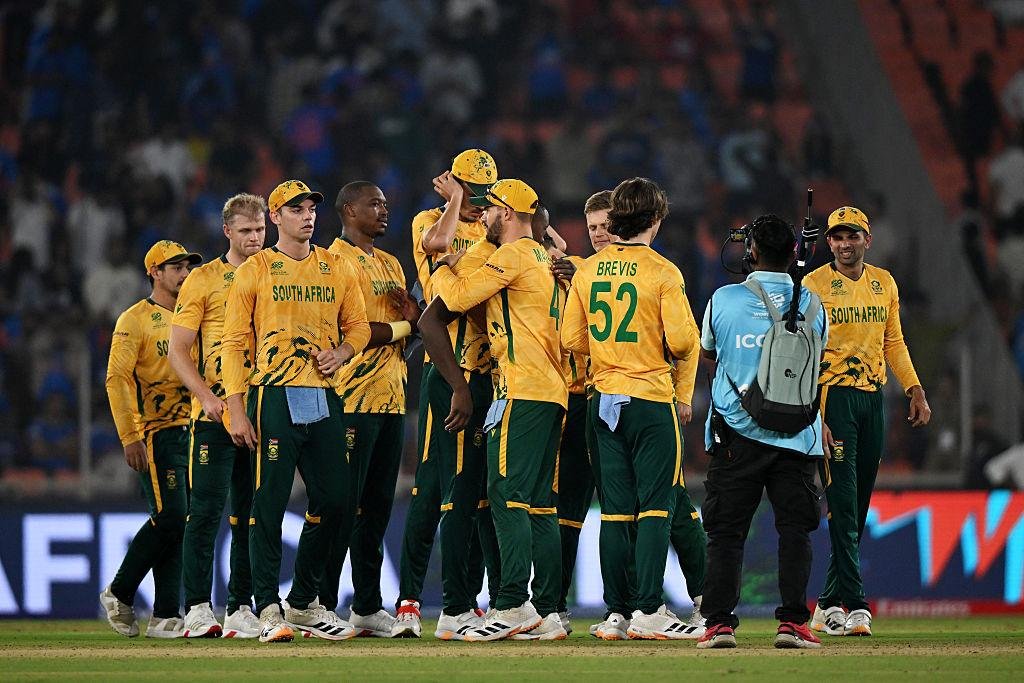
The South Africa cricket team stands among the most talented teams in the history of international cricket. Fans admire their aggressive pace attack, dynamic batting line-ups, and world-class fielding standards. Over the decades, the team has produced legendary cricketers and dominated many bilateral series across formats. Despite this success, South Africa carried a painful reputation in global tournaments.
For many years, the team struggled to win major ICC trophies. South Africa often entered tournaments as favorites but failed during crucial knockout matches. Supporters and critics started using the term “chokers” to describe their repeated collapses under pressure.
From the dramatic 1999 World Cup semi-final to the heartbreak of the 2024 T20 World Cup final and the 2026 T20 World Cup semi-final defeat, South Africa experienced numerous painful moments. Each tournament brought hope, yet elimination followed again and again.
However, the team never stopped fighting. The Proteas rebuilt squads, developed new stars, and continued challenging the strongest teams in world cricket. Their historic 2025 ICC World Test Championship victory finally ended a long wait for an ICC title and restored pride to South African cricket.
This article explores the history of South African cricket, their painful World Cup exits, the statistics behind their struggles, legendary players who shaped the team, and the modern era that aims to rewrite the narrative.
Early History of South African Cricket
Cricket reached South Africa during the 19th century through British influence. The national team played its first official Test match in 1889 against England. Over time, South Africa developed a strong cricket culture with talented players and competitive domestic structures.
During the early decades of international cricket, South Africa competed regularly against England and Australia. The team developed a reputation for producing strong fast bowlers and disciplined batsmen. However, political events interrupted their journey.
Apartheid Ban (1970–1991)
The apartheid system in South Africa led to international condemnation. Global sporting bodies banned the country from international competitions. In 1970, South Africa lost its place in international cricket.
This ban lasted more than two decades. As a result, South Africa missed the first five Cricket World Cups held between 1975 and 1987.
Many talented players lost the chance to represent their country internationally. Cricket continued domestically, but the absence from global tournaments created a massive gap in South Africa’s international history.
Return to International Cricket
Political reforms ended apartheid in the early 1990s. The international cricket community welcomed South Africa back in 1991. Their return brought excitement to the sport.
Soon after readmission, South Africa qualified for the 1992 Cricket World Cup in Australia and New Zealand. This tournament marked the beginning of the Proteas’ modern cricket journey.
The team impressed the cricket world immediately. They defeated strong teams and played disciplined cricket. South Africa reached the semi-final in their very first World Cup appearance after returning to international cricket.
Unfortunately, the semi-final also introduced the heartbreak that would follow the team for many years.
The Beginning of the “Chokers” Label
Cricket fans began associating South Africa with dramatic tournament exits. The team played excellent cricket during group stages but failed during knockout matches.
The 1992 World Cup semi-final against England created the first major controversy.
Rain interrupted the match when South Africa needed 22 runs from 13 balls. Officials applied the rain rule used at that time. After recalculations, South Africa suddenly needed 22 runs from just one ball.
The impossible target eliminated the Proteas from the tournament. Many fans criticized the rule because it removed any realistic chance for South Africa to win.
Although the team did not collapse under pressure in that match, the result started a pattern of painful eliminations in ICC events.
1999 World Cup: The Most Famous Heartbreak
The 1999 Cricket World Cup produced one of the greatest matches in cricket history. South Africa faced Australia in the semi-final at Edgbaston.
Australia scored 213 runs, setting a competitive target. South Africa struggled early but staged a remarkable comeback thanks to Lance Klusener.
During the final over, South Africa needed 9 runs. Klusener smashed two boundaries from the first two balls, leaving 1 run needed from four balls.
At that moment, victory looked certain.
However, a misunderstanding between Klusener and Allan Donald changed everything. Klusener attempted a quick single. Donald failed to respond quickly and dropped his bat while running.
Australian fielder Damien Fleming completed the run-out. The match ended in a tie.
Australia advanced to the final because they finished higher in the Super Six stage of the tournament.
This moment shocked the cricket world. South Africa lost a winning position in a knockout match. The dramatic collapse strengthened the “chokers” narrative that would follow the team for decades.
World Cup Knockout Record
South Africa often dominated group stages but struggled when the pressure increased. Their knockout record illustrates this unusual pattern.
ODI World Cup Semi-Final Appearances
South Africa reached the semi-final stage in the following tournaments:
- 1992
- 1999
- 2007
- 2015
- 2023
Despite these appearances, South Africa never reached the final of the ODI World Cup during those years.
Overall Knockout Losses
Across ICC tournaments, South Africa suffered numerous knockout defeats:
- 12 semi-final losses
- 2 quarter-final losses
- 1 final loss
These statistics highlight the extraordinary number of close calls and heartbreaks experienced by the Proteas.
2015 World Cup: Another Painful Exit
The 2015 Cricket World Cup provided another opportunity for South Africa to break their trophy curse.
The team featured world-class players such as AB de Villiers, Hashim Amla, Faf du Plessis, and Dale Steyn. Many experts considered South Africa one of the strongest teams in the tournament.
In the semi-final, South Africa faced New Zealand.
South Africa scored 281/5 in a rain-affected match. The target increased slightly due to the Duckworth-Lewis method.
New Zealand chased the revised target successfully. In the final over, Grant Elliott smashed a dramatic six off Dale Steyn.
South Africa once again exited a World Cup after a heartbreaking finish.
Players and fans struggled to hide their emotions after the defeat. The match reinforced the belief that South Africa could not win crucial knockout games.
T20 World Cup Journey
South Africa performed strongly in the ICC T20 World Cup throughout its history. The team consistently qualified for later stages of the tournament.
T20 World Cup Overall Record
South Africa played 49 matches in T20 World Cups.
- Wins: 32
- Losses: 16
- No Result: 1
These statistics show that South Africa maintained one of the strongest win percentages in the competition.
Despite these performances, the trophy remained out of reach for many years.
2024 T20 World Cup Final
The 2024 ICC Men’s T20 World Cup produced a historic moment for South African cricket.
For the first time, the Proteas reached the final of a World Cup tournament.
The team delivered an unbeaten run to the final. Strong performances from players such as Quinton de Kock, Aiden Markram, and Kagiso Rabada guided the team through difficult matches.
South Africa faced India in the final.
The match turned into a thrilling contest. South Africa came very close to winning their first limited-overs World Cup. However, India defended their total successfully and won the match by 7 runs.
Although South Africa lost the final, the team earned respect for their impressive tournament performance.
2026 T20 World Cup Semi-Final Defeat
The 2026 ICC T20 World Cup once again raised hopes among South African supporters.
The team dominated the tournament with a strong winning streak. South Africa reached the semi-final undefeated.
However, the semi-final against New Zealand ended in another painful defeat.
New Zealand opener Finn Allen delivered a remarkable performance. He scored a stunning century from just 33 balls, the fastest century in T20 World Cup history.
New Zealand chased the target comfortably and won by nine wickets.
South Africa’s dream of winning another global tournament ended once again in the knockout stage.
Legendary South African Players
Despite their trophy struggles, South Africa produced many iconic cricketers who influenced world cricket.
Jacques Kallis
Jacques Kallis stands among the greatest all-rounders in cricket history. He scored more than 10,000 runs in Test cricket and also took over 250 wickets.
Kallis combined technical batting skills with reliable seam bowling. His consistency played a crucial role in South Africa’s success during the 2000s.
AB de Villiers
AB de Villiers transformed modern batting with his creativity and adaptability. Fans called him “Mr. 360” because he played shots all around the ground.
He holds several records in limited-overs cricket, including the fastest ODI century.
Dale Steyn
Dale Steyn became one of the most feared fast bowlers in cricket history. His ability to swing the ball at high speed troubled batsmen across the world.
Steyn led South Africa’s bowling attack during their most competitive era in Test cricket.
Allan Donald
Allan Donald played a key role in rebuilding South African cricket after the apartheid ban. His aggressive pace bowling and fierce competitiveness inspired the next generation of fast bowlers.
2025 World Test Championship Triumph
South Africa finally achieved a historic breakthrough in 2025.
The team reached the ICC World Test Championship Final against Australia at Lord’s.
Australia entered the match as favorites, but South Africa displayed remarkable determination.
Key performances changed the course of the match:
- Aiden Markram scored 136 runs
- Temba Bavuma contributed 66 runs
- South Africa chased the target successfully
South Africa won the match by five wickets.
This victory delivered South Africa’s first World Test Championship title and ended a 27-year wait for an ICC trophy.
Players and fans celebrated the moment as redemption for decades of disappointment.
Reasons Behind South Africa’s Trophy Struggles
Several factors contributed to South Africa’s long wait for major ICC titles.
Psychological Pressure
Repeated failures in knockout matches created a mental barrier for players. Expectations from fans and media increased the pressure during crucial games.
Unusual Match Situations
Several eliminations involved unusual or controversial circumstances. Examples include the rain rule in the 1992 World Cup and the tie rule in the 1999 semi-final.
Close Matches
Many defeats occurred in extremely close contests. A single mistake or moment of brilliance from the opposition often decided the outcome.
High Expectations
South Africa frequently entered tournaments as favorites due to strong squads. This status increased the emotional impact of every defeat.
The Modern South African Team
The current generation of South African cricketers aims to change the team’s legacy.
Key players include:
- Kagiso Rabada
- Aiden Markram
- Marco Jansen
- Quinton de Kock
These players combine youth, skill, and experience. South Africa continues to produce talented fast bowlers through its domestic system.
The 2025 World Test Championship victory strengthened belief within the squad. The team now aims to convert strong performances into more global titles.
Conclusion
South African cricket tells a story of immense talent mixed with heartbreaking disappointment. The Proteas consistently produced world-class players and competitive teams. Yet knockout defeats haunted them for decades.
From the rain controversy in 1992 to the dramatic tie in 1999 and the narrow losses in recent tournaments, South Africa endured some of the most painful moments in cricket history.
However, the team never stopped fighting.
The 2025 World Test Championship victory finally proved that South Africa can overcome its difficult past. The triumph restored pride to the Proteas and offered hope for future tournaments.
South Africa now stands at an important turning point. With talented young players and renewed confidence, the team aims to win more ICC trophies and finally erase the painful legacy of the “chokers” label.
The next chapter of South African cricket could transform one of the sport’s most tragic stories into one of redemption and triumph.